


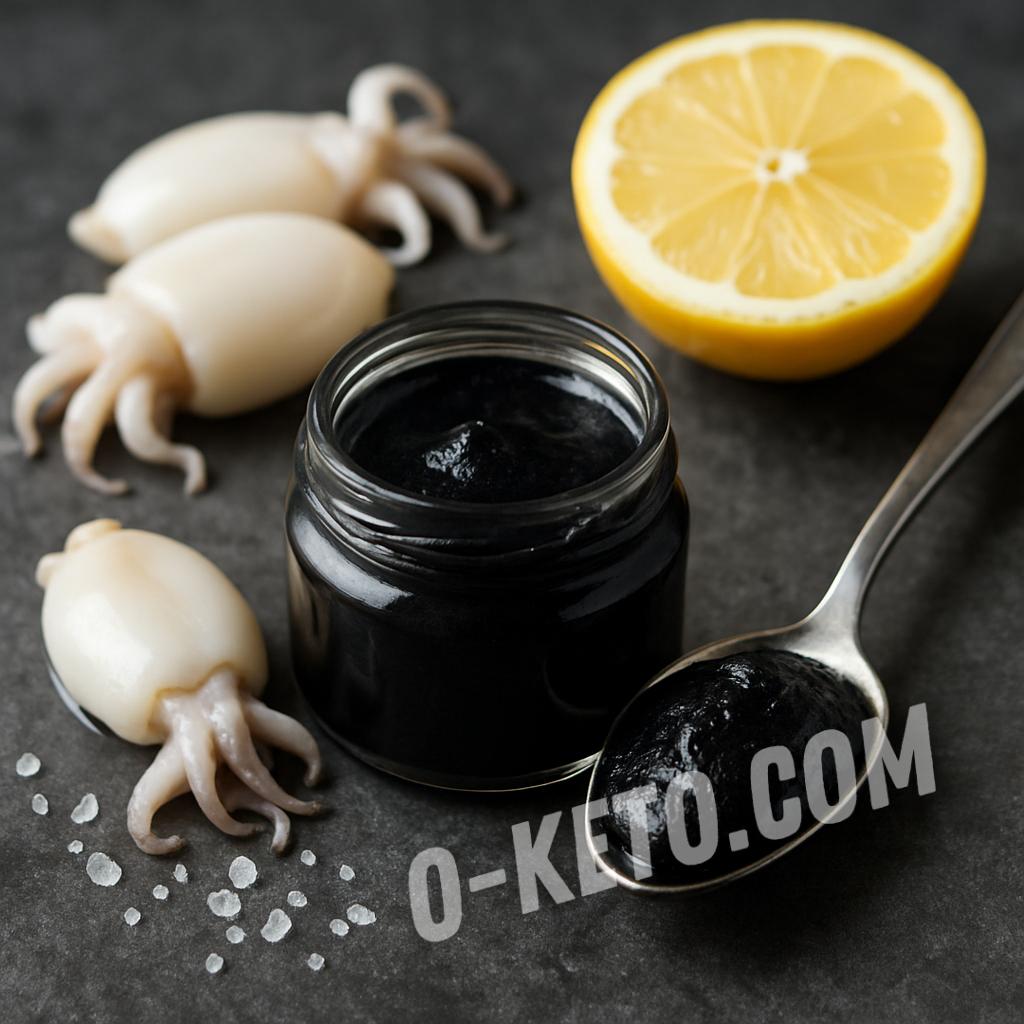

Cuttlefish ink is a thick black marine ingredient used mainly for color, briny flavor, and a light umami note. In cooking it is not a stand-alone seafood serving or a meaningful protein source, but a concentrated seasoning: a few grams can color sauce, low-carb dough, cauliflower rice, keto-style noodles, or a fish dish.
It is sold in small sachets, jars, and tubes. The formula varies by producer: some products are close to ink with salt and water, while others are pastes with stabilizers, thickeners, acidifiers, or a little sugar. For keto, the label matters more than the name.
Nutrition
Per 100 g, cuttlefish ink is usually low in calories, moderate in protein, almost fat-free, and fairly low in carbohydrate, but high in sodium because of salt and its natural briny character. Real servings are much smaller than 100 g: sauces and dishes often use only 2-8 g, so calories and carbohydrates usually remain minor.
The glycemic load of such a serving is low. The keto problem usually comes from the surrounding recipe, not from the ink itself: wheat pasta, rice, flour, breading, sweet sauce, or a ready-made starch-thickened mix can change the meal completely.
How to Use
Cuttlefish ink works best when a dish needs deep black color and a marine taste: sauces for fish, squid, shrimp, mussels, cream sauce, mayonnaise dressing, low-carb noodles, omelets, keto ravioli dough, or cauliflower “risotto.” Add it gradually because the flavor is concentrated and the product is already salty.
Strong boiling and long frying can make the flavor harsher. A practical method is to dilute the ink in a little warm liquid, oil, or sauce and stir it in near the end of cooking. Adjust salt only after the ink has been added.
How to Choose
Choose a product with a clear ingredient list and an ink percentage when the producer provides it. Good ink should not smell sharply of ammonia, rancid fat, or chemicals. If the ingredient list includes sugar, starch, maltodextrin, or many thickeners, count it as a prepared paste rather than pure ink.
Small sachets are convenient for clean color and freshness because they reduce contact with air. Tubes and jars are practical for frequent use, but the open-life instructions matter.
Storage and Safety
Store unopened packages according to the producer’s instructions. Once opened, keep cuttlefish ink refrigerated and use a clean spoon or spatula; avoid introducing water or crumbs. Discard it if there is a sharp off smell, mold, gas, swollen packaging, or unusual sliminess.
Cuttlefish ink is a seafood ingredient, so it should be avoided by people with allergy to mollusks or cephalopods. Because it is salty, it is not a product to add by large spoonfuls when sodium restriction matters.


