


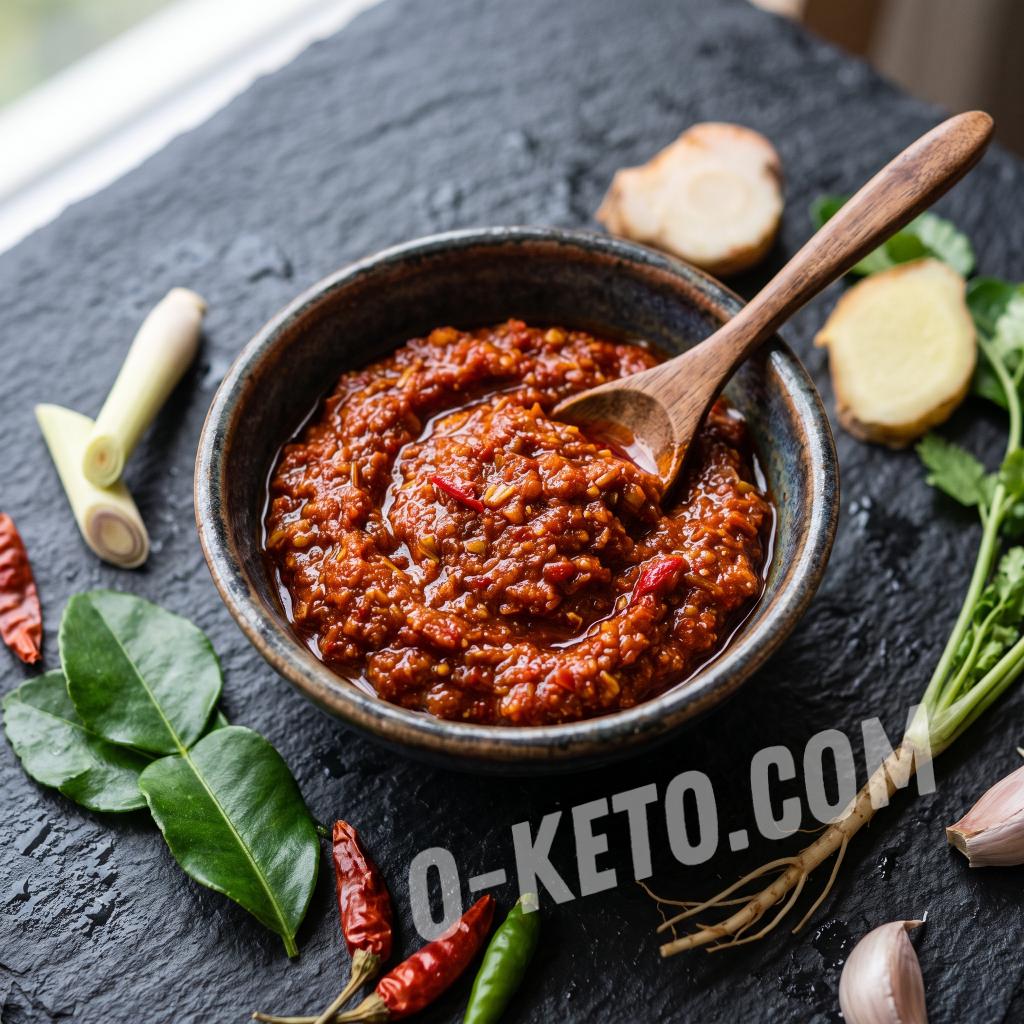

Red curry paste is a concentrated Thai-style seasoning paste built around red chili, garlic, lemongrass, galangal, and other aromatic ingredients. Unlike a dry curry powder, it comes as a ready flavor base that can be added to sauces, soups, marinades, and quick coconut-milk dishes. It is usually used in small amounts because even a little can bring noticeable heat, saltiness, and a deep savory aroma.
How it differs from dry curry powder
Dry curry powder and red curry paste are not the same product. The paste is wetter, more concentrated, and usually integrates better into hot dishes where it is cooked briefly in fat, broth, or coconut milk. That tends to produce a rounder, fuller flavor than simply sprinkling a dry spice blend into the dish at the end.
It also acts more like a flavor base than a single spice. Because of the garlic, chili, and salty components, it can shape the whole direction of the dish rather than just add a small aromatic accent. That matters when you combine it with other sauces or seasonings.
How to use it
Red curry paste is often warmed briefly in a pan before coconut milk, broth, fish, seafood, chicken, or vegetables are added. That step helps the aroma open up more fully. In practice, it is often easiest to start with a modest amount and increase only if the dish still needs more intensity.
It works well in quick everyday meals when you want a distinctly Thai profile without measuring many separate spices. It can go into soups, braised vegetables, fish sauces, and warm marinades. The key point is that it is a concentrate, not a neutral puree.
What to consider when choosing one
It helps to check the ingredient list, heat level, and sodium content. Some versions are milder, while others are noticeably hotter and saltier. For regular home cooking, the most practical option is usually one with a clear, predictable flavor and a straightforward ingredient list.
After opening, the paste is usually stored in the refrigerator and handled with a clean spoon. If the aroma becomes flat and the taste shifts toward simple saltiness without the bright spicy depth, the paste is no longer giving the same culinary value.
Limitations
Because it is spicy and concentrated, red curry paste is not equally comfortable for everyone. People with a sensitive stomach, marked reflux, active gastritis, or poor tolerance to hot spices usually use it more cautiously and in smaller amounts. Sodium also matters, since it is easy to oversalt a dish if the rest of the seasoning is not adjusted.
If a milder result is needed, the paste is often balanced with coconut milk, richer creamy elements, neutral vegetables, or a larger protein portion. That usually works better than trying to dilute the heat with water alone.


