


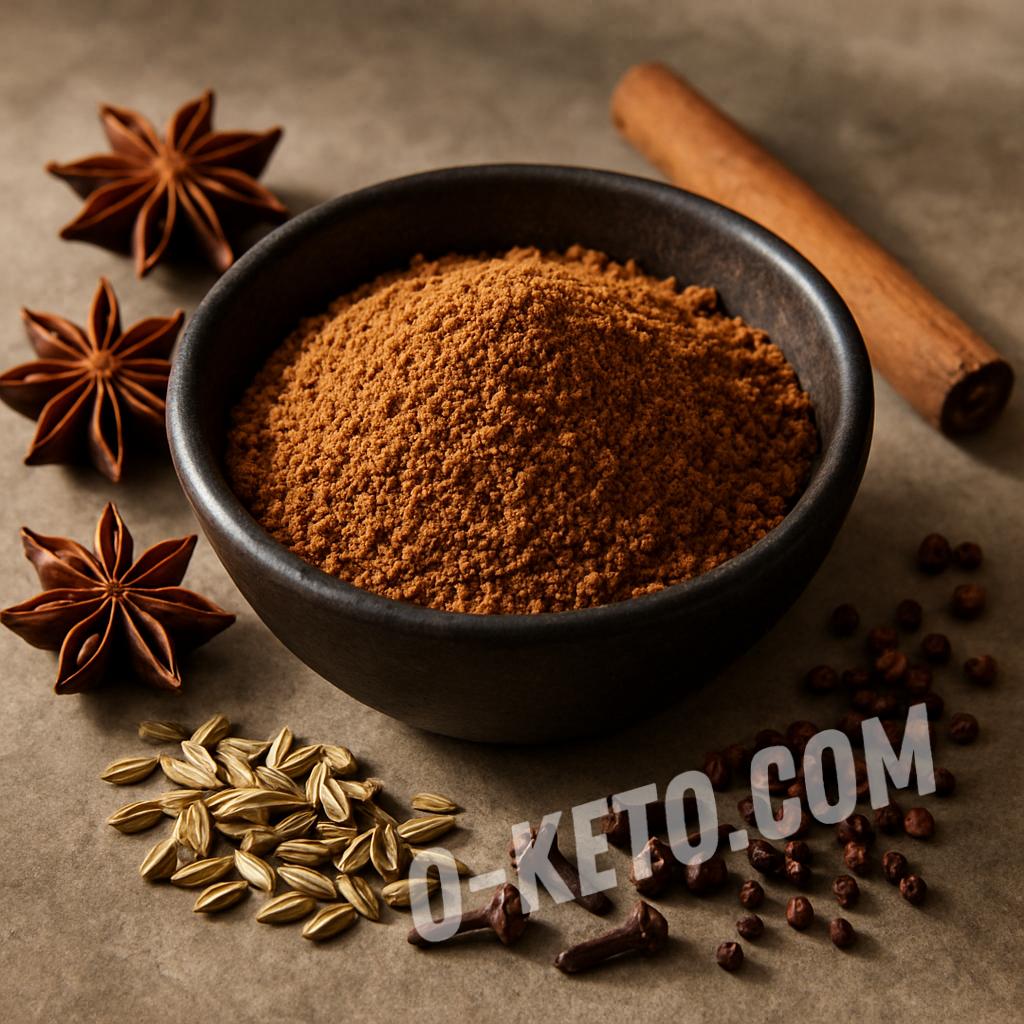

Five-spice blend is usually associated with Chinese cooking, where one seasoning is expected to bring several directions of flavor at once: warm sweetness, gentle heat, woody spice, a light citrus lift, and a faint numbing edge. A jar sold under this name may contain a fairly classic Chinese five-spice powder or a more local manufacturer variation, so the label matters almost as much as the aroma.
What the blend is
In its best-known form, five-spice blend combines star anise, cinnamon or cassia, fennel, cloves, and Sichuan pepper. Some versions replace Sichuan pepper with black pepper, allspice, or ginger, while others add salt, garlic, sugar, starch, or anti-caking agents. Because of that, two products with the same name can behave very differently in a recipe: one works as a clean aromatic spice, another leans sweet, and a third is closer to a ready-made all-purpose seasoning.
The character of the blend depends on balance. Star anise brings the recognizable sweet licorice note, cinnamon adds warmth and woodiness, cloves deepen and dry the profile, fennel softens the composition, and Sichuan pepper adds a citrusy tingling accent. Even a small pinch can noticeably change the whole dish, so it is usually treated as a supporting spice rather than a bulk seasoning.
Flavor and culinary use
Five-spice blend is used in small amounts because it comes forward easily. It works especially well in dry rubs, fatty marinades, minced meat mixtures, roasted poultry, pork, duck, ribs, braised dishes, mushroom-based recipes, and some broths. In keto cooking it also pairs well with coconut aminos, sesame oil, butter, duck fat, garlic, ginger, and soy-style low-carb sauces.
It is usually a good match for the following ingredients and cooking formats:
- duck, pork, ribs, and richer cuts of poultry;
- meatballs, sausage fillings, and ground-meat mixtures;
- braised cabbage, eggplant, mushrooms, and roasted vegetables;
- shrimp, squid, and other seafood in an Asian-style flavor profile;
- oil-based marinades and glossy finishing sauces.
If the blend feels too sharp, cooks usually soften it with fat. Butter, ghee, duck fat, sesame oil, or olive oil distribute the spices more evenly and reduce the risk of bitter dry patches on the surface of meat or vegetables.
Nutrition and keto context
Like many spice mixes, five-spice blend is nutrient-dense on paper per 100 g, but in practice it is used in small portions. For keto and low-carb cooking, the main point is not the tiny spoonful itself but the full recipe composition. A pure spice blend without sugar or starch is usually compatible with keto, while sweetened seasoning mixes can change the carb load much more than the name on the jar suggests.
When checking a label, pay special attention to sugar, dextrose, maltodextrin, flour, starch, flavor enhancers, and excess salt. A clean spice blend is one thing; a sweetened glaze-style seasoning is another.
How to choose and store
Choose a blend with a clear ingredient list, a dry free-flowing texture, and a strong but clean aroma without mustiness. The spice should smell lively, warm, and layered rather than flat or dusty. If possible, compare color and fragrance: a fresh blend tends to be aromatic, while an old one often turns dull and woody.
Store five-spice blend tightly closed, away from steam, direct light, and strong moisture. It keeps best in a cool cupboard rather than next to the stove. If the aroma fades or the blend develops a stale bitterness, it is better treated as past its peak, even if it is still technically usable.


