


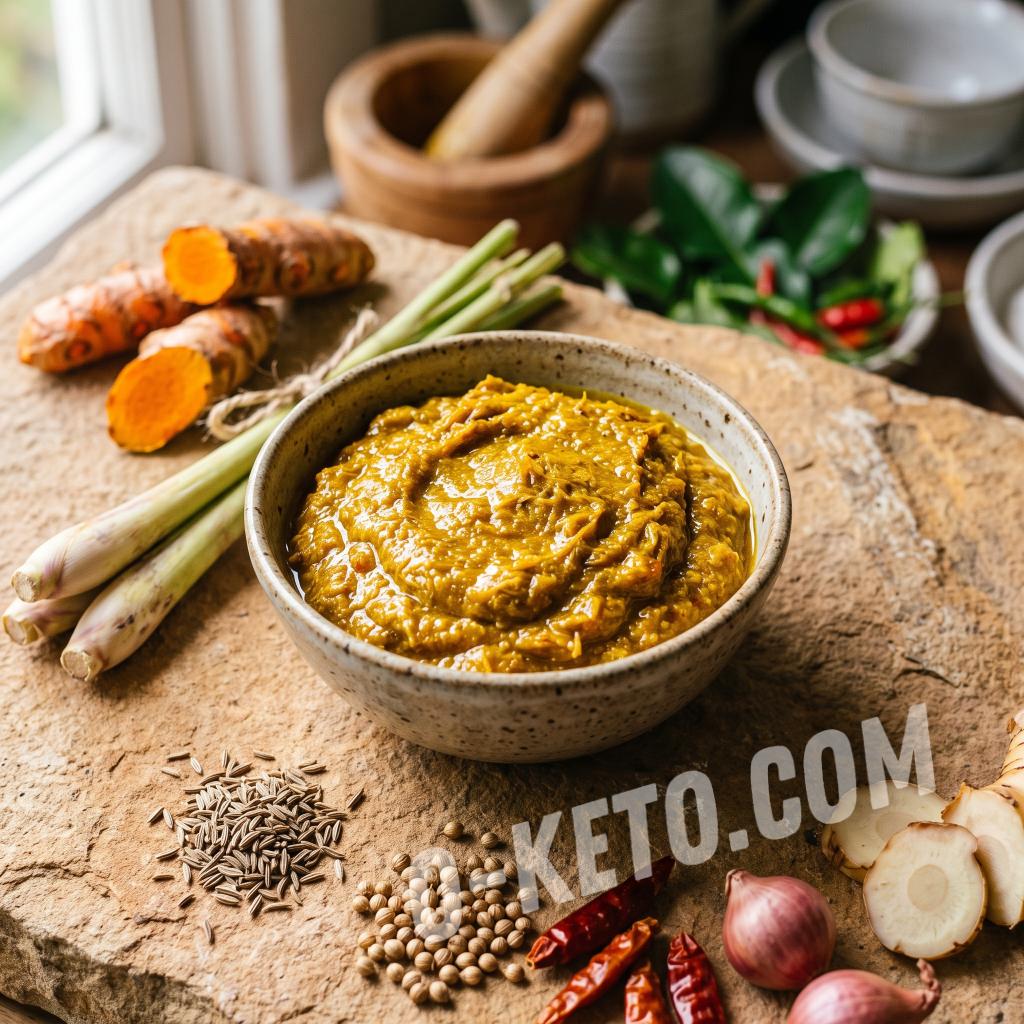

Yellow curry paste is an aromatic seasoning paste that commonly combines garlic, lemongrass, galangal, turmeric, cumin, and other warm spices. Compared with red curry paste, it is often perceived as rounder and gentler, with less sharp heat and more emphasis on warm spiced depth. That makes it practical when you want a clear curry profile without making the dish aggressively hot.
How it differs from red curry paste
The main difference is usually the flavor direction. Yellow curry tends to lean more on warm, earthy, and softly spiced notes where turmeric, cumin, and similar ingredients are easier to notice. Red curry paste usually pushes a brighter chili-driven heat and a sharper peppery impression.
That does not make one better than the other. It simply means yellow curry paste is often easier to use in dishes where a softer entry is preferred. It is commonly paired with chicken, vegetables, fish, and sauces that should stay aromatic without becoming too fiery.
How to use it
Yellow curry paste is often warmed briefly before liquid is added so the spices can open up more fully. After that, coconut milk, broth, meat, fish, or vegetables are added and the dish is finished to the desired texture. Because the paste is concentrated, it usually makes sense to begin with a modest amount.
It works well in curry sauces, soups, warm marinades, and dishes built around braised vegetables. Its milder profile also makes it easier to fit into everyday family cooking where not everyone wants intense heat but the dish should still keep a distinctly Asian spiced note.
What to consider when choosing one
It helps to check the ingredient list, sodium level, and heat intensity because yellow curry pastes can vary a lot from one brand to another. Some are quite mild and rounded, while others are still noticeably spicy. For predictable home cooking, a clear ingredient list and stable flavor profile are usually the most useful qualities.
After opening, the paste is typically kept in the refrigerator and handled with a clean spoon. If the aroma fades and the flavor becomes mostly salty and flat, the paste is no longer delivering the depth people expect from it.
Limitations
Even though yellow curry paste is often milder than red curry paste, it is still a concentrated blend of spices and salt. People with a sensitive stomach, irritated mucosa, active gastritis, or poor tolerance to spiced food usually use it more carefully. Sodium should also be considered because the paste can shift the seasoning balance of the whole dish very quickly.
For a softer result, it is often balanced with coconut milk, creamy elements, extra vegetables, or a more neutral protein source. That approach usually gives a smoother dish than simply diluting everything with water.


