


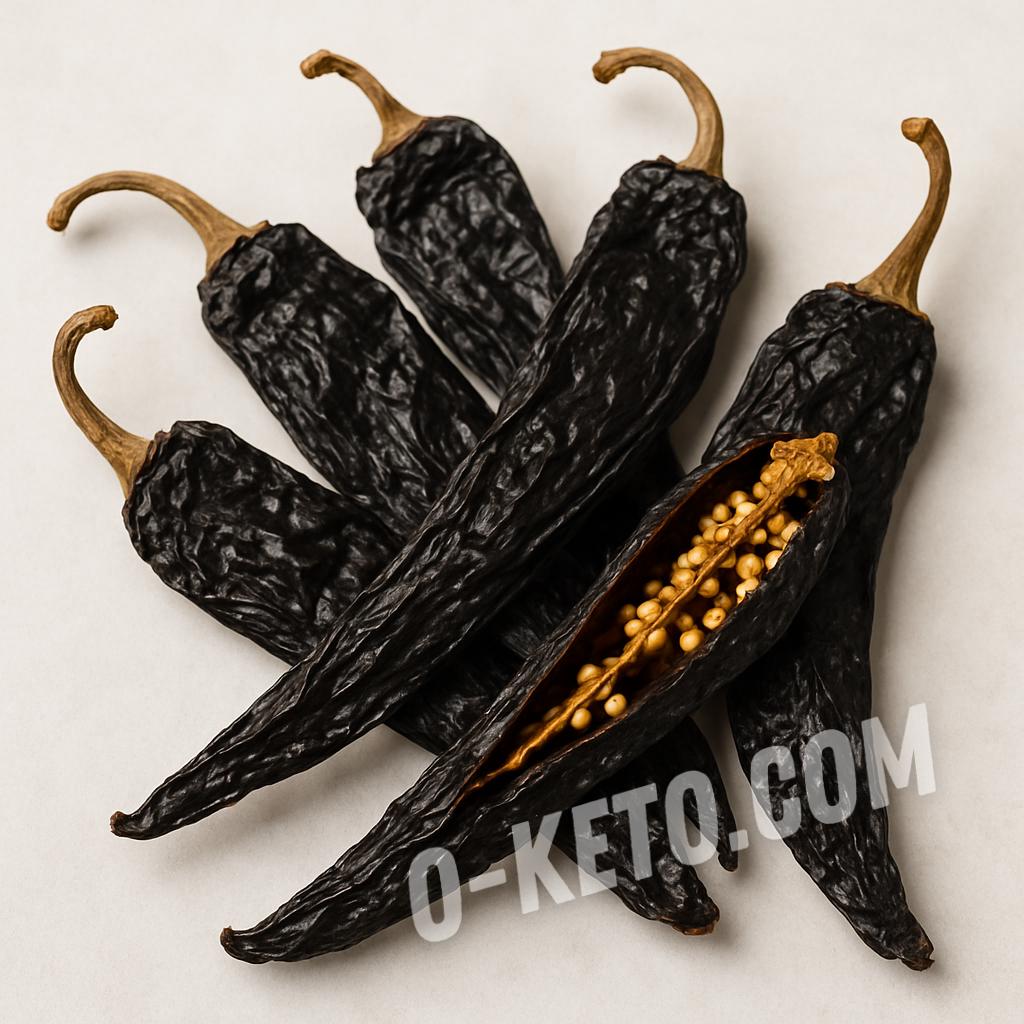

Pasilla is the dried form of the chilaca pepper, valued in Mexican cooking for its dark color, mild-to-moderate heat, and deep flavor with notes of dried fruit, cocoa, tobacco, and warm earthiness. In English it is usually labeled as pasilla pepper or dried pasilla chile, and recipes may also mention chile negro or chilaca. Retail labeling is not always precise, so it helps to judge the product by the pepper itself, not only by the name on the package.
A true dried pasilla is longer and narrower than ancho, with very dark brown to nearly black wrinkled skin. It is used in sauces, adobos, braises, meat dishes, fish, mushrooms, and layered spice blends where the goal is not aggressive heat but a dark, rounded, slightly sweet chile flavor. In keto cooking it works well because the usual culinary portion is small, so it adds complexity without depending on sugar, starch, or bottled sweet sauces.
Nutrition and keto context
Like other dried chiles, pasilla concentrates carbohydrates, fiber, and some micronutrients as water is removed. Per 100 grams it looks much more carbohydrate-dense than a fresh pepper, but that is not how people normally use it. A typical recipe uses one pod, part of a pod, or a teaspoon or two of ground chile, so the practical keto impact depends on the real portion rather than the 100-gram reference value.
Pasilla provides fiber, potassium, phosphorus, magnesium, iron, manganese, copper, several B vitamins, and vitamin A. From a low-carb perspective, whole dried pasilla usually fits far better than ready-made chile pastes or sauces that may include sugar, flour, starch, maltodextrin, or dextrose. The pepper itself is a flavoring ingredient; the hidden carbs usually come from processed mixtures, not from the plain dried pod.
How to choose and use it
Good pasilla should be dry yet still somewhat flexible, aromatic, and evenly dark, not brittle, dusty, faded, or musty. Whole pods are convenient because they can be quickly toasted in a dry pan, stemmed, partly seeded, then ground or soaked for sauce work. If the package says pasilla but the peppers are wide and broad-shouldered like ancho, the labeling may be imprecise.
In the kitchen pasilla pairs especially well with meat, duck, fish, seafood, tomatoes, garlic, mushrooms, cocoa, oregano, and slow-cooked vegetables. Soaking it softens the skin and helps build smooth sauces; grinding it creates a dry seasoning for rubs, marinades, and spice mixes. Its heat is often gentler than many hotter dried chiles, which is why cooks use it as much for depth and aroma as for pungency.
Storage and limitations
Store whole pods or ground pasilla tightly closed, protected from moisture, steam, and strong light. Damp storage quickly dulls the aroma and raises the risk of spoilage. If you buy a ground product, check the ingredient list carefully to make sure it is plain chile and not a sweetened or thickened commercial blend.
People with reflux, gastritis, or a low tolerance for spicy foods may need to test their response carefully and start small. Pasilla is not a fasting-compatible drink ingredient, so it should not be marked as suitable during fasting. In a keto or LCHF kitchen, its main value is straightforward: it gives a rich chile profile without forcing you into sugary sauces or ultra-processed seasoning mixes.


