


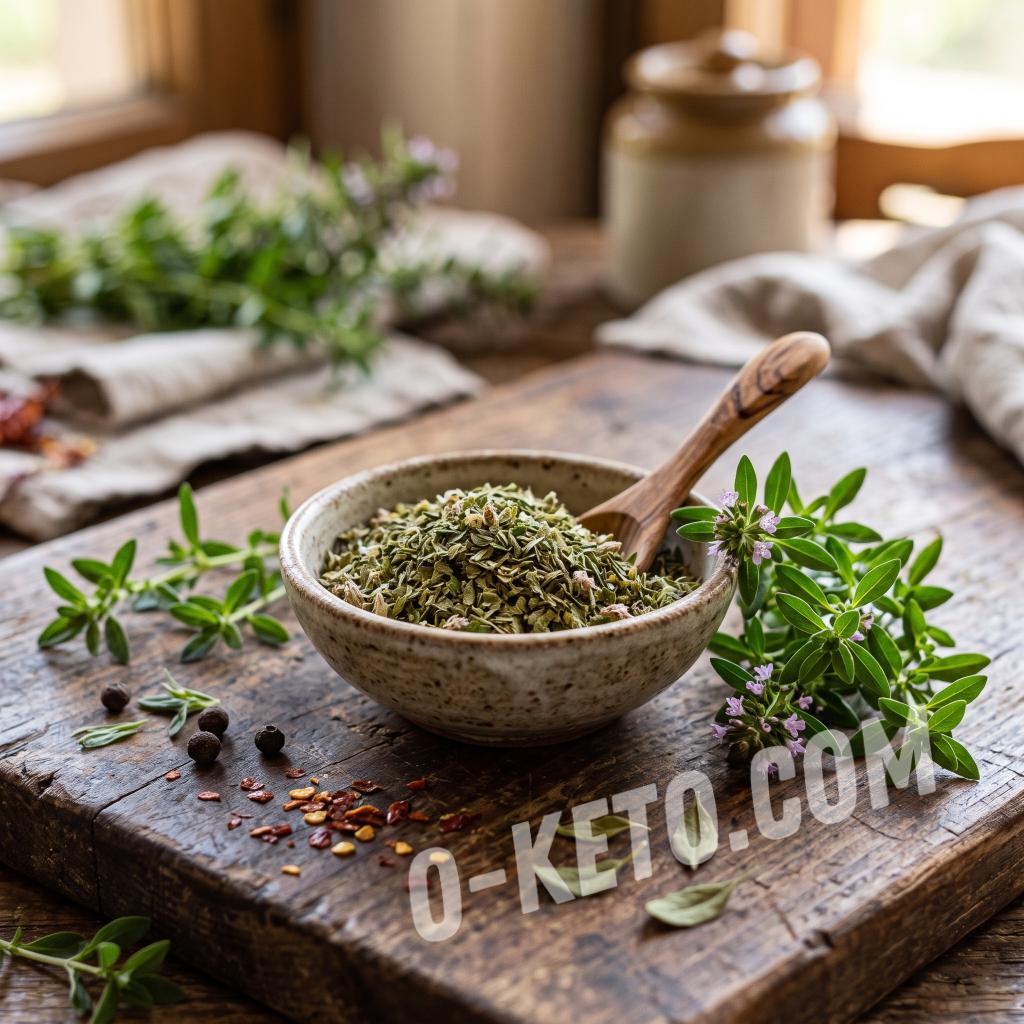

Chubritsa is a popular Balkan seasoning. In some contexts it means dried savory on its own, while in others it refers to a blend built around savory together with paprika, garlic, salt, or additional herbs. Its flavor is warm, dry, slightly peppery, and deeply useful in everyday cooking. For keto and low-carb eating, this category is convenient because real kitchen portions are small, so flavor arrives long before the seasoning becomes a meaningful carb source.
Why dried herbs should not be judged only by the 100 g table
Like many herbs and spices, chubritsa can look carbohydrate-heavy if someone stares only at a nutrition table per 100 grams. In normal cooking, that is usually a misleading lens. A pinch, half a teaspoon, or a teaspoon for a whole pan or salad is far more realistic than anything close to 100 grams. At those amounts, the seasoning functions as an aroma tool, not as something that meaningfully drives the carb load of the meal.
That is exactly why it is useful in low-carb cooking. It lets food become more interesting without leaning on sugar, flour-based sauces, or starchy side flavors. In practical keto kitchens, that kind of seasoning support can matter a lot.
Why the ingredient list still matters
The important detail is that not every product sold as chubritsa is the same. Sometimes it is just dried savory. Sometimes it is already a prepared blend with salt, paprika, garlic, fenugreek, or other additions. That is not automatically bad, but it does change how the product should be evaluated. A clean herb is one thing. A blend with salt, starch, sugar, or flavor enhancers is another.
So the useful first step is to understand what exactly is in the jar. If it is simply the herb, low-carb use is usually very predictable. If it is a mixture, the whole label deserves attention, especially for people trying to build a cleaner keto pantry.
Where it works especially well
Chubritsa pairs well with meat, eggs, cheese fillings, stewed vegetables, cabbage dishes, tomato bases, homemade minced meat, and savory bakes. It brings enough dry warmth to make a simple dish feel more complete even when the ingredient list is short. That is particularly useful in low-carb cooking, where the core foods are often straightforward: eggs, meat, fish, mushrooms, zucchini, cabbage, cheese, and herbs.
It does not always need to dominate. Often it works best as part of the background together with garlic, black pepper, paprika, acid, and oil. That gives depth without forcing sweetness or heavy sauces into the dish.
How not to overdo it
A common kitchen mistake with dried herbs is adding more and more because the aroma is not immediate. Chubritsa often opens more clearly once heat and fat carry it through the dish. If too much is used, the result can become dusty, overly herbal, or slightly bitter. That matters even more when the seasoning is a concentrated Balkan blend rather than a plain leaf.
Salt also matters. If the product already includes salt, it should not be treated as a neutral herb that can be shaken freely into everything. In low-carb menus, many foods are already savory enough, so hidden salt in spice blends changes the whole balance quickly.
Limitations
In most cases chubritsa fits keto and low-carb very well because the practical serving is tiny. The main limitations are not about carbs but about taste preference, salt sensitivity, and the quality of the specific blend. The real issue is usually not the herb itself, but whether the jar contains a clean seasoning or a more industrial mixture with unnecessary additions.
The practical conclusion is simple: chubritsa is a strong low-carb flavor tool when the composition is straightforward and when it is used like a spice rather than like a heavily salted convenience powder. In that role it can make keto meals more complex and satisfying with very little real carb cost.


