


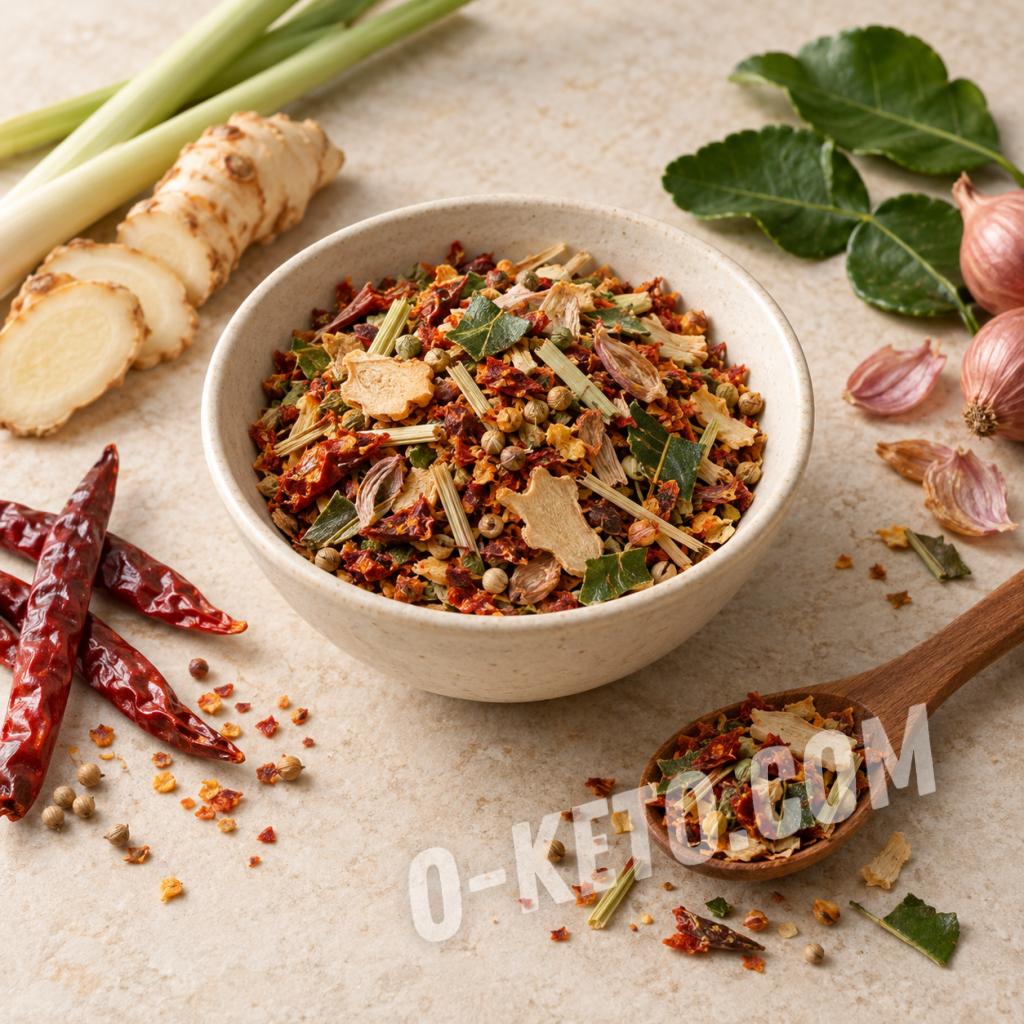

Dry Tom Yum soup seasoning is a blend of dried aromatic plants and spices intended to give a Thai soup its sour, hot and citrus-forward profile. There is no single required formula for the blend: one product may contain only herbs and spices, while another may include salt, sugar, acid, starch, flavour enhancers or shrimp powder. The name describes a flavour direction, so the package is the authority for the actual ingredients.
Flavours behind the Tom Yum profile
Lemongrass, galangal, makrut lime leaves and chilli are central to the familiar Tom Yum aroma. Lemongrass brings a fresh lemon-like herbal note, galangal adds a warm peppery quality, and lime leaves contribute a vivid citrus fragrance. Chilli provides heat. Fresh preparations may also use shallot, coriander root and other regional seasonings; a dry blend presents these plants as cut pieces, flakes, granules or powder. Their proportions and grind size affect both intensity and how quickly the aroma develops in broth.
Tom Yum is a Thai hot-and-sour soup, not the name of one fixed spice packet. A shrimp version may include mushrooms and seafood, while chicken, fish and vegetable versions are also common. Lime, fish sauce, salt, sweetener and stock are often added separately. If the seasoning already contains salt or acid, taste the soup before adding more.
Dry blend, paste and soup cube are different products
A dry herb blend is convenient to store and measure, but it may consist of coarse pieces or fine powder. It does not necessarily replace Tom Yum paste: a paste may contain oil, water, fermented sauces, sugar and fish or shrimp ingredients, and behaves differently from a blend made only from dried plants. A soup cube or seasoning sachet packed with instant noodles is another category. Manufacturers may add substantial salt, fat, sugar, starch, maltodextrin, flavourings and allergens. The label on the specific package matters more than a general idea of what Tom Yum should taste like.
How to use it in soup
Follow the package directions first because concentrated blends have different strengths. With a plain herb blend, start with a small amount, let it infuse in hot broth, and increase it only after tasting. Larger dried pieces may need several minutes of simmering, while a fine powder releases flavour quickly and can make the broth cloudy. Lemongrass and lime leaves often serve as aromatics; remove large tough pieces before eating if their texture is unpleasant.
Add the blend near the beginning when the herbs need time to steep, or later when using a fine powder that already contains salt and acid. Cook shrimp or chicken, mushrooms and vegetables separately until safely done. Add lime juice and fresh herbs close to serving so the sour note remains clear and the flavour is not dulled by prolonged boiling. Fish sauce, coconut milk and extra spices are recipe choices, not ingredients that every dry seasoning necessarily contains.
Nutrition and low-carbohydrate eating
A single calorie or nutrient table per 100 g cannot be assigned reliably to an unspecified blend: its herb ratios are unknown, as are the amounts of salt, sugar, oil, starch or powdered sauces. Official Tom Yum seasoning labels vary considerably. Products range from dried spice mixes to concentrated soup seasonings with sugar, fat, flavour enhancers, maltodextrin, shrimp or fish. Values from one manufacturer therefore cannot stand in for every dry blend. No universal nutrient table is shown here; use the nutrition panel on the package you have.
Plain herbs and spices are usually used in small quantities, but that does not guarantee that a packaged seasoning is low in carbohydrates. Sugar or a starchy carrier may make up much of the product. For a low-carbohydrate diet, check total carbohydrates, sugars, syrups, starch and maltodextrin, and note how much seasoning the recipe uses. Sodium matters when salt is being limited. Chilli heat and acidity may irritate a sensitive stomach; tolerance depends on the person and the amount eaten.
Choosing and storing the blend
Look for a complete ingredient list in descending order and clear preparation directions. Check salt, sugar, glucose syrup, starch, vegetable oil, flavour enhancers and allergen statements separately. Powdered blends and soup sachets may contain shrimp, fish, soy, wheat or milk ingredients, which matters for allergies and when choosing a vegan option. The words Tom Yum do not guarantee an herb-only formula or the absence of animal ingredients. For a simpler blend, choose one that lists the named herbs and spices first and clearly identifies any added ingredients.
Keep an unopened blend in its sealed original package, in a cool dry place away from the stove and direct sunlight; heat gradually weakens volatile citrus aromas. After opening, close the bag or jar tightly, use a dry spoon and keep steam or water droplets out. Shelf life depends on formulation and packaging, so use the date printed on the label. Discard the blend if it becomes damp, develops mould, shows insect contamination, or smells musty or rancid.
Sources
Thailand Department of Agricultural Extension. Tom Yum Kung (Spicy Prawns Soup).
Ministry of Foreign Affairs of Thailand. Discovering Thai Cuisine in Qatar: Tom Yum Kung.
MICHELIN Guide Thailand. Thai Soups Explained: Tom Kha, Tom Yum, Tom Kloang and Tom Som.
Ajinomoto Thailand. RosDee Cube Tom Yum. YumYum Foods. TomYum Shrimp Flavour.


