


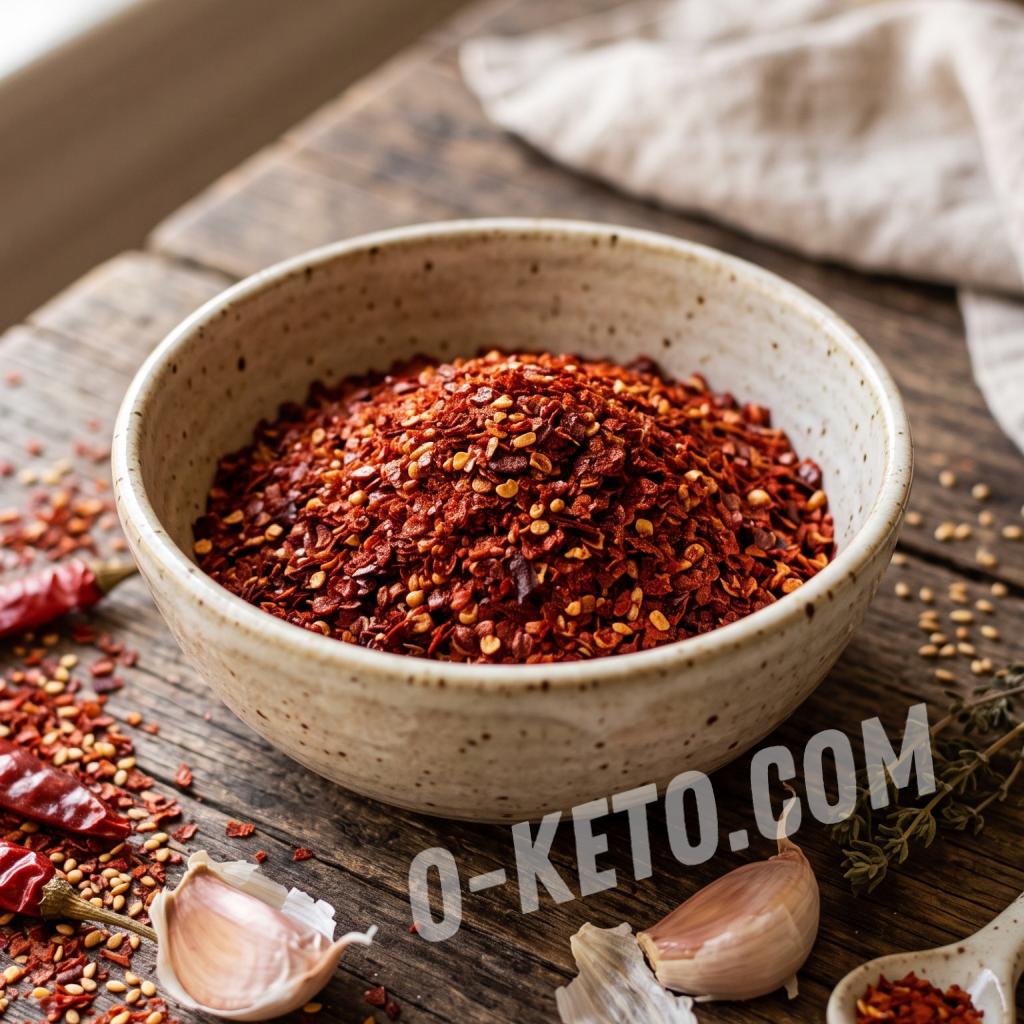

Gochugaru is the Korean red pepper flake used in kimchi, chili sauces, marinades, and many savory seasoning mixes. In Russian-speaking cooking communities the name is sometimes written as Kochukaru, but the product itself is the same Korean chili ingredient. The texture matters: this is usually a flake or coarse grind rather than a fine powder, so gochugaru contributes color, aroma, and texture together with heat. A good version tastes bright and peppery, with mild sweetness, a touch of smokiness, and a cleaner finish than many generic hot chili powders.
Flavor Profile
One of the reasons gochugaru is so useful is balance. It can be spicy, but it is rarely just sharp and punishing. Many versions have a rounder profile than cayenne, with fruity chili notes and a warmer, less aggressive finish. That is why it is not ideal to replace it one-for-one with any random hot pepper powder. The heat level, texture, and color extraction are different, and the final dish may lose the typical Korean character that gochugaru brings to kimchi, seasoned vegetables, and meat marinades.
How It Is Used
Gochugaru is commonly added to kimchi mixtures, chili pastes, dipping sauces, glaze-style marinades, soup bases, and dry rubs. It works especially well with pork, chicken, fish, shellfish, roasted vegetables, and snack-style dishes that benefit from aromatic heat rather than blunt fire. The flakes can be mixed with garlic, soy sauce, vinegar, sesame oil, neutral oil, or fermented salty ingredients. They can also be lightly bloomed in warm fat to deepen aroma before being added to a sauce or braise.
How To Choose
A good product is usually vivid red to deep crimson, aromatic, and relatively uniform in grind. It should not smell stale, dusty, or flat. Labels may mention mild, medium, or hot intensity, and that difference matters in real cooking. Medium flakes are often the most flexible choice for kimchi and general marinades, while a finer grind can be useful for smoother sauces. It is also worth checking that the ingredient list is clean and does not include unnecessary sugar, salt, flavor enhancers, or anti-caking mixtures that dilute the character of the pepper itself.
Practical Kitchen Use
Because perceived heat changes with fat, acid, and resting time, gochugaru is best added gradually. In oily marinades it may taste softer and more rounded than in a dry sprinkle. It pairs naturally with garlic, ginger, sesame, soy-based sauces, fish, seafood, fatty pork, and cabbage-heavy vegetable dishes. Outside Korean cuisine it can still be very useful for spicy wings, grilled fish, seafood butter, egg dishes, and savory vegetable sides when a bright chili profile is wanted without the harsher edge of pure cayenne.
What To Keep In Mind
Like other spices, gochugaru is used in small amounts, so its everyday culinary role is about flavor rather than calories. It is still dried chili, though, and very large amounts may be uncomfortable for people with sensitive digestion. Storage matters: keep it tightly closed, away from strong light, moisture, and heat, because stale pepper loses both aroma and color quickly. If a substitute is needed, mild chili flakes or a gentle smoked paprika blend may come closest, but the result will still be different from true gochugaru, which has a softer, fuller, and more distinctly Korean flavor profile.


