


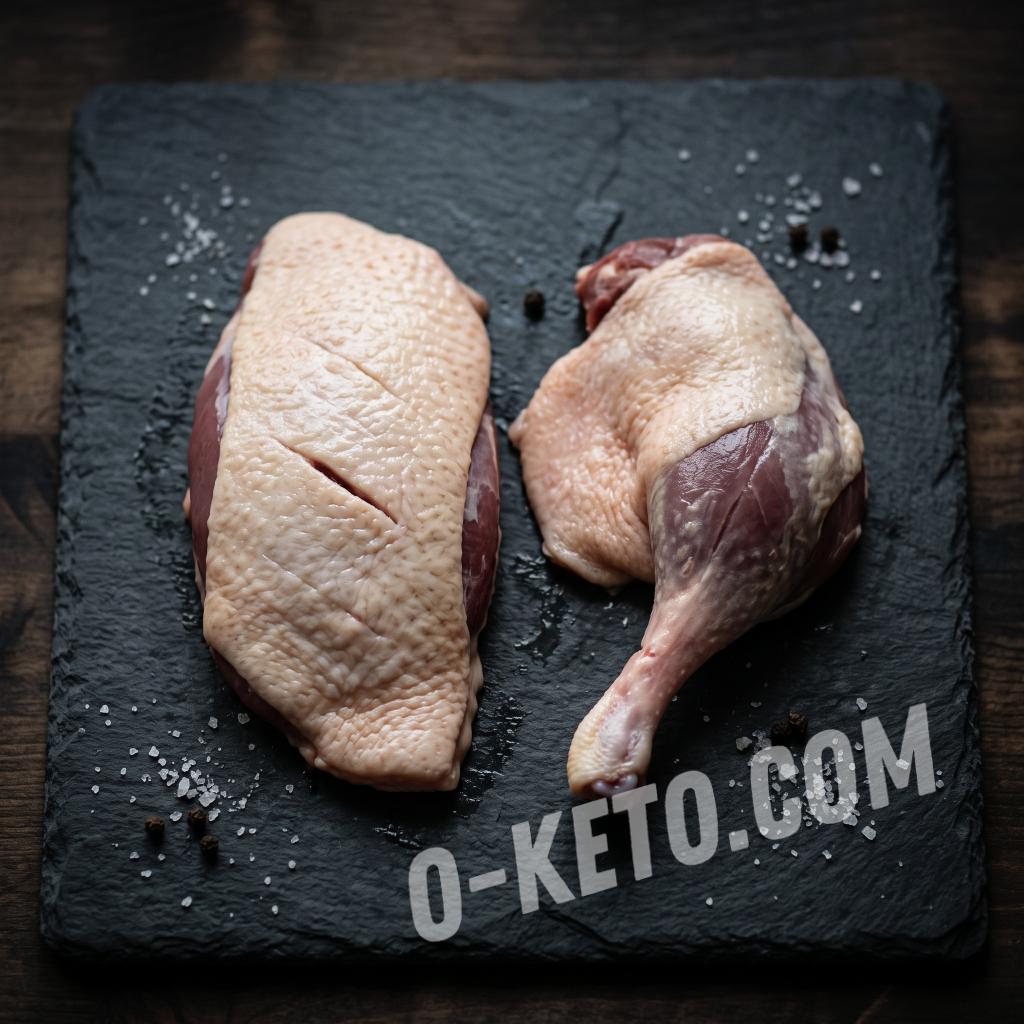

Duck is a fatty and flavorful meat of domestic poultry, which is noticeably different from the more neutral chicken or turkey. The profile varies significantly across different parts of the carcass: skinless breast is usually drier and leaner, while legs and meat with skin are fattier and more aromatic, and the final nutritional value greatly depends on whether the skin is left on, how much fat is rendered during cooking, and which specific piece is used in the dish.
What is this product
In cooking, duck is valued for its dense dark meat, pronounced flavor, and ability to pair well with both spices and sour or slightly sweet presentations. It is not a diet-neutral product in the everyday sense: duck meat is usually more calorie-dense than chicken, especially when cooked with the skin. However, due to its higher fat content, duck fits well into LCHF and keto cuisine, provided the dish is not overloaded with sugary glazes, flour-based sauces, and fruit syrups.
Under the name “duck,” the market may sell whole carcasses, breasts, drumsticks, fillets, offal, and semi-finished products. Therefore, for accurate calculation of macronutrients, it is always important to understand which part is being referred to and how it will be prepared.
Nutritional value and keto context
Duck meat provides complete animal protein, fats, iron, zinc, phosphorus, B vitamins, and a range of other micronutrients. The variation in calories and fats between parts is quite noticeable. If the skin is retained, the calorie content is usually higher, and the dish itself is more satiating. If using a leaner skinless breast, the protein content will be higher, and the fat content lower.
For keto, duck is particularly interesting as a product that allows for the intake of not only protein but also natural animal fat. Problems usually arise not from the bird itself, but from classic additions: honey glazes, sweet berry sauces, breading, and restaurant-style gravies with starch. In its pure form, duck is significantly more keto-compatible than many prepared dishes made from it.
Flavor and culinary application
Duck handles roasting, slow braising, frying the skin to crispness, and confit preparation well. Its flavor appreciates salt, pepper, garlic, thyme, rosemary, marjoram, sage, juniper, citrus acidity, and moderate spice blends. In the fattier parts, balance is especially important: acidity and greens make the flavor cleaner and lighter.
In the kitchen, duck is most often used in the following scenarios:
- roasting a whole carcass or legs with salt, herbs, and garlic;
- searing the breast and then bringing it to the desired doneness;
- braising legs and drumsticks in their own fat or broth;
- salads and warm dishes with cooked duck meat without sweet sauces.
How to choose
When choosing duck, it is important to understand what you are buying: a young carcass for roasting, fillet, drumsticks, or already marinated semi-finished products. For home cooking, it is especially useful to look for several signs:
- the color and smell should be clean, without sourness or sticky surfaces;
- the skin should be intact, without pronounced dry spots or signs of refreezing;
- the packaging should not contain excess sweet marinade if a keto option is needed;
- for frozen products, it is important to avoid large ice crystals and excess glaze;
- for accurate macronutrient calculation, it is better to take the part that is directly indicated on the packaging, rather than an abstract “duck.”
Storage and limitations
Fresh duck should be kept in the refrigerator and cooked within a reasonable time, while frozen duck should be thawed slowly, preferably on a refrigerator shelf. Refreezing deteriorates both the taste and texture of the meat. When working with poultry, standard kitchen safety rules are important: a separate cutting board, clean hands, and sufficient cooking temperature depending on the dish format.
For people who count calories or adhere to a leaner diet, duck may be noticeably heavier than chicken. For keto, this is not a downside in itself, but it is worth remembering portion sizes and that fatty duck with skin, confit, and fried skin provide a completely different energy load than a piece of lean skinless fillet.


