


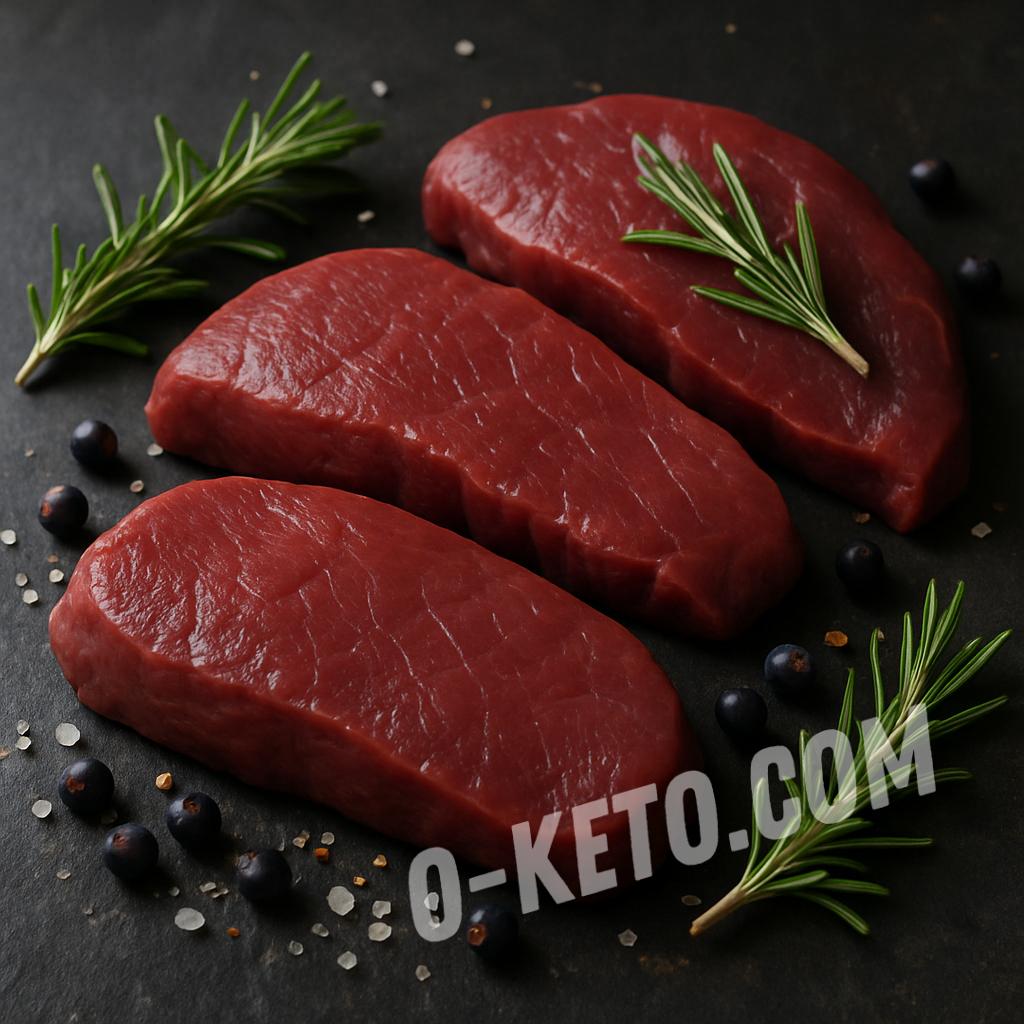

Venison is deer meat with a firm texture, pronounced meat flavor, and usually less fat than beef or pork. It is used for steaks, braises, mince, patties, sausages, stews, and dishes with berry or cream sauces.
Quality depends on the animal age, cut, and handling. Young venison is more tender, while mature wild meat can be denser and more aromatic; it often benefits from marinating, slow cooking, or careful heat control.
Nutrition
Venison fits keto and LCHF well: plain meat has no carbohydrate, provides complete protein, and supplies iron and B12. Because it is often lean, the dish may need butter, cream sauce, bacon, or a fatty side.
Its glycemic load is zero. The keto profile changes because of breading, sweet marinade, flour-thickened sauce, or side dishes, not because of the meat itself.
How to Cook
Tender cuts should be cooked briefly and not dried out; tougher cuts are better braised slowly. Venison pairs with juniper, rosemary, thyme, garlic, butter, mushrooms, and unsweetened berry sauces.
Venison mince is often mixed with fattier meat or fat so patties and sausages do not turn dry. For macro calculation, weigh the venison and count added fat separately.
Choosing and Storage
Fresh venison should smell clean and meaty, not sour or rotten. It can be darker than beef, but the surface should not be sticky, grey, or packed with cloudy liquid.
Store it like other fresh meat: chilled for a short time, frozen airtight, and without repeated thawing. Wild game or meat of uncertain origin should be cooked thoroughly.


