Tongue, heart, tripe, and liver usually scare home cooks not because offal is inherently difficult, but because one bad attempt can feel very discouraging. One time the tongue comes out rubbery, another time the liver tastes bitter, tripe smells too strong, and heart turns dense and dry. After that, many people stop buying these products at all, even though they are rich in protein, iron, B vitamins, and other useful nutrients and can fit very naturally into an ordinary low-carb kitchen.
Most mistakes happen before the final recipe even begins. Offal does not require restaurant tricks. It needs a few practical habits: what to trim away, what to rinse, when to use salt or acid, how long to simmer, when to peel the skin, and why rushing the heat usually makes the result worse. Once these base steps are clear, offal becomes much easier to use in salads, soups, sausages, terrines, pates, and simple hot dishes without that feeling that every batch is a gamble.
Why offal smells stronger and turns tough
Offal has a more expressive structure than ordinary muscle meat. Heart works constantly and has firm fibers. Tripe is part of the digestive system, so without careful cleaning it can keep extra odor. Tongue is covered with a dense outer skin that has to be removed at the right moment. Liver has a strong blood supply and reacts quickly both to poor trimming and to overcooking.
Strong smell usually comes from leftover blood, bile, coarse membranes, delayed cleaning, or careless storage before cooking. Toughness comes from another pair of mistakes: either the product was not brought all the way to tenderness during gentle simmering, or it was overcooked with aggressive heat. That is why each type of offal benefits from its own realistic heat logic. Heart and tripe usually improve with long soft cooking, while liver often becomes better with short cooking followed by a brief rest.
How to prepare heart so it does not feel dry and heavy
The first job with heart is trimming away what will not improve the final texture: large vessels, clotted blood, and excess hard fat. After that it helps to rinse it very well under running water and, if the piece is large, cut it open so the interior can be cleaned properly. With beef heart, a short soak in cold water for 1-2 hours can help remove residual blood and make the flavor cleaner, although this is a useful option rather than a sacred rule.
For a basic cooked heart, gentle simmering works much better than trying to force softness with hard boiling. When the liquid barely moves, the fibers soften more evenly and the meat stays more pleasant. The readiness cue is simple: a knife or long skewer should go into the center easily. If the heart will later be used in salad, soup, or a terrine mixture, it is smart to keep some of the broth. That broth can support soups, meat mixtures, or gelatin-based cold dishes later.
How to boil tongue properly and when to peel it
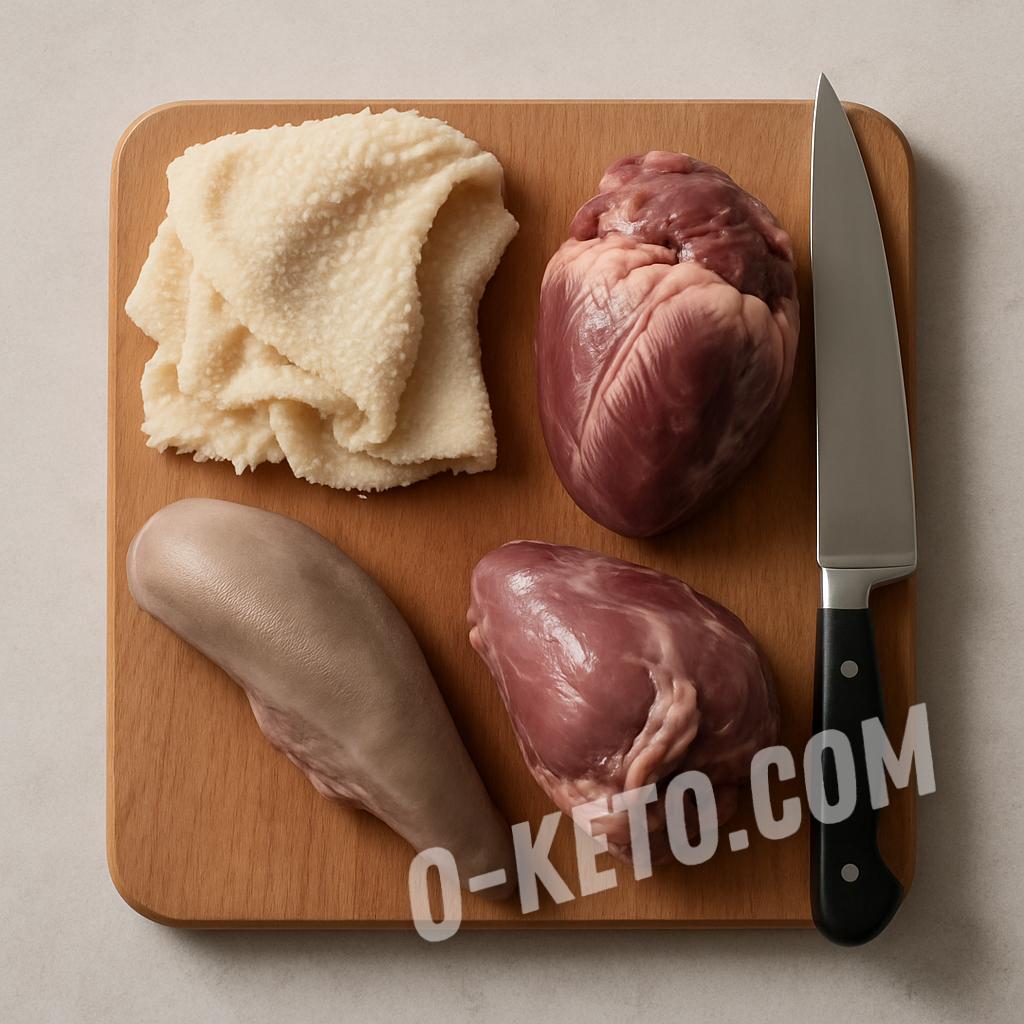
With tongue, the most common mistake is not the simmering itself but the peeling moment. If the cooked tongue is allowed to cool down completely in its skin, the dense outer layer becomes harder to remove cleanly. It is much easier to transfer the tongue into cold water for a few minutes right after cooking and peel it while the product is still warm. That short temperature contrast helps separate the skin without tearing away too much meat.
Tongue also benefits from low gentle simmering with vegetables and spices rather than hard boiling. This gives a cleaner flavor and a softer bite. The real readiness test is not a fixed internet number but the product itself: a knife or long skewer should enter the middle without resistance. If the center still feels tight, it simply needs more time. Tongue that is cooked patiently usually slices better for salads, cold platters, sausages, and terrines.
How to handle tripe and reduce extra odor
Tripe scares people mainly because of smell, but that problem is usually solved by process rather than by complicated additives. First it should be washed thoroughly, then rubbed with salt and splashed with lemon juice or vinegar for a short time if the smell is still noticeable. This helps clean the surface and makes later handling easier. Any remaining coarse membrane should be removed before the main simmering stage.
A short preliminary boil for 10-15 minutes followed by draining and rinsing both the tripe and the pot is one of the most useful steps. It may look unnecessary, but it often makes the biggest difference in the final flavor. After that, the tripe is simmered in fresh water over very low heat until tender. The key is not to rush. Depending on the size of the pieces and the age of the animal, tripe may need quite a long time. The better cue is softness: ready tripe should cut easily with a knife instead of bouncing back like rubber.
How to trim liver and avoid bitterness
The most important liver step is not the marinade but the trimming. Membranes, large ducts, and especially every trace of bile have to go. Even a small contaminated piece can ruin an entire batch of pate, rillette, or fried liver with bitterness. If a section looks greenish or sharply discolored, it is safer to cut it away than to hope the taste will disappear later.
After trimming, liver often benefits from a short marinade or at least careful seasoning before cooking. Dried garlic, pepper, mild herbs, and a balanced salty sauce component work well. But no marinade can rescue liver that has been dried out. In a skillet, a strong fast start is usually the right direction: sear the outside quickly, then finish briefly under a lid or let the heat carry through during a short rest. Properly cooked liver should not be raw in the center, but it also should not crumble like dry chalk.
What is worth doing in advance if offal will be used in several dishes
The easiest home strategy is to treat tongue, heart, and tripe as base preparations rather than one-time projects. A pot of cooked tongue or heart can become salad, soup, sliced snack meat, sausage filling, or terrine later. A batch of well-cleaned and boiled tripe can go into warm salads, braised dishes, or cold snacks. This lowers the chance of mistakes because the most sensitive part of the work has already been done once, calmly and without time pressure.
Another useful habit is separating the softening step from the final flavor step. Heart can first be cooked until tender, then reheated quickly with beans, herbs, or sauce. Tongue can be boiled in advance and used later in salad or headcheese. Liver and gizzards can be kept marinated for a short time in the refrigerator and cooked fast later. This kind of staging is one of the most practical ways to make offal feel normal in a busy kitchen rather than like a special-event project.
Common mistakes that ruin the result
The most common mistake is believing spices will fix everything. If bile is left on the liver or tripe is not cleaned properly, no bay leaf, garlic, or herb blend will solve the problem. The second mistake is heat that is too aggressive: violent boiling hurts the texture of tongue, heart, and tripe, while prolonged frying almost always ruins liver. The third mistake is skipping the small intermediate steps that seem unimportant but matter a lot in practice: cooling tongue briefly before peeling, giving tripe a preliminary boil, hydrating gelatin ahead of time, or keeping some broth for meat mixtures.
There is also a very ordinary home-cooking mistake: judging readiness only by a time number. Piece size, initial temperature, and animal age can all shift the real cooking time. It is more reliable to judge by the physical sign of readiness: a knife enters easily, the product slices softly, the liver is no longer raw but still juicy, and the tripe is tender rather than elastic. That approach produces a much steadier kitchen result than blind loyalty to one clock value.
Conclusion
Tongue, heart, tripe, and liver become difficult mainly when they are cooked without preparation and without understanding their basic logic. If you trim away the right membranes, blood, and bile, choose the right heat pattern, and do not skip the useful intermediate steps, offal becomes much cleaner in flavor, much softer in texture, and far easier to fit into normal home cooking. For a keto or low-carb kitchen, this is one of the most practical ways to broaden the menu with nutrient-dense ingredients without drifting into complicated restaurant technique.