The word “antinutrients” is often used as a shortcut for why someone should avoid beans, nuts, greens, soy or whole grains. But it is not one class of poisons and not a ready-made list of forbidden foods. It describes different natural compounds that, under particular conditions, may reduce absorption of some nutrients, affect digestion or become dangerous when a food is prepared incorrectly.
For everyday eating, the useful question is not whether a plant contains an antinutrient, but whether it creates a problem in your portion and how preparation or pairing can reduce that problem.
What antinutrients means
Antinutrients are natural plant compounds that may bind minerals, alter digestive-enzyme activity or affect nutrient absorption. The group includes lectins, oxalates, phytates, tannins, enzyme inhibitors, saponins and goitrogenic compounds. Their effect depends on dose, chemical form, processing, the rest of the diet and a person’s health.
The term does not mean that a compound is always harmful. Phytates and polyphenols, for example, may reduce availability of some minerals while also having biological activity. The practical question is whether the compound matters in your situation.
Which compounds occur in foods
| Compound | Common sources | What matters |
|---|---|---|
| Lectins | Dry legumes, especially kidney beans, and some seeds and grains | The main everyday risk is raw or undercooked legumes; proper boiling sharply reduces dangerous lectin activity |
| Oxalates | Spinach, chard, sorrel, rhubarb, beetroot, nuts and some legumes | Most relevant with calcium-oxalate stones; levels vary greatly by food and cooking method |
| Phytates | Seeds, nuts, legumes, whole grains and pseudograins | May bind iron, zinc and calcium, but a varied diet is not defined by eliminating every phytate |
| Tannins and polyphenols | Tea, cocoa, berries, grapes, legumes, nuts and whole grains | May reduce non-heme iron absorption; the effect depends on amount and meal timing |
| Goitrogenic compounds | Cruciferous vegetables, soy and cassava | Most relevant with iodine deficiency; reasonable portions usually do not require avoidance when iodine intake is adequate |
Lectins: where caution is real
Lectins occur in many plants, but that does not make raw greens or nuts dangerous. The best-known practical problem is phytohaemagglutinin in raw or undercooked legumes, especially red kidney beans. It can cause nausea, vomiting and diarrhea within hours.
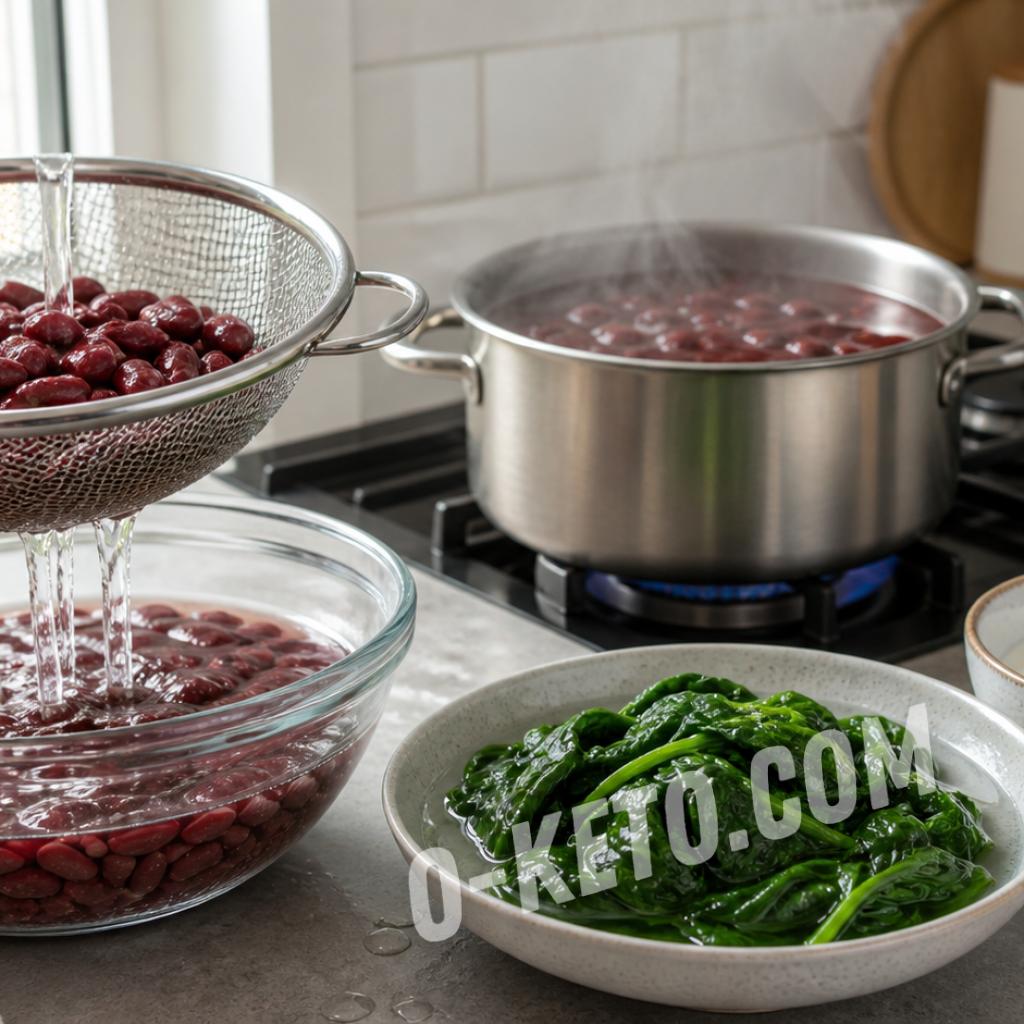
Soaking helps prepare dry legumes but does not replace cooking. Drain and rinse the soaking water, then boil the legumes in fresh water until completely soft. Kidney beans should not be cooked only at low temperature or eaten firm. Commercial canned beans have usually received the required heat treatment.
Laboratory work with isolated lectins and animal experiments cannot automatically be equated with a serving of well-cooked beans. The dependable everyday rule is narrower: do not eat raw or undercooked legumes, and do not turn mechanisms into a blanket ban on plant foods.
Oxalates and kidney-stone risk
Oxalates can bind calcium and contribute to calcium-oxalate stones. Risk depends not only on one food’s oxalate content, but also on stone type, fluid intake, sodium, overall diet, intestinal absorption and adequate dietary calcium.
If you have had stones, do not build a universal internet blacklist. Spinach, chard, sorrel, rhubarb, nuts, peanuts and bran are often discussed, but restrictions should follow stone analysis and professional advice. Boiling some vegetables and discarding the water can reduce soluble oxalates, but it does not make unlimited portions safe.
Calcium balance matters: with calcium-oxalate stones, enough dietary calcium during a meal can bind some oxalate in the gut and reduce its entry into urine. Removing calcium automatically can therefore be the wrong strategy.
Phytates, tannins and mineral absorption
Phytic acid and phytates accumulate in seeds, nuts, legumes and grains. They can bind iron, zinc and calcium, but the size of the effect depends on the whole diet and whether a person has a deficiency. A varied diet does not automatically require removing all phytates.
Soaking, sprouting, fermentation and boiling can reduce some phytates and other compounds. The result depends on the food and the method: soaking nuts does not guarantee a major improvement in mineral absorption, while legumes and grains may respond differently. Use these methods for preparation and tolerance, not a promise of complete “detoxification.”
Tannins and other polyphenols from tea, cocoa and some plants may reduce non-heme iron absorption, especially when strong tea is taken with a meal. With confirmed iron deficiency, separating such drinks from the meal or prescribed iron may be reasonable, but eliminating every polyphenol-containing food is not.
Goitrogens and phytoestrogens: why they do not frighten everyone
Goitrogenic compounds may interfere with iodine use and matter most when iodine intake is low. Soy, cruciferous vegetables and cassava are commonly mentioned. For most people with adequate iodine intake, reasonable portions of cabbage, broccoli or cauliflower are not a reason to exclude them.
With thyroid disease, consider the diagnosis, iodine status, medication and usual food amount—not one label such as “goitrogen.” Cooking may reduce the activity of some compounds, but it does not replace diagnosis or justify taking large iodine doses without advice.
Soy and flax phytoestrogens are not simply human estrogen. Their effects depend on form, amount, intestinal metabolism and dietary context. Claims that soy “destroys hormones” or that phytoestrogens “treat hormonal disorders” are both oversimplifications.
How to reduce antinutrients in the kitchen
Match the method to the food:
- Legumes: soak dry beans, drain and rinse, then boil in fresh water until fully soft. Kidney beans need a proper boil.
- High-oxalate greens: brief boiling with the water discarded may help with spinach and chard, but does not remove every oxalate.
- Grains and seeds: soaking, sprouting and fermentation can change composition, but the effect is not identical for every food.
- Tea and coffee: if iron deficiency is a concern, do not take them with an iron-rich meal or prescribed supplement unless advised otherwise.
- Cruciferous vegetables: do not remove them automatically; adequate iodine and variety matter more than eliminating every goitrogen.
Dry roasting or baking is not a universal substitute for boiling legumes, and “activating” nuts does not guarantee special bioavailability.
Antinutrients on keto and LCHF
On strict keto, the main filter is usually carbohydrate content, not antinutrients. Dry legumes and most grains may not fit the daily limit, while small portions of greens, nuts, seeds, tofu or selected vegetables may fit more easily. Consider oxalates separately if you have had relevant kidney stones.
Do not turn low-carb eating into a list of fears. Kidney beans still need proper cooking for safety, not because keto bans lectins. The site’s practical guidance on legumes and soaking can be used alongside this general explanation.
Who may need an individualized plan
Individual guidance is more important with recurrent calcium-oxalate stones, confirmed iron or zinc deficiency, thyroid disease, chronic kidney disease, marked reactions to legumes or a prescribed therapeutic diet. In these situations, diagnosis and tests matter more than a universal “allowed—avoid” table.
If severe nausea, vomiting or diarrhea follows legumes, stop eating the product and seek medical help as appropriate. With an allergic reaction, do not test tolerance with a large portion at home.
Conclusion
Antinutrients are not a reason to label all plants harmful. The practical rules are simple: cook legumes properly, account for high-oxalate foods when relevant stones are present, avoid unnecessarily combining tea or cocoa with iron-deficiency treatment, and assess goitrogenic foods in the context of iodine status.
For most people, varied food, safe cooking and sensible portions matter more than trying to remove every natural plant compound.
Sources
- A Comprehensive Review of Antinutrients in Plant-Based Foods and Their Key Ingredients — British Nutrition Foundation, 2025.
- Is There Such a Thing as “Anti-Nutrients”? A Narrative Review of Perceived Problematic Plant Compounds — Nutrients, 2020.
- Natural Toxins in Food — FDA food-safety guidance.
- Bad Bug Book: Phytohaemagglutinin — FDA reference.
- Eating, Diet, & Nutrition for Kidney Stones — National Institute of Diabetes and Digestive and Kidney Diseases.
- Iodine: Health Professional Fact Sheet — National Institutes of Health, Office of Dietary Supplements.
- Phytates as a natural source for health promotion: a critical evaluation of clinical trials — 2023 review.