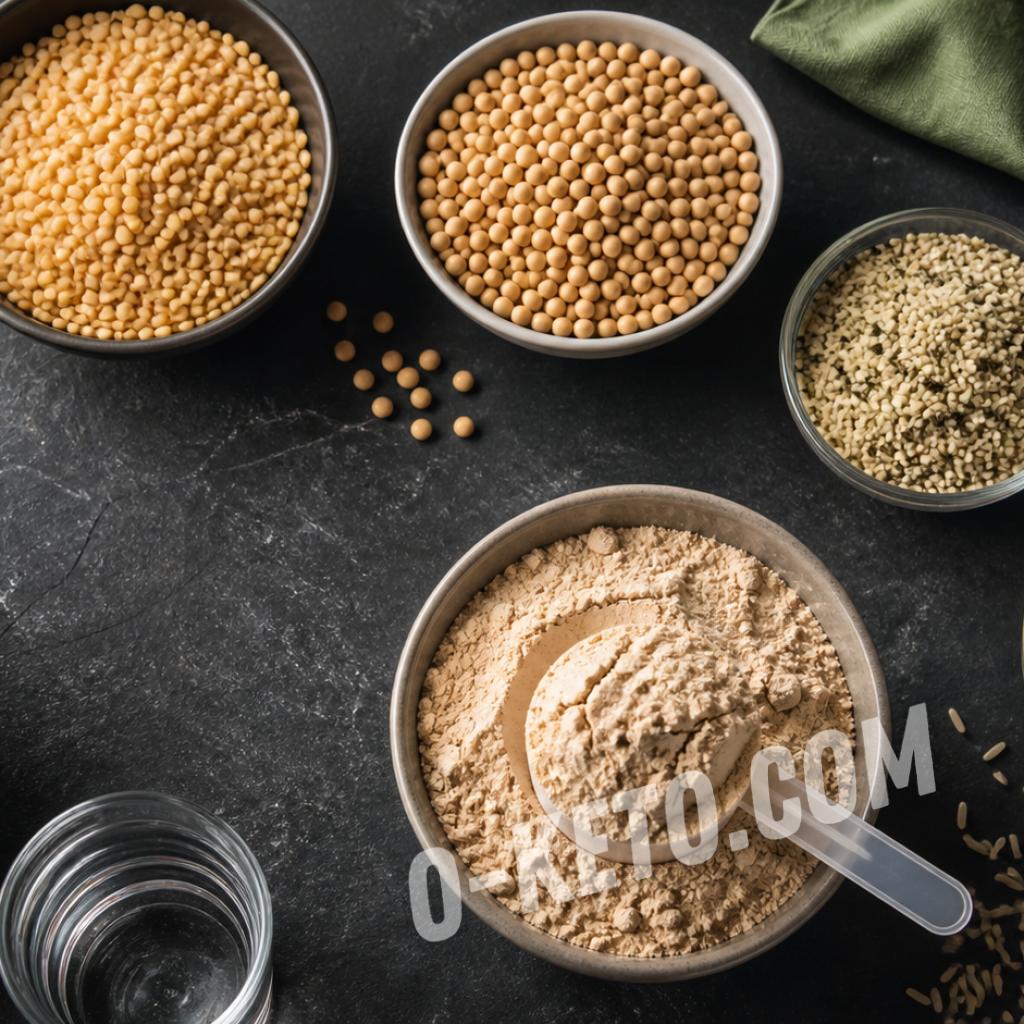

Choose plant protein for a specific job rather than for a slogan on the tub. One person wants a convenient way to add protein after training; another wants a powder without dairy; someone else needs a low-carbohydrate option. Those goals do not always point to the same product.
Soy, pea, rice, hemp and blended powders differ in amino-acid profile, protein per scoop, fiber and carbohydrate content, taste and tolerance. The useful question is not which plant protein is universally “best,” but which one closes your gap without creating a new problem.
What plant protein means
Plant protein is a protein ingredient made from soy, pea, rice, hemp, potato or another plant. Retail products are usually concentrates or isolates. A concentrate retains more accompanying components, while an isolate is more highly purified and provides more protein by weight.
Whole foods and powders serve different purposes. Tofu, tempeh, soy foods, seeds and other foods provide protein together with water, fats, fiber or minerals. Powder is useful when a full meal is impractical, protein is hard to reach with food, or the composition of a serving needs to be predictable. More protein per gram does not make a powder automatically better than food.
How to judge plant-protein quality
Protein quality is not the same as the percentage printed on the label. Consider essential amino acids, their balance, digestibility, serving size and total daily protein. PDCAAS and DIAAS are laboratory tools for comparing protein quality, but they do not directly predict how a particular powder will affect one person’s muscle, appetite or digestion.
Some plant proteins have lower density of particular essential amino acids and more accompanying fiber or other compounds. That does not make them ineffective. A sufficient total serving, a complementary blend and variety across the diet can narrow practical differences. Grain and legume proteins often complement one another, but there is no need to engineer a perfect combination at every meal.
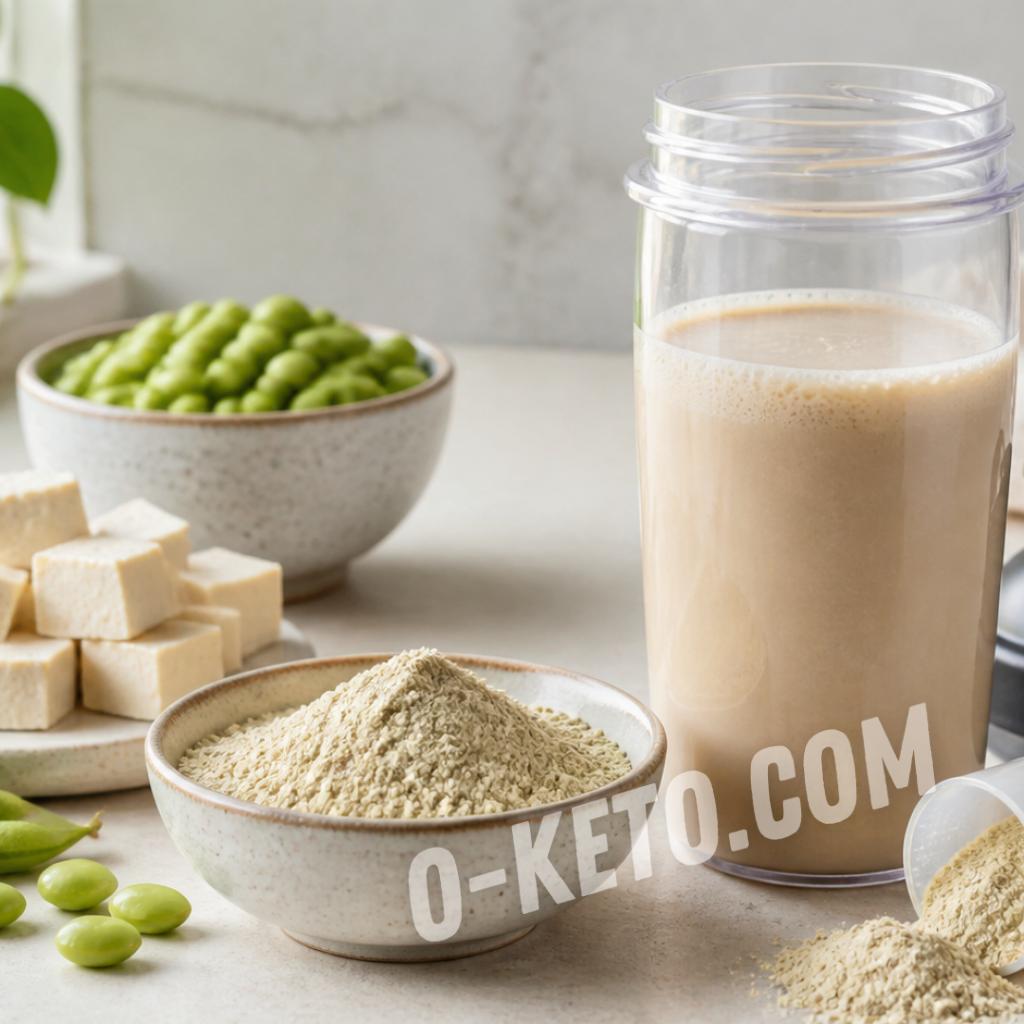
Pea, soy, hemp and rice: what differs
These powders are best understood as different trade-offs, not as a rigid ranking.
| Type | Potential strengths | What to check |
|---|---|---|
| Soy isolate | Relatively complete amino-acid profile, high protein density, and the strongest research base among plant options | Soy is a common allergen; taste and tolerance vary |
| Pea isolate | Good protein density and a practical dairy-free option | Its amino-acid pattern differs from milk protein; some people experience bloating |
| Rice protein | Useful when soy or legumes are not tolerated; pairs well with pea | Usually less convenient for lysine on its own; check the product’s quality controls and ingredients |
| Hemp protein | May retain fiber, fat and a nutty flavor | Often has less protein per serving than an isolate; composition depends on processing |
| Blend | Combining sources can improve the amino-acid balance; some blends add leucine | Check the proportion of each source, serving size, sweeteners and carbohydrates |
“Complete” on the label does not replace reading the label. A useful amino-acid profile cannot compensate for very little protein, added sugar or an impractical serving.
What research says about training and muscle
Research does not support the simple claim that plant protein “does not work.” Compared with little or no protein, plant supplements can help meet protein needs and support training adaptation. Direct comparisons with dairy and other animal proteins depend on the source, dose, age, exercise and total protein intake.
Short-term studies often show a stronger muscle-protein-synthesis response per gram from animal proteins, especially in older adults. Recent reviews also show that the gap can be small or disappear in some settings: soy is closer to dairy, and well-formulated pea-and-rice or other blends at an adequate dose can produce a similar post-exercise response. Judge the whole program, not one ingredient.
The exact “anabolic window” is often overstated. Reaching an adequate daily protein intake and distributing servings regularly matter more than hitting one perfect minute. Count grams of protein, not grams of powder: a 30-g scoop may provide considerably less than 30 g of protein.
How to read the label
Use the same checklist every time:
- Protein: compare grams per serving and per 100 g.
- Ingredients: check the protein source, sugar, syrups, maltodextrin, starch and sweeteners.
- Amino acids: for training, leucine and the essential-amino-acid profile add useful transparency.
- Serving size: match it to the gap you actually need to close.
- Tolerance: account for soy, legumes, sugar alcohols, flavors and previous reactions.
How to use plant protein in everyday eating
First decide whether you actually fall short. If fish, meat, eggs, dairy, tofu, tempeh or other whole foods cover your needs, a powder is optional. If schedule, appetite or food restrictions make that difficult, it can be a convenient tool.
Mix it with water or an unsweetened drink, add it to yogurt or a smoothie, or use it in a cooked dish if the taste and tolerance remain good. Do not let it replace the whole diet: powder rarely provides the diversity of nutrients found in food. If bloating occurs, start with a smaller serving, review sweeteners and try a different source.
Plant protein on keto and LCHF
For strict keto, the key filter is digestible carbohydrate in the real serving—not the word “plant.” Choose products without sugar or syrups, check carbohydrates and fiber, and count whatever you mix into the shake. Soy or pea isolates are often easier to fit into a low-carbohydrate plan, but the label decides.
Whole legumes and grains may not fit a strict daily carbohydrate limit, while tofu, tempeh, seeds and some isolates provide more protein with a smaller carbohydrate load. That does not make every plant powder keto-friendly; judge the full serving and the day’s total.
Who should be cautious
Plant protein is not a treatment. If you have a soy, legume or other ingredient allergy, avoid the relevant powder and do not test a severe reaction at home. With chronic kidney disease, pregnancy, an eating disorder or a prescribed therapeutic diet, discuss protein amount and supplement composition with a clinician.
Manufacturing quality matters as well. Prefer clear labeling, intact packaging, proper storage and a producer that discloses ingredients and quality controls. Independent testing is more useful than a front-label promise of “perfect absorption.”
Conclusion
The best plant protein is the one that closes a specific protein gap, fits your carbohydrate target and tolerance, and does not displace varied food. Soy or a blend often offers a denser amino-acid profile, pea pairs naturally with rice, and hemp is chosen for taste and accompanying components while usually providing less protein density.
Compare grams of protein, serving composition, amino acids and your own response. Then the powder remains a practical food rather than a substitute for a varied diet.
Sources
- Dietary protein quality evaluation in human nutrition — FAO Expert Consultation
- Effect of Plant Versus Animal Protein on Muscle Mass, Strength, Physical Performance, and Sarcopenia — systematic review and meta-analysis
- The Effect of Plant-Based Protein Ingestion on Athletic Ability — Bayesian meta-analysis
- Plant Protein Blend Ingestion Stimulates Postexercise Myofibrillar Protein Synthesis Rates Equivalently to Whey
- Effect of Plant-Based Proteins on Recovery from Resistance Exercise-Induced Muscle Damage — systematic review
- Food Allergies — U.S. Food and Drug Administration