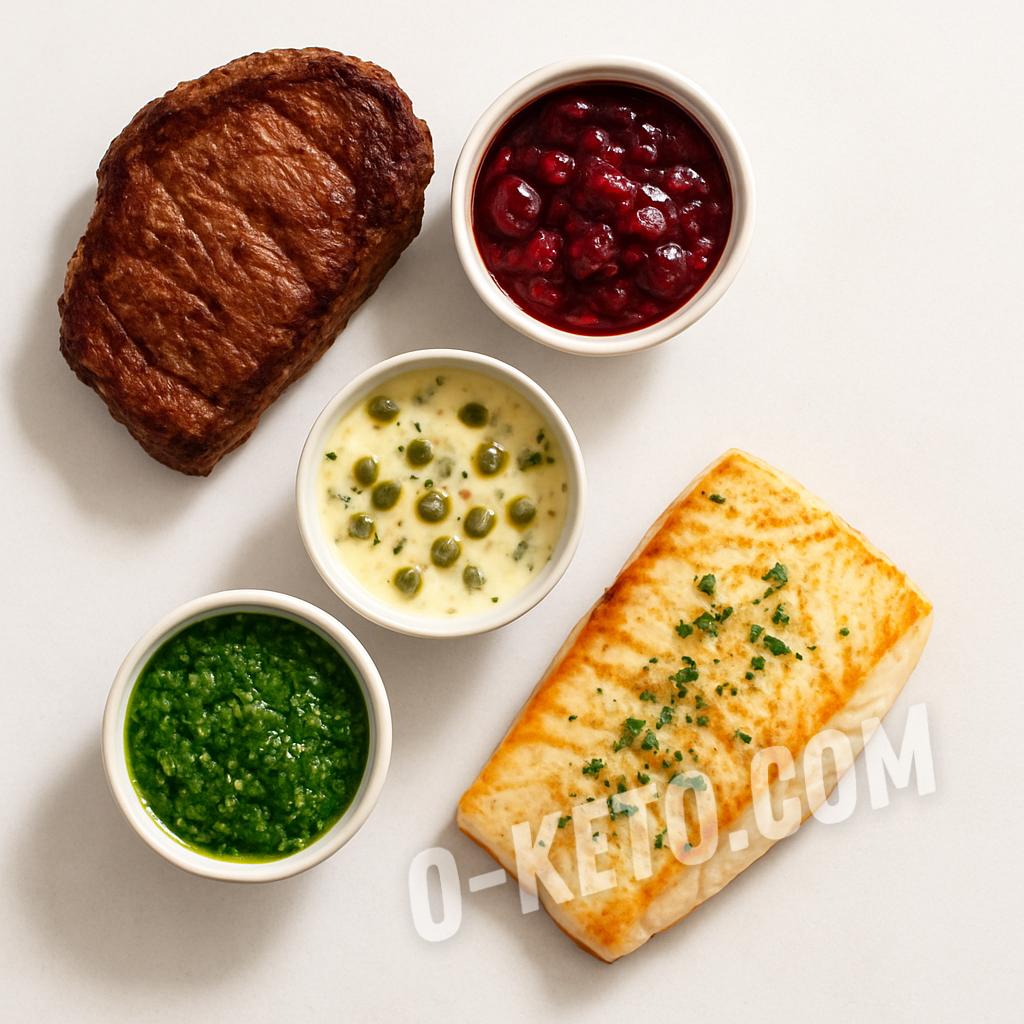

A good keto sauce does not have to be sweet, floury, or starchy. Its task is simpler and more complex at the same time: to highlight the flavor of meat or fish, add acidity, aroma, juiciness, and texture, but not overpower the dish itself. Therefore, the sauce should be chosen not based on the principle of “sounds nice,” but according to the fat content of the product, the method of preparation, and what kind of contrast is needed on the plate.
Consider the fat content of the dish
Fatty meat and fatty fish are best complemented by sour, berry, citrus, or spicy sauces. Acidity cuts through the heaviness and makes the flavor cleaner. Duck, pork, ribs, lamb, mackerel, and salmon pair well with sauces made from cranberries, currants, gooseberries, lemon, vinegar, capers, rosemary, pepper, and mustard.
Lean meats and delicate white fish require a different logic. Chicken breast, turkey, cod, pike perch, and haddock can easily get lost under too thick or aggressive sauces. They often need a mild sauce: lemon with butter and capers, berry-based with moderate acidity, herbal or ginger, but without a heavy sweet base.
Acidity makes the flavor brighter
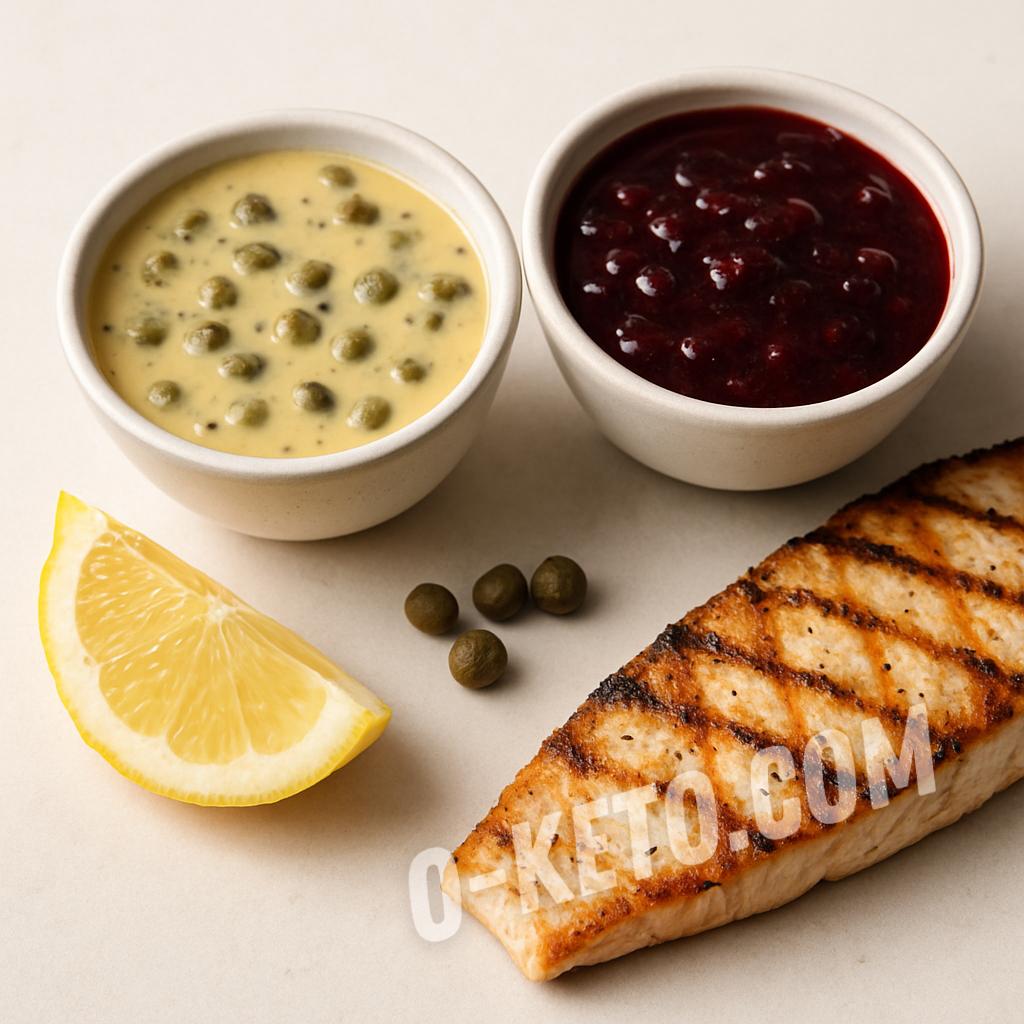
Acidity in the sauce acts as a flavor enhancer. Lemon juice, apple cider vinegar, balsamic vinegar, berries, and dry wine more actively reveal the salt, spices, and natural sweetness of the product. Therefore, even a small amount of acidic component can make meat taste juicier and fish taste fresher.
On keto, it is especially convenient to use acidic sauces because they do not require sugar and starch for expressiveness. If the flavor seems flat, often it is enough to add a few grams of lemon or vinegar at the end of cooking. If the sauce has become too sharp, it can be softened with butter, allulose, a small amount of water, or additional reduction.
Consider the cooking method
Fried meat with a crust loves thick sauces that cling to the surface but do not make it soggy. For steak, ribs, and chicken wings, berry sauces with pepper, smoked paprika, mustard seeds, or rosemary are suitable. They are best served on the side or applied in a thin layer.
Baked and stewed meat better accepts softer and more fluid sauces. They penetrate the fibers and add juiciness. For grilled or baked fish, fresh sauces work better: lemon, capers, gooseberries, mint, olive oil, a bit of ginger, or soft herbs.
The texture of the sauce is also important
A smooth sauce makes the dish more cohesive and silky. It is suitable for chicken, turkey, white fish, and dishes where a neat presentation is needed. A sauce with pieces of berries, capers, olives, or mustard seeds adds contrast and is better suited for meat with a pronounced texture, cheeses, and grilled dishes.
Too runny a sauce can ruin a crispy crust, while too thick a sauce can overwhelm delicate fish. Therefore, it is not necessary to pour the sauce over the dish. Often, it is better to serve it separately: this way, the flavor can be dosed, and the texture of the main product remains intact.
Warm or cold
The temperature changes the perception of the sauce. A warm berry or wine sauce feels deeper and softer, making it suitable for meat, duck, lamb, and hot cheeses. A cold lemon, mint, or gooseberry sauce provides a fresh contrast and works well with hot fish, chicken, and fatty dishes.
If the sauce is stored in the refrigerator, it is not always necessary to reboil it. For most keto sauces, it is enough to gently warm it over low heat or leave it at room temperature for 10-15 minutes. This preserves the aroma of herbs, mint, lemon, and berries.
How to make the sauce keto-friendly
Regular fruit and berry sauces often contain a lot of sugar, honey, or sweet fruits. For keto, it is better to choose recipes based on sour berries, lemon, capers, olives, herbs, spices, dry wine, and vinegar. Sugar can be replaced with allulose: it behaves better in sauces than erythritol and helps maintain a softer texture.
It is important to remember that a sauce without sugar does not become a long-term preservation. It should not be stored for months at room temperature, even if the original recipe was designed for canning. The keto version is safer to keep in the refrigerator in a clean, sealed jar and use within 5-7 days.
Quick pairing chart
| Dish | What goes well |
| steak, ribs, lamb | black currant, red wine, rosemary, smoked salt, pepper |
| duck and pork | red currant, cinnamon, clove, balsamic vinegar |
| chicken and turkey | raspberry, black pepper, mustard seeds, lemon |
| white fish | lemon, capers, bay leaf, olive oil |
| salmon and grilled fish | gooseberry, mint, ginger, olives |
| cheese platter | berry sauces with acidity and spices |
Main mistakes
- making a sweet sauce for a fatty dish without acidity;
- pouring a runny sauce over a crispy crust;
- serving a heavy thick sauce with delicate white fish;
- replacing sugar in the recipe and continuing to store the sauce like regular preservation;
- using too many spices when the main product is delicate on its own.
The right sauce does not compete with the dish. It adds one clear accent: acidity, freshness, smokiness, spiciness, saltiness, or soft berry depth. If this accent helps the main product to stand out more, the sauce has been chosen correctly.
Sources
- Sodium Reduction Through Sensory Interactions With NaCl: Strategies and Underlying Mechanisms
- Reducing Sodium in Foods: The Effect on Flavor
- Refrigeration & Food Safety: USDA Food Safety and Inspection Service
- Leftovers and Food Safety: USDA Food Safety and Inspection Service
- FDA Food Code 2022
- Kitchen Companion: Your Safe Food Handbook