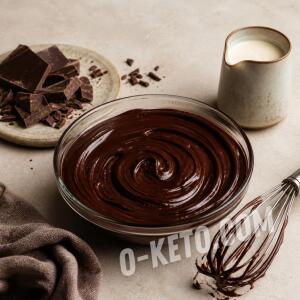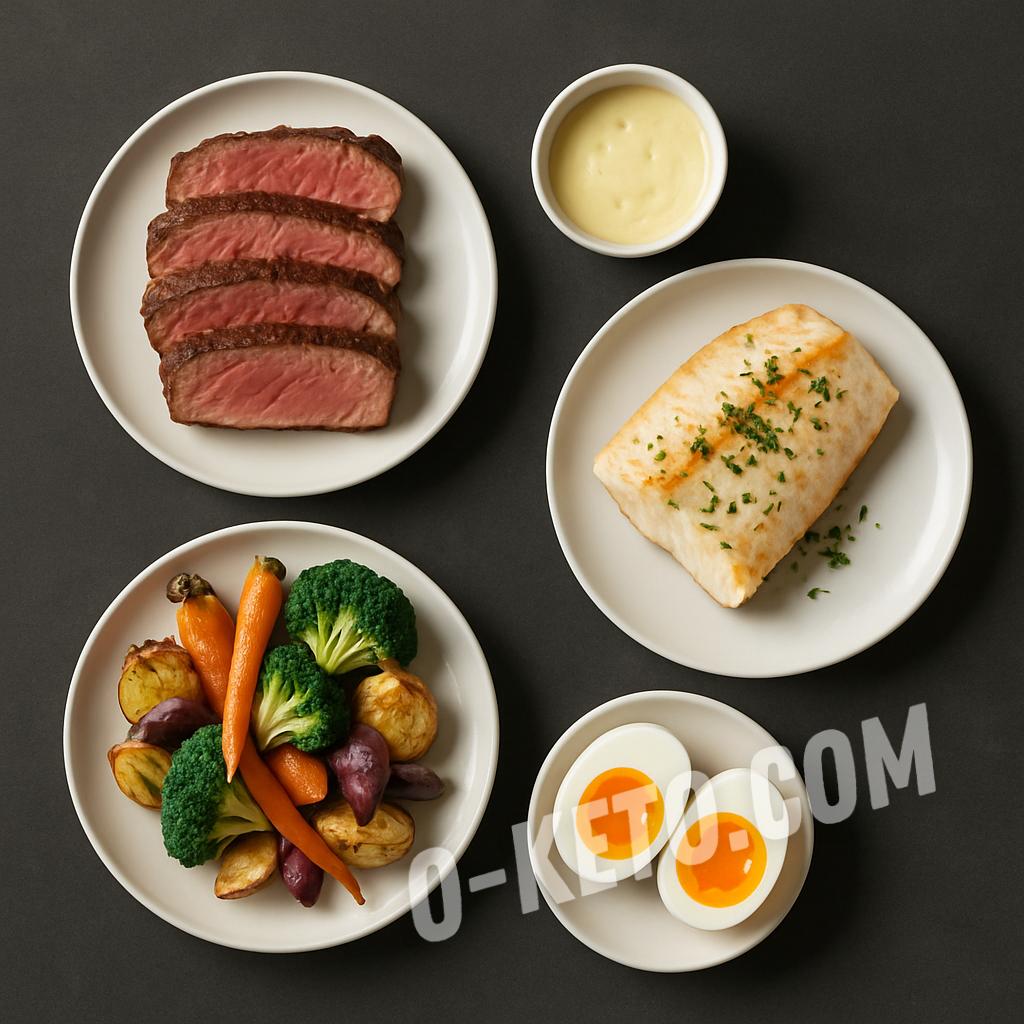

A sauce does not need to be impressive on its own to be successful. Its real job is usually more specific: support the meat, freshen a rich fish, give vegetables more depth, add contrast to eggs, or tie several elements of a plate together. That is why sauce pairing works better when it is based on a few practical questions: is the product fatty or lean, dense or delicate, bold or mild, served hot or cold?
This is especially useful in home cooking, where the same sauce can make one dish better and another much worse. A sauce that is too heavy can make fish feel clumsy. One that is too acidic can dominate eggs. A sweet-leaning sauce may fight with a good piece of meat, while a pale low-energy sauce may disappear next to roasted vegetables with a strong caramelized edge. Once pairing is viewed through texture and flavor structure, the choice becomes much easier.
What to assess before choosing a sauce
The first thing to consider is the fat level of the product itself. The richer the product, the more comfortably it can handle acidity, herbs, bitterness, spice, or contrast. That is why fatty pork, duck, lamb, mackerel, or salmon often pair well with sauces that contain mustard, green herbs, lemon, berries, or a little sharpness. Those notes do not ruin the food. They keep the plate from becoming too heavy.
The second factor is texture density. Delicate white fish, poached eggs, soft omelets, young zucchini, or cauliflower do not respond well to very dark, aggressive, thick sauces. They usually work better with light buttery sauces, yogurt-based sauces, herb sauces, or soft creamy tomato styles. Dense meat, on the other hand, can stand up to more concentrated stock sauces, pepper sauces, mushroom sauces, cheese sauces, or stronger reductions.
The third factor is the cooking method. A roasted product with a strong browned surface often needs a different sauce from a steamed or gently poached one. If the product already brings a lot of grill, roast, or pan aroma, the sauce often works best when it stays clearer and shorter. More neutral cooking methods leave more room for the sauce to shape the overall taste.
How to pair sauces with meat

Meat usually likes sauces that add either depth or contrast. Beef and steaks often work well with demi-glace, pepper sauces, mushroom sauces, cream-mustard sauces, and bright herb sauces such as chimichurri when the meat itself is rich enough to support them. In these cases the sauce should not be random gravy. It should either reinforce the meat juices and umami or cut through the richness and make the flavor cleaner.
Pork and poultry often allow more flexibility. They work well with mustard sauces, yogurt sauces, garlic sauces, cream sauces, nut-based sauces, and soft tomato sauces. Balance still matters, though. A delicate chicken breast disappears under a heavy cheese sauce, while a fatty pork neck can become much more interesting with something greener and slightly more acidic. If the meat was slow-cooked or cooked sous-vide, the sauce is often better when it stays cleaner so the texture of the meat remains visible.
Lamb pairs especially well with sauces that include acidity, herbs, garlic, yogurt, and moderate spice. In this setting a yogurt or herb sauce does not weaken the flavor. It makes it more precise. Duck and other richer poultry cuts often benefit from mustard-based, berry-toned, citrus, or lightly spiced sauces that cut the fat and keep the finish more lively.
How to pair sauces with fish
With fish, the main rule is simple: the cleaner and more delicate the fish, the more careful the sauce should be. White fish such as cod, pike perch, hake, or halibut usually responds better to light creamy sauces, butter sauces, lemon sauces, yogurt-herb sauces, or caper-based sauces. Freshness matters more than weight. A dark stock sauce, heavy pepper sauce, or aggressive cheese sauce can make this kind of fish feel coarser than it is.
Fatty fish can handle more contrast. Salmon, mackerel, trout, tuna, and sardines often work well with sauces that contain herbs, mustard, yogurt, lemon, gentle spice, or a controlled sweet-sour depth without extra sugar. The role of the sauce here is not to make the fish richer, but to balance it and keep it fresh. That is why sauces such as tzatziki, raita, light feta-yogurt sauces, herb vinaigrettes, and green sauces often perform better than very heavy creamy cheese styles.
Temperature matters too. Cold baked or lightly cured fish usually benefits from cold sauces with clean acidity and herbs. Hot fish can take warm butter or light cream sauces more easily, but only when the sauce does not erase the fish itself.
Which sauces work best with vegetables
Vegetables often need a more precise approach than simply giving them the same sauce used for meat. Their own flavor may be watery, sweet, grassy, earthy, or nutty after roasting. Crisp fresh vegetables usually respond best to dressings with acidity, herbs, mustard, yogurt, or sesame. These dressings make the vegetables feel brighter and more complete.
Roasted vegetables often pair well with green sauces, nutty dressings, pesto, yogurt-garlic sauces, soft cheese dressings, and some tomato sauces. Temperature contrast is useful here: hot vegetables with a cool fresh sauce are often more interesting than hot vegetables buried under another heavy hot layer. If the vegetables are already sweet from roasting, the sauce usually works better when it leans savory, herbal, or acidic rather than creamy-sweet.
Cauliflower, broccoli, asparagus, and zucchini often pair especially well with lemon-butter, herb, yogurt, and sesame styles. Eggplant, mushrooms, peppers, and some denser vegetables can carry deeper sauces more easily because their own structure is more assertive.
What works well with eggs
Eggs usually prefer sauces that support their softness rather than break it. For boiled eggs, poached eggs, omelets, and scrambled eggs, creamy, buttery, herbal, and gently tangy sauces are often the most successful. There is a reason hollandaise and its lighter relatives work so well here: egg and butter textures naturally align, and a little acidity keeps the pairing from becoming too heavy.
Yogurt-herb sauces, mild mustard dressings, soft cheese creams, and fresh green sauces can also work very well as long as they are not too sharp. Eggs are easily overwhelmed by aggressive vinegar, smoky intensity, or too much garlic. That means a sauce that is excellent on grilled meat may feel rough and unbalanced on eggs.
If eggs are part of a larger plate with vegetables, fish, or meat, it often helps to choose the sauce for the whole plate rather than only for the eggs. That way the eggs feel integrated instead of tasting like a separate component with a different logic.
How to judge sauce thickness and amount
Even a good sauce can fail in service if the thickness or amount is wrong. A very thick layer covers the crust on roasted meat, hides the fish texture, or makes vegetables heavy. A very thin sauce can run away and turn the plate into a loose mixture. Dense meat usually benefits from smaller amounts of more concentrated sauce, while fish, vegetables, and eggs often do better with lighter sauces applied more gently or served on the side.
A useful home rule is to taste the product almost plain first, then with a little sauce, and only then decide whether more is needed. It sounds basic, but it is the easiest way to feel whether the sauce is supporting the food or already arguing with it.
Conclusion
Pairing sauces with meat, fish, vegetables, and eggs is not about rigid charts. It is about flavor logic and texture. Rich and dense foods can accept brighter, more acidic, or more concentrated sauces. Delicate foods usually prefer cleaner and lighter ones. Vegetables often need freshness and contrast, while eggs prefer softness and restraint. When the sauce supports the nature of the product instead of trying to overpower it, the whole plate becomes much more harmonious.