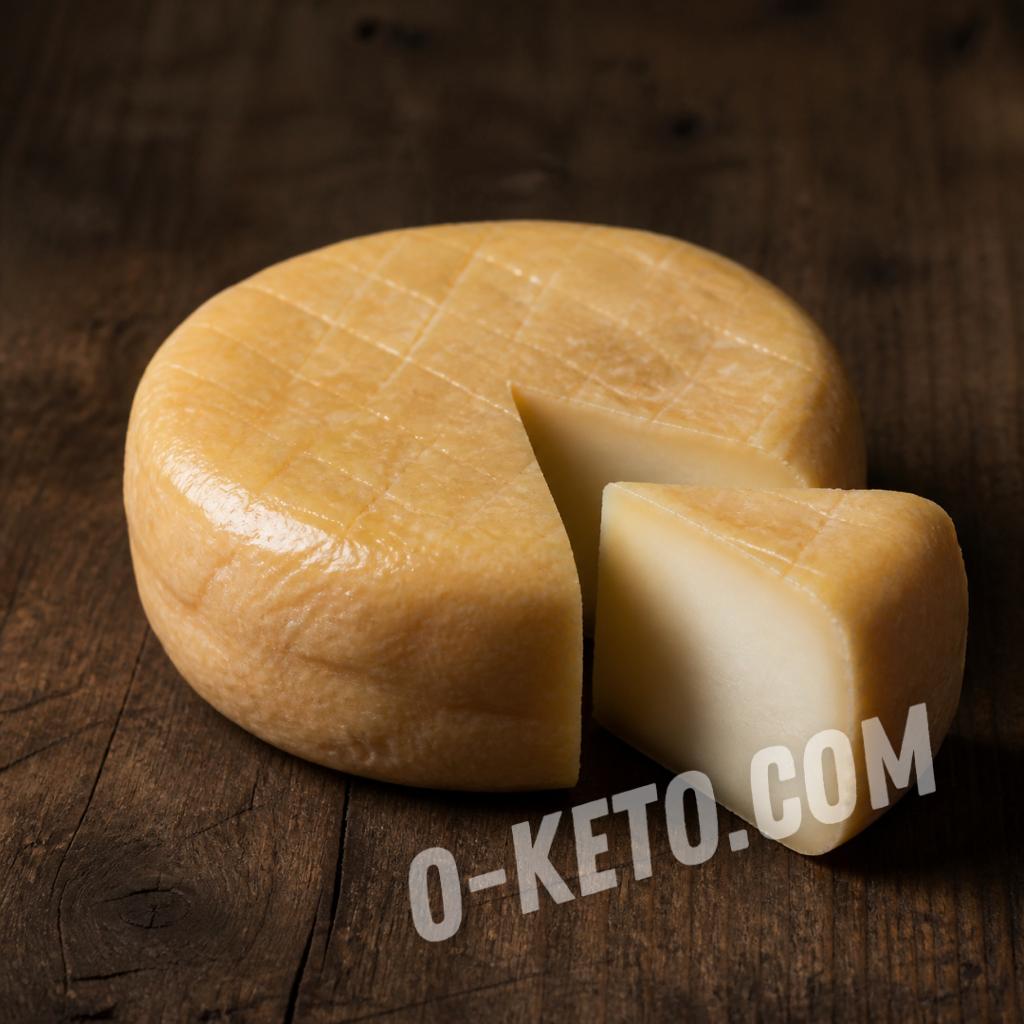

Italico is a soft to semi-soft Italian cheese with short ripening, a gentle body, mild buttery character, and only a light lactic tang. It is not built around long aging, strong sharpness, or a firm brittle paste. The point of this cheese is different: it should feel supple, moderately moist, quietly savory, and easy to use in everyday eating when you want a mellow cheese rather than a hard, dry, or aggressively aromatic one.
Historically, Italico is associated with the Italian cheesemaker Egidio Galbani. Bel Paese later developed on that line. The underlying idea matters as much as the name. The cheese took inspiration from French and German washed-rind logic, but adapted it for an Italian market traditionally dominated by pasta filata and harder table cheeses. The result was a gentler domestic cheese with a calmer flavor profile and a more approachable texture.
What style of cheese Italico is
Italico is usually described as a tender short-aged cheese that ripens in roughly three weeks. Its paste should be even, without pronounced eyes, supple rather than crumbly, and soft without becoming runny. It is not meant to become dry and brittle, but it is also not meant to collapse like a fully soft bloom-ripened cheese. It sits in a calmer middle zone: still able to hold shape, yet already mild, yielding, and slightly buttery.
That is why balance is central. If the cheese dries too far, it loses the softness that defines the style. If it stays too wet and weak, the structure becomes loose and the surface ripens unevenly. The flavor goal is not aggressive pungency. A good Italico should taste creamy, lightly cultured, gently salty, and rounded enough for easy daily use.
Milk choice and why a gentle regime suits it
This style is usually made from milk of moderate fat content, around or below 3.6%. Milk that is too rich can make body balance harder to control and can complicate whey release. But over-lean milk is not the answer either, because part of Italico’s identity lies in its soft, slightly buttery texture.
The pasteurization logic is equally revealing. A gentle low-temperature hold helps keep the milk safe and manageable without making the protein system too dead and industrially rigid. For home cheesemaking, that is an important clue. Italico does not respond well to a severely damaged milk structure, because a supple curd and a tender short-aged paste depend on milk that still has enough cheesemaking flexibility.
Why starter, calcium, and firmer rennet action matter here
In the described method, the culture is added at a relatively warm point and the milk then settles into a more working range before rennet goes in. That already suggests that what matters is not acidity in the abstract, but a calm, controlled pace of acid development. If acidity moves too fast, the paste can become drier and sharper than intended. If it moves too slowly, curd strength and grain control suffer.
Calcium chloride is also explicitly mentioned as an option for weak milk. That makes sense. In a short-aged, gentle-bodied cheese, a floppy curd is especially undesirable because it begins losing fat and fine solids into the whey too early. Rennet is not used at the weakest possible level either. A somewhat stronger working dose compared with a producer’s average guideline helps build a reliable medium-density curd without cracks and without excessive waiting.
How the structure is built through curd cutting and grain handling
Italico relies on gradual curd cutting. The curd is first divided into large columns, then into smaller pieces, and only after that into the final grain size. That sequence helps avoid tearing a young delicate curd too early and avoids driving out too much moisture in one rough step. For a cheese of this type, that matters a great deal: the structure should tighten progressively rather than through aggressive treatment.
The grain is not stirred harshly without pause. Intermittent stirring with short rests allows the maker to control firming and whey release more gently. Part of the whey is then removed, and the mass is lightly compacted into a unified slab. This is another key stylistic point. Italico is not aiming for a very dry grain destined for long aging. It is aiming for a gathered but still tender mass that can later produce a supple body without eyes.
Self-pressing, brining, and surface drying
After the slab is transferred to the mold, the cheese is left to self-press for about six hours with regular turns. That already tells you something about the style. It does not need the kind of heavy pressing associated with denser long-aged cheeses. The structure should settle through its own weight and moderate drainage while preserving softness and elasticity.
Salting is done in an 18% brine at roughly four hours per kilogram. After brining, the surface is dried until matte rather than visibly wet. That is not just a cosmetic detail. If the rind enters ripening too wet, rind care becomes harder to control. If the cheese is overdried before ripening even begins, the surface can close too quickly and the interior may develop less evenly.
Ripening and rind care
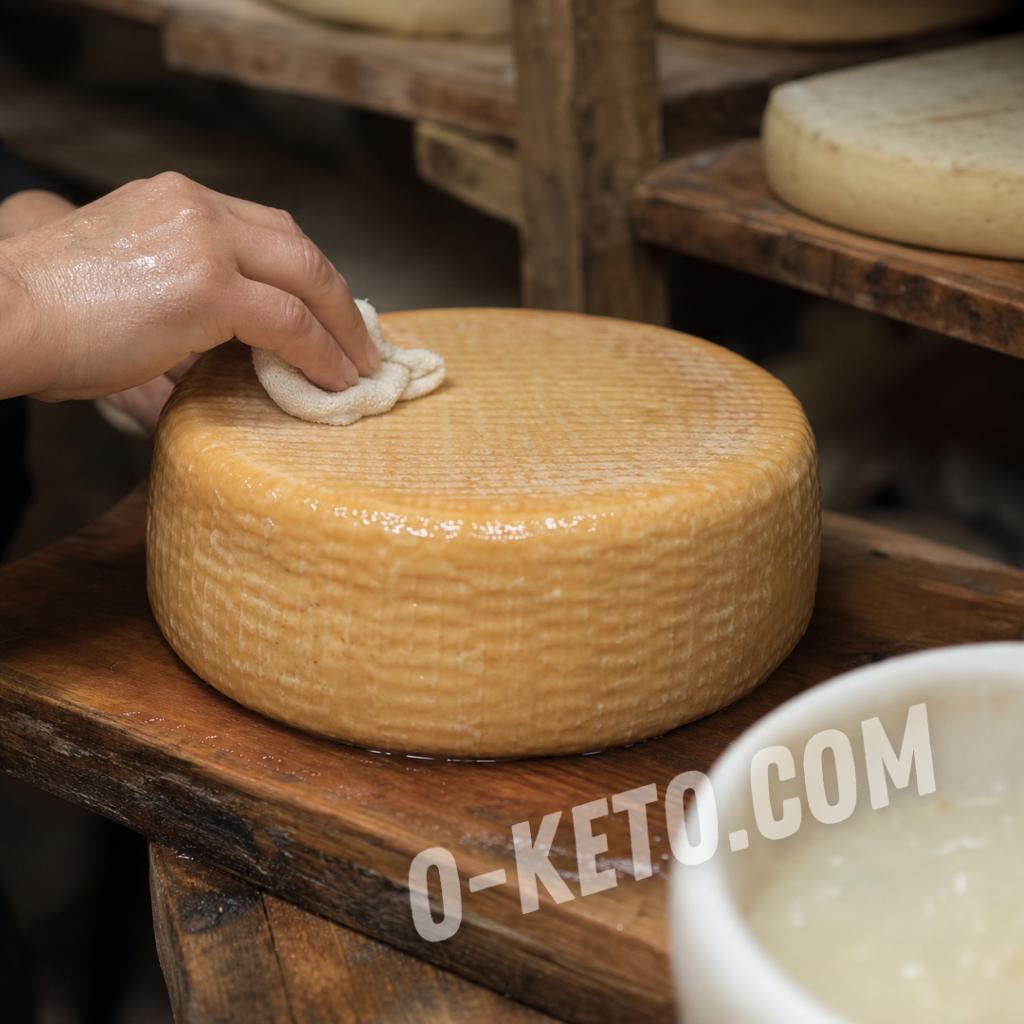
Italico ripens at a relatively cool temperature around 5°C and a humidity of about 80 to 85%. In home practice that means it needs a stable, attentive environment. It is not a long multi-month affineur project, but neither is it a cheese that can simply be forgotten in a domestic fridge. Short ripening only works well when surface behavior and internal moisture stay in balance.
The rind is washed with a weak 2 to 3% brine every two or three days, and the cheese is turned daily. This is where its kinship with washed-rind thinking becomes especially clear, even though Italico does not aim for the extreme aroma of that family. The washes help the surface mature more evenly, prevent the rind from drying too quickly, and support the calm gentle style that defines the cheese.
How a finished Italico should look and feel
A finished Italico should have a neat even rind without coarse over-drying and without sticky aggression. On the cut, the paste should be pale, supple, and eye-free, with a texture that is soft but not liquid. The knife should pass through it without the sensation of brittleness. If the cheese is too dry, it has moved away from style. If it is watery and loose, moisture and drainage were not held properly either.
The expected taste is mild, creamy, lightly lactic, softly salty, and gently buttery. This is not a cheese designed to dominate the palate. It is made for calmer everyday use. It works well on simple cheese plates, gentle sandwiches, warm toast, and recipes where a soft creamy accent is welcome but a heavy aged punch would be too much.
Why Italico is useful for the home cheesemaker
Italico is a good example of how much in cheesemaking depends not only on the starter list or the rennet label, but on the technological goal itself. If the goal is not a hard cheese and not a stretched-curd cheese, but a gentle short-aged Italian table cheese, then milk fat, curd strength, pressing intensity, moisture retention, and rind care all have to be chosen differently. In that sense Italico is educational: it teaches not maximum density and aging length, but the balance of softness, plasticity, moderate brining, and short ripening.
That is why it deserves attention not only as a historical predecessor of Bel Paese, but as a style in its own right. For home practice it is not the simplest cheese, but neither is it an extreme one. It suits makers who already understand the basics of soft and semi-hard work and want to learn how to hold a more delicate balance between curd, moisture, brine, and a short washed-rind maturation.