


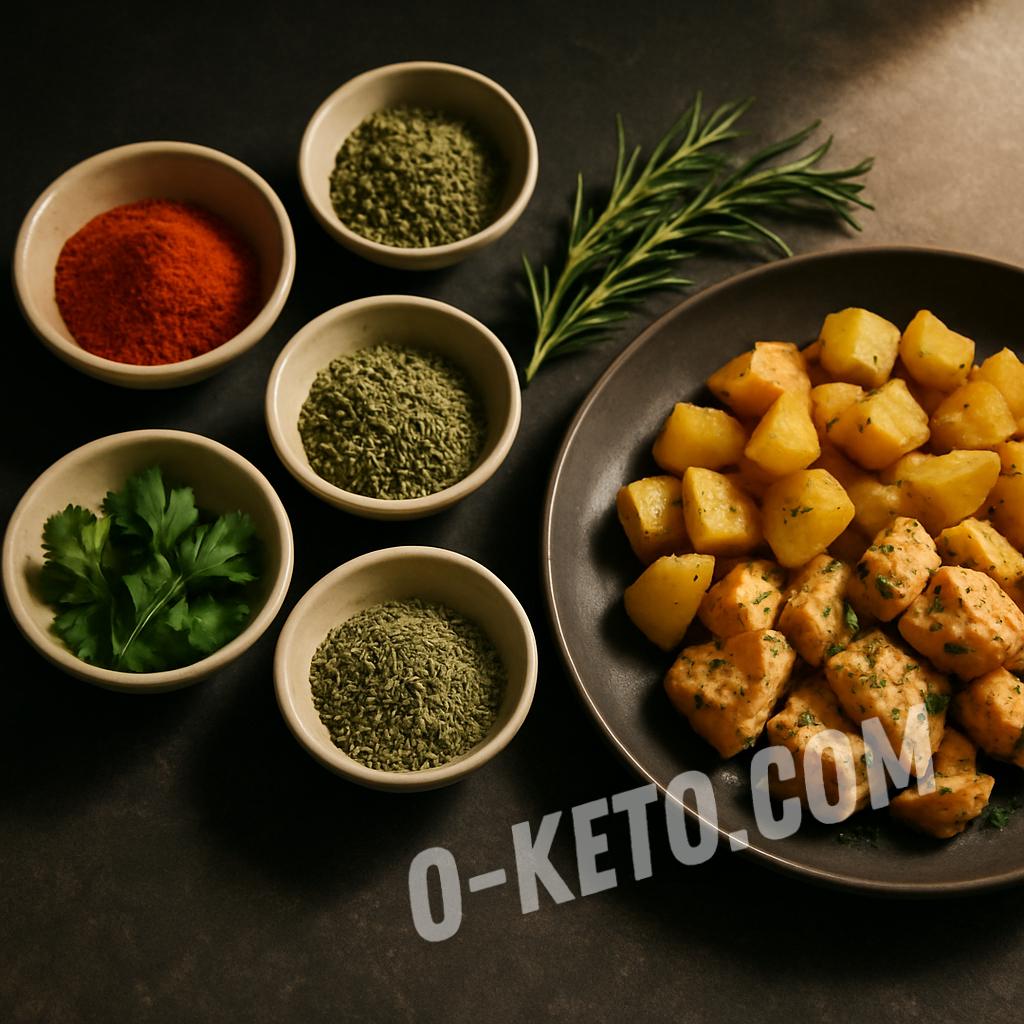

Spices and herbs most often ruin a dish due to an unsuccessful combination or the wrong moment of addition. The same ingredients can become flat and boring if they are under-seasoned and left without aroma, or, conversely, overloaded if too many bright spices are mixed at once. Home cooking benefits not from exoticism per se, but from understanding a few simple principles: which aromas complement each other, which spices love fat, which work better with acidity, and at what stage of cooking the aroma should unfold.
This is especially important in a home menu, where the same basic ingredients are often repeated. Eggs, fish, poultry, vegetables, cottage cheese, yogurt sauces, stews, and warm salads can sound different just by using spices and herbs. This helps to diversify the diet without excess carbohydrates, sugar, and heavy ready-made sauces. A good combination of aromas makes food more interesting but should not mask the main ingredient.
First, choose the aromatic direction of the dish
The main mistake in home cooking is trying to put garlic, smoked paprika, thyme, cumin, curry, basil, and lemon zest into one dish at the same time. As a result, no aroma becomes dominant, and the taste breaks down into a random set of accents. It is much better to first decide which direction the dish should sound: fresh-herbaceous, warm-spicy, Mediterranean, Eastern, creamy-soft, spicy, or sour.
Once the direction is chosen, the other spices are selected as support. For a warm spicy profile, coriander, cumin, paprika, garlic, and a bit of black pepper usually work well. For a fresh green direction, dill, parsley, cilantro, mint, lemon zest, and a mild acidity are more suitable. For a Mediterranean profile, basil, oregano, thyme, rosemary, garlic, and olive oil are often used. This approach helps to avoid overloading the dish and losing its character.
Which groups of spices and herbs usually combine best
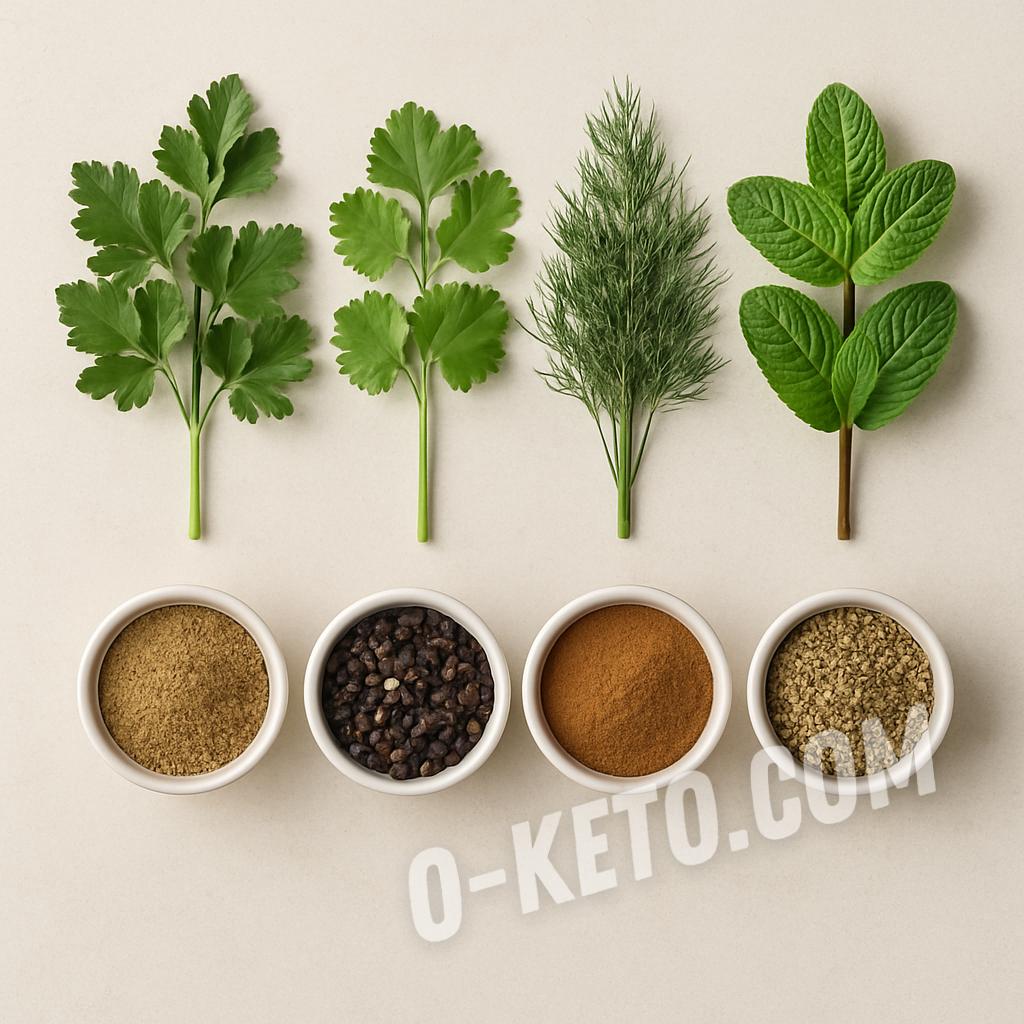
It is convenient to think not in separate jars but in aromatic groups. Warm seed spices, such as coriander, cumin, fennel, and anise, provide roundness and depth. Leafy herbs, such as parsley, dill, cilantro, basil, and mint, work as a fresh top layer. Woody herbs like thyme, rosemary, and sage tolerate heat better and are suitable for frying, stewing, and baking. Hot spices, including chili, mustard, and black pepper, manage not so much the aroma as the sensation of warmth and intensity.
Good combinations often build between neighboring groups. For example, cumin and coriander support carrots, cauliflower, lamb, and poultry well. Thyme and garlic clarify the taste of fish, mushrooms, and chicken. Parsley and lemon refresh seafood, while mint and a dairy base soften garlic and hot spices in cold sauces. The stronger the base ingredient in flavor, the bolder the spices can be; the more delicate the ingredient, the more care is needed.
Why fat, acidity, and temperature change the work of spices
The aroma of spices unfolds not by itself but in a specific environment. Fat well carries and retains fat-soluble aromatic molecules, so ghee, butter, cream, fatty fish, meat juices, coconut milk, or olive oil deepen and prolong the flavor of spices. That is why paprika, cumin, garlic, thyme, or rosemary usually sound richer in hot oil than if simply sprinkled on top of a finished dish.
Acidity works differently. Lemon juice, lime, vinegar, fermented brine, or yogurt make the flavor more concentrated, highlight fresh herbs, and help eliminate the feeling of greasy heaviness. But acidity can conflict with delicate sweet spices if there is too much of it. For example, mint, cilantro, dill, and zest love fresh acidity, while rosemary, sage, and clove notes feel better in a richer and warmer environment.
Temperature also matters a lot. Not every herb tolerates prolonged heating well. Rosemary, thyme, oregano, bay leaves, and seed spices can be added at the beginning. Parsley, dill, cilantro, chives, mint, and basil are better added closer to the end or already in the finished dish; otherwise, they lose freshness and start to sound coarser.
How to select combinations for vegetables, poultry, fish, and sauces
Vegetables often need not the strongest spices but contrast and support. Cauliflower, zucchini, and carrots benefit from combinations where there is one warm spice and one fresh note. For example, carrots love cumin and coriander, while cauliflower tolerates paprika, garlic, thyme, and a bit of lemon well. Beets respond better to vinegar or citrus acidity, black pepper, thyme, and soft creamy accents.
Poultry usually pairs well with garlic, thyme, rosemary, paprika, mustard, lemon, and parsley. Turkey and chicken are themselves more neutral than lamb or duck, so they need one clear aromatic center. Fish and seafood often require a lighter touch: lemon, zest, parsley, dill, cilantro, white or black pepper, a bit of garlic, sometimes fennel or tarragon. Too many dry spices can kill the feeling of freshness.
Sauces are particularly important because it is in them that aromas concentrate. In a cold sauce based on yogurt or sour cream, mint, dill, garlic, cucumber, lemon, and a bit of pepper work more brightly. In oil dressings, mustard, oregano, basil, parsley, vinegar, and lemon zest unfold well. In hot sauces, spices are better warmed in fat first and then combined with the liquid part of the dish.
How much spice to use and how to avoid overloading the dish
Even good combinations can be easily spoiled by excess. If a dish already contains garlic, smoked paprika, and rosemary, often there is no need for chili, cumin, and coriander at the same time. It is better to leave one main spice, one supporting, and one fresh finishing note. This principle works especially well at home when you need to achieve delicious and stable results, rather than just the maximum brightness.
If the mixture seems boring, it does not always mean that you need to add another spice. Sometimes the problem lies in a lack of salt, acidity, or fat. Salt makes the flavor fuller, lemon or vinegar gathers the aroma, and a small amount of oil distributes the spices throughout the dish. Therefore, it is better to adjust the taste step by step: first salt, then acidity, then fresh herb or a bit of warm spice, rather than the other way around.
Another useful technique is to leave part of the herb for the end. If all the dill, basil, or cilantro is added at the beginning, the dish may end up without a fresh top aroma. However, if a small portion is added after heating, the flavor becomes noticeably livelier without unnecessary complexity.
Conclusion
The best combinations of spices and herbs in home cooking are built around one main direction rather than the desire to use everything at once. It is important to consider the character of the product, the presence of fat and acidity, as well as the timing of adding each spice. When a dish has a clear aromatic center, and fresh herbs and spices work in the right environment, the food turns out bright but cohesive, and even the simplest home ingredients begin to sound much more interesting.


