Spices often seem dull not because they are naturally weak, but because they have already faded by the time they reach the pan. Aromatic oils evaporate, powders oxidize faster than whole seeds, and storage near the stove, sink, or bright light turns a pretty spice shelf into a weak one. That means the flavor of a dish depends not only on the blend itself, but also on the condition of the spices you are using.
This matters especially in home cooking. We do not cook giant restaurant batches every day, so one jar can sit for months. If you buy too much ground spice at once and keep it warm, what goes into the dish is often no longer a vivid aroma but a dry background. It is much more useful to learn how to buy spices in sensible amounts and store them in a way that keeps them active.
Why spice quality matters even in simple food
When cooking is built around eggs, meat, fish, vegetables, sauces, cottage cheese, or other basic products, spices are not decoration. They are one of the main flavor tools. If coriander, cumin, cinnamon, cardamom, or paprika have already gone flat, the whole dish becomes poorer. This is especially noticeable in keto and low-carb cooking, where flavor is not hidden under sugar, syrups, and flour.
A good spice should give a clear profile: freshness, warmth, resin, sweetness, light heat, or depth. If the smell is weak already in the jar and the only way to feel it is by using a lot, you are paying for bulk rather than for quality. That is why a sensible kitchen starts not with exotic blends, but with fresh versions of the most ordinary spices.
Whole or ground: what is usually better to buy
For everyday home cooking, whole spices often have the advantage. Coriander seeds, cumin seeds, fennel seeds, mustard seeds, peppercorns, cinnamon sticks, cloves, cardamom pods, and other whole forms usually last longer because their aromatic compounds are protected by a natural structure. Until a spice is cracked or ground, it oxidizes more slowly and reacts less to air and moisture.
Ground spices are convenient for quick sauces, desserts, and marinades, but their bright period is shorter. That does not mean powders are useless. It simply means they are better bought in smaller portions and not treated like a multi-year reserve. A good home rule is simple: keep the basic seed spices whole when possible and crush or grind them as needed; buy powders when the whole form is impractical or used too rarely.
There are still exceptions. Dry ground ginger, curry blends, paprika, or turmeric are often used exactly as powders. Even then, smaller packs usually make more sense than giant economy bags if you do not use them constantly.
How to choose spices when buying
When choosing spices, look not only at the name but at the condition. Whole spices should look alive rather than gray, damp, or dusty. Ground spices should have a clean smell and should not feel like old dry powder that has sat open too long in bright light.
For home use, smaller purchases are usually smarter than giant bags bought only for price per gram. A huge pack may look economical, but if cinnamon is used once a week and cloves once a month, a long-term warehouse on your shelf is not a real benefit.
It also helps to divide spices by frequency of use. The ones you use all the time can be bought a little more confidently. The rare ones are better kept in small amounts. That keeps the shelf practical instead of turning it into a museum of tired jars.
How to store spices at home
The main enemies of spices are light, heat, moisture, and excess air. The worst places for them are right next to the stove, next to the sink, or in direct sunlight. There they lose aroma faster, absorb moisture more easily, and end up smelling weak or flat.
The best home setup is a dry dark place and small tightly closed jars. Glass or metal containers both work if they close well and are not constantly heated by steam and cooking. For frequently used spices, it can be practical to keep a small working jar in use and the rest of the supply separately so it sees less air.
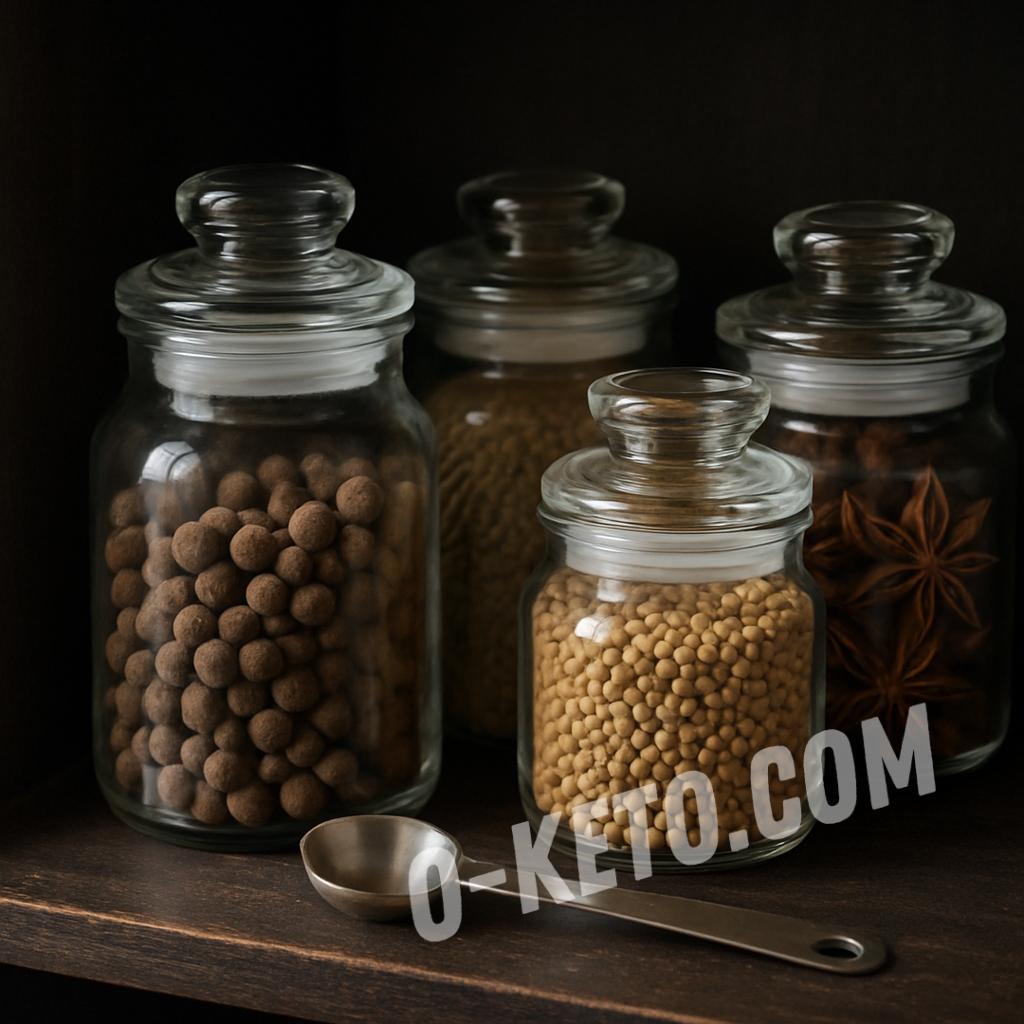
If the jars are transparent and have to stand on an open shelf, at least keep them away from direct light. Even a simple label covering part of the jar can reduce exposure. It may not be glamorous, but in a real kitchen it is more useful than a beautiful display of stale spices.
Why whole spices last longer
A whole spice keeps its aroma longer because its structure protects volatile compounds until the moment you crack, break, or grind it. In ground form, the contact surface with air becomes much larger, and oxidation speeds up together with aroma loss.
That is why black peppercorns are almost always brighter than pre-ground pepper, and coriander or cumin seeds crushed before cooking smell more alive than a jar of old powder. This does not mean everything has to be ground by hand before every meal. But it does mean that keeping at least part of the basic spice shelf whole makes practical sense.
How long spices keep
Exact shelf life always depends on quality, packaging, and home conditions, but the broad rule is simple: whole spices usually stay useful longer than ground ones. If the jar is protected from light and heat, whole seeds and peppercorns can stay workable well beyond a year, while powders usually fade sooner.
In practice, smell matters more than a romantic stockpile. If a spice already smells weak in the jar, has to be used in double amounts, or leaves only dry bitterness without a clear aroma, it is time to replace it. A small but active spice shelf is much more useful than a large but tired one.
A practical home strategy
The easiest home system is to keep durable spices whole when possible and buy powders in smaller amounts without long storage. The most fragile powders should not be exposed to heat, steam, or wet spoons. If a spice is used often, topping it up little by little usually works better than buying huge amounts rarely.
- whole seeds and peppercorns are usually better for longer storage;
- ground spices are best bought in smaller amounts;
- jars should be kept away from light, heat, and moisture;
- steam and wet spoons shorten the useful life of spices;
- smell and flavor strength matter more than having a large decorative collection on the shelf.
If you want a stronger kitchen, start not with rare exotic products but with a well-kept basic set. Coriander, cumin, pepper, paprika, cinnamon, cardamom, turmeric, and garlic all perform much better when bought in sensible volumes and not forced to age for months next to the stove.