


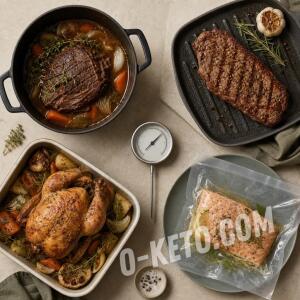


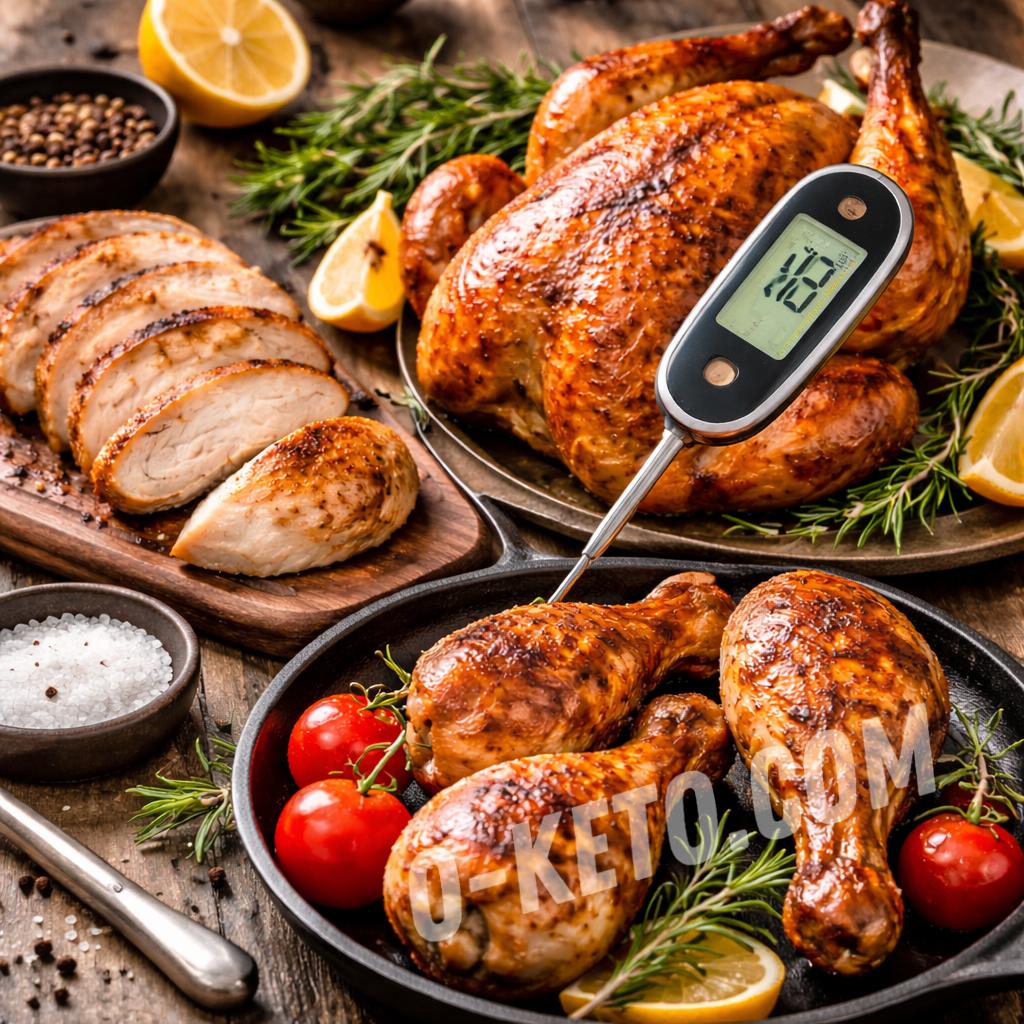

The readiness of chicken is best determined not “by eye” and not by the color of the juice, but by the internal temperature. This is the most reliable and safe method, which also helps to keep the meat juicy and not overcook it.
Why temperature is more important than “the appearance of meat”
The risk of foodborne infections from chicken is higher than from many other types of meat. Therefore, it is important to bring it to a safe state.
But safe does not mean dry: overcooking almost always occurs due to excess cooking time, not because “it has to be done that way.”
The only objective criterion for readiness is the internal temperature in the thickest part of the piece. The color of the meat, the clarity of the juice, “firmness,” and other signs can vary greatly depending on the part of the chicken, marinade, cooking method, and even kitchen lighting.
What temperature is considered safe
The guideline for traditional cooking is 74 °C inside the piece. This is the temperature at which chicken meat becomes safe.
At the same time, safety is determined not only by the peak temperature but also by the duration of exposure: bacteria die at lower temperatures if the heating lasts long enough. This is the basis of sous-vide and similar gentle methods.
| control method | safe guideline | what it provides |
| classic heat treatment | 74 °C in the center of the piece | simple and quick safety criterion |
| low-temperature pasteurization | 60 °C for about 12 minutes | softer texture, lower risk of drying out |
| very low-temperature pasteurization | 55 °C for about 1.5 hours | suitable for long cooking methods, such as sous-vide |
How to measure correctly
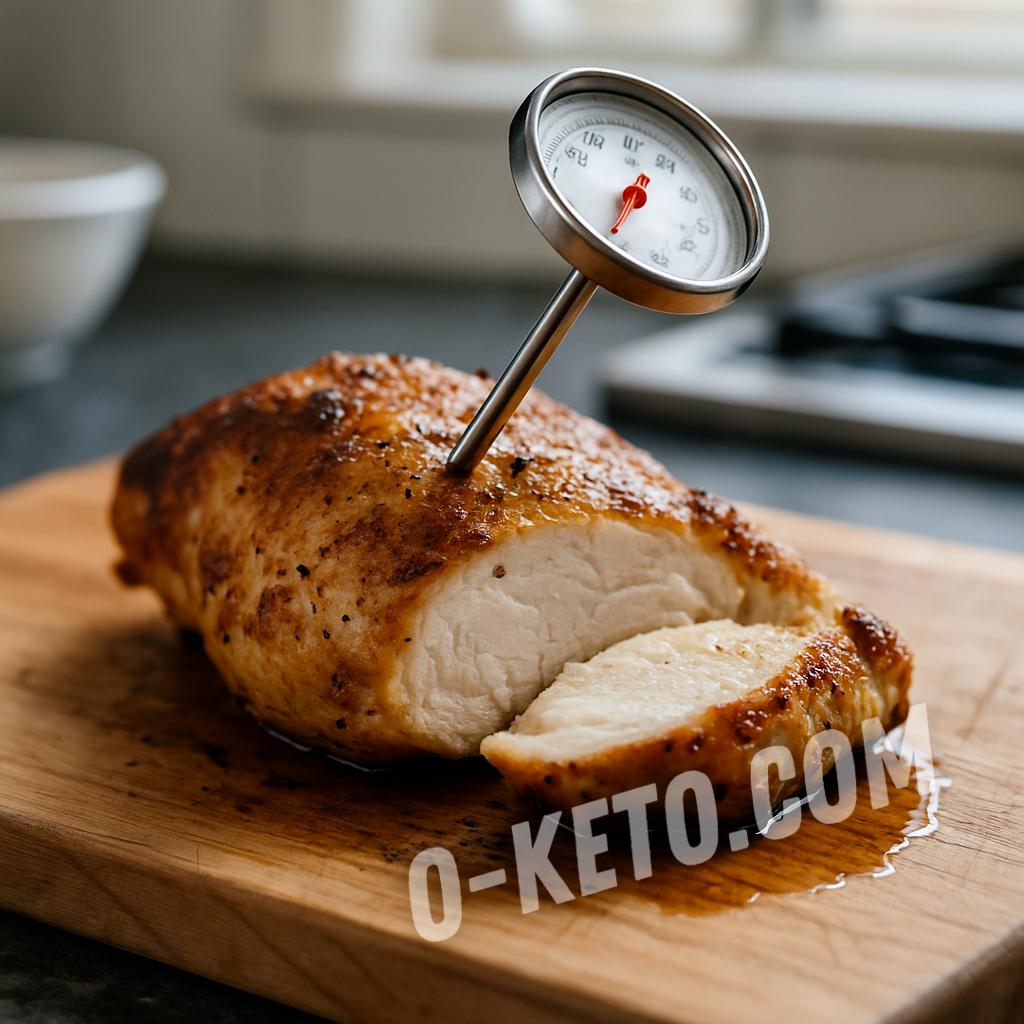
To avoid guessing, use a kitchen thermometer with a thin probe. To check accuracy, you can measure the temperature of ice water and boiling water: benchmarks of 0 and 100 °C.
Always measure in the thickest part and wait for the readings to stabilize. If the piece is uneven, it’s better to check 2-3 points.
The probe is inserted:
- breast: insert the probe from the thicker side of the fillet parallel to the plane, into the center of the thickest part;
- leg or thigh: insert the probe into the thickest part, not reaching the bone and not touching it;
- whole chicken: insert the probe between the breast and the thigh, also not touching the bone.
Residual heat: how not to overcook
Even if you remove the chicken from the heat, it continues to “cook” inside due to residual heat: the hot outer layers transfer heat to the center. Therefore, when the center reaches 74 °C, the part of the meat closer to the surface can overheat, and juiciness is lost.
A practical approach for juiciness is to remove it a little earlier and let the chicken rest in a warm place.
| what we cook | when to remove | resting |
| whole in the oven | about 68 °C in the area between the breast and thigh | 10 minutes in a warm place |
| individual pieces | 2-4 °C below the target point | 5-10 minutes on a board or plate |
What to do if there is no thermometer
Without a thermometer, you can only rely on indirect signs, but they are unreliable. If it is important for you to cook chicken consistently juicy, a thermometer is the simplest upgrade for your kitchen. It solves two tasks at once: safety and control of overcooking.
How to avoid transferring bacteria to other foods
Heat treatment is only part of safety. The second part is proper handling of raw chicken to avoid transferring possible bacteria to hands, utensils, and surfaces:
- use a separate knife and cutting board for chicken and wash them with detergent immediately after use;
- do not use the same dishes and utensils for other ingredients after contact with raw chicken;
- wash hands thoroughly after any handling of raw meat;
- do not wash chicken under running water: splashes spread contaminants around the kitchen;
- if you need to remove visible dirt, do so in a container of water or outside the kitchen, but you don’t need to wash chicken more often.
In conclusion
- determine the readiness of chicken by temperature, not “by appearance”;
- the target for classic cooking: 74 °C in the center of the thickest part;
- for juiciness, consider residual heat and let the meat rest;
- for sous-vide, temperature and exposure are important, not just “reach 74”;
- maintain kitchen hygiene, especially do not wash chicken under the tap.
Sources
- Chicken from Farm to Table: USDA Food Safety and Inspection Service
- USDA FSIS Safe Minimum Internal Temperature Chart
- USDA FSIS Food Thermometers
- Washing Food: Does It Promote Food Safety?: USDA Food Safety and Inspection Service


