


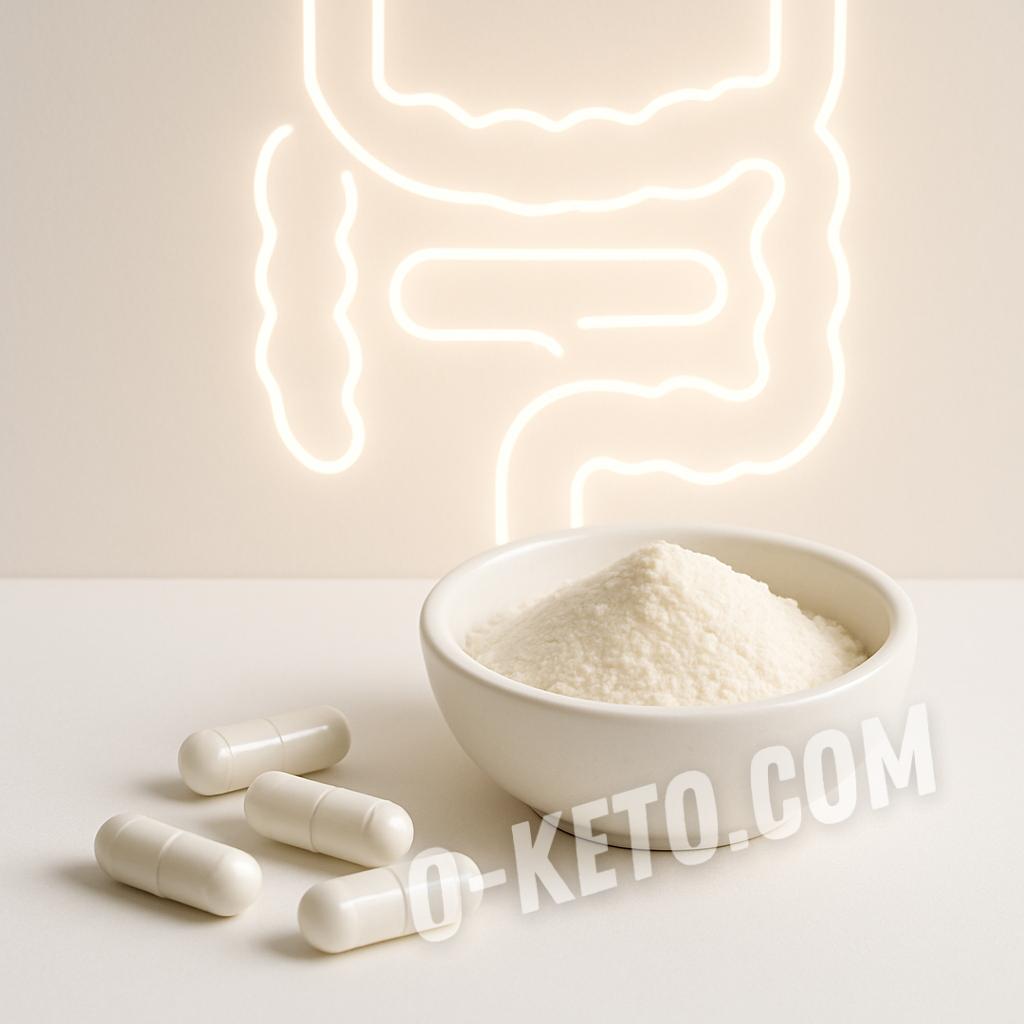

Mega IgG is usually discussed as a specialized immunoglobulin supplement used in protocols that focus on gut barrier support, food tolerance, and mucosal recovery. It is not an ordinary food product and it is not a basic nutrient from daily meals. In practical use, it is a narrow tool that people add when they want a concentrated source of immunoglobulins rather than a culinary ingredient or a general protein food.
What it is
Under the name Mega IgG, people usually mean a branded product made from serum-derived bovine immunoglobulins. The main interest is not calories or macros, but the idea of binding unwanted compounds in the intestinal lumen and helping support the gut barrier. It is therefore discussed as a supplement, not as a substitute for balanced nutrition, regular protein intake, or ordinary food-based gut care.
Different product versions may vary in the amount of immunoglobulins per serving, the dosage form, and the list of added ingredients. That is why the label matters. A recognizable brand name alone is not enough. It is important to check the real serving size, whether the product is powder or capsules, and whether sweeteners or unnecessary fillers were added.
Where it is usually discussed
This type of product most often appears in a few practical settings:
- in gut barrier support protocols;
- in strategies that try to reduce the impact of food triggers and digestive irritation;
- in cases where someone wants immunoglobulin support without relying on classic dairy colostrum;
- in recovery-oriented programs after prolonged intestinal stress, when the broader plan already makes sense.
That still does not mean Mega IgG is appropriate for every case of bloating, pain, or unstable stool. If the real issue is infection, inflammatory bowel disease, severe malabsorption, or another serious gastrointestinal condition, this kind of supplement cannot replace proper evaluation and treatment.
How to choose
Look at the source of the immunoglobulins, the amount per serving, and the excipients. For some people, lactose-free and casein-free formulas are especially relevant. Powder may be convenient when higher amounts are needed, but capsule format can be easier for routine use if taste or volume is a problem.
If the goal is to judge tolerance carefully, a simpler formula without many extra prebiotics, herbs, or stimulants is usually the better starting point. It is much easier to understand what the gut is reacting to when the ingredient list is clean.
Limitations
Even though it is often marketed as a gentle digestive support product, it should not be used mindlessly. Extra caution is sensible in pregnancy, breastfeeding, active autoimmune treatment, pronounced allergy history, and complex gastroenterology protocols. If the product increases bloating, nausea, heaviness, or stool instability, the approach should be reviewed instead of pushed forward automatically.
It is also worth remembering that a supplement with good digestive marketing is not a universal answer to every gut complaint. At best it can be one part of a broader plan, not a complete replacement for that plan.
How to store it
Keep Mega IgG tightly closed in a dry place away from strong heat and steam. Powders deserve special protection from humidity because they can clump and become harder to dose accurately. Capsules also store better away from the bathroom and the kitchen stove.


