


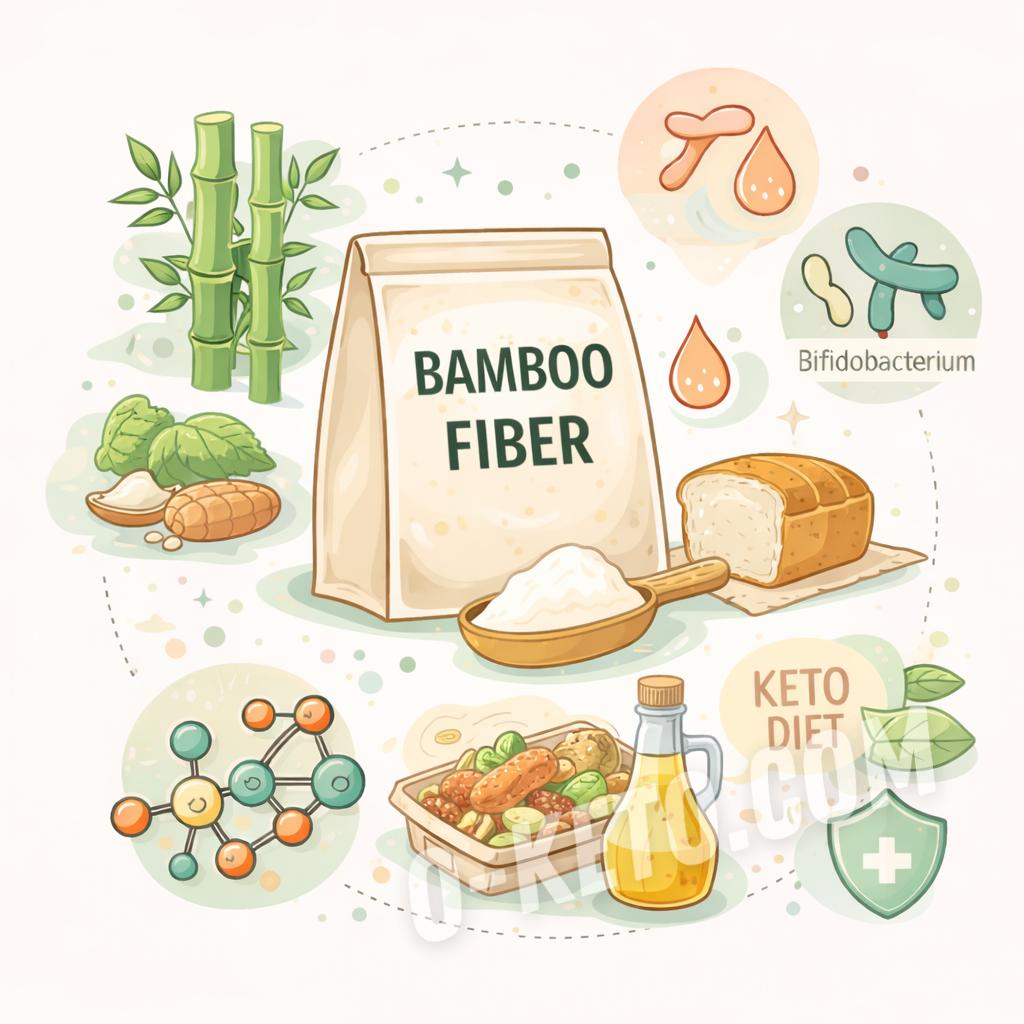

Bamboo fiber in food is a pale powder made from purified plant fiber obtained from bamboo. It should not be confused with textile bamboo fibers: the food ingredient is made for recipes and technological use. Its taste is almost neutral, the aroma is mild, and its main role is to hold moisture, add bulk, and support structure where dough or ground meat behaves poorly without wheat flour and starch.
In low-carb cooking, bamboo fiber is a functional ingredient, not a food to eat on its own. It can make keto crackers, flatbreads, sugar-free muffins, patties, meatballs, creams, and fillings more stable. But it is not “flour” in the usual sense: it adds almost no flavor, does not form gluten, and needs the right amount of liquid.
Nutrition profile
Bamboo fiber consists mostly of insoluble dietary fiber. Digestible carbohydrate is usually low, while the calorie value on a label depends on the producer and local rules. For keto, the most important point is the ingredient list: a clean product should not contain sugar, maltodextrin, starch, rice flour, or flavored additives.
Insoluble fiber does not dissolve like inulin and does not turn liquid into a smooth gel like some gums. It works mechanically: it absorbs some moisture, adds dry mass, makes texture denser, and helps food hold shape. That is why it is often used together with eggs, cheese, psyllium, almond flour, coconut flour, or protein powders.
Is it suitable for keto?
Bamboo fiber fits keto and LCHF if it is a clean food fiber without starchy fillers. It barely changes the carbohydrate profile of a dish and can replace part of the dry ingredients when you need less flour or a less wet texture. It is especially common in low-carb crackers, buns, pizza bases, breading without breadcrumbs, patties, and meat rolls.
At the same time, bamboo fiber does not need to be in every keto recipe. If a dish already holds together well, the added fiber can make it dry or cottony. Start with small amounts: a teaspoon or a few grams can already change the dough noticeably. After adding it, mixtures often need a short rest so the fiber can absorb moisture.
How to use it
In dough, bamboo fiber is added as a dry ingredient and mixed with other powders before liquid is added. In ground meat, it can help hold juices, but too much makes patties dense. In creams and fillings, it should be used carefully because coarse fiber may be felt on the tongue. For breading, it can be mixed with grated hard cheese, spices, sesame, or almond flour.
A common mistake is replacing all flour with bamboo fiber one for one. The recipe will almost certainly turn dry. Bamboo fiber works better as part of a blend: a little fiber for structure, almond or coconut flour for flavor, eggs and fat for binding, and psyllium or gum when elasticity is needed.
How to choose
Look for a simple label: food-grade bamboo fiber, without sweeteners, starch, or flavorings. The powder should be pale, dry, without musty smell or lumps. For delicate recipes, fine grind matters because coarse particles may be noticeable in cream or a soft bun. If the package says “keto baking mix,” read the full ingredient list because it may include other fibers, sweeteners, and raising agents.
Limits
There is no specific deficiency of bamboo fiber; it is not an essential nutrient. The main limit is fiber tolerance. A sudden large increase can cause heaviness, bloating, gas, or stool that is too dry, especially with low fluid intake. With a sensitive digestive tract, a tendency to constipation, or a strict elimination-style menu, increase the amount gradually.
Storage
Keep the powder in a dry cabinet, in a tightly closed jar or bag. It easily absorbs moisture and odors, so a wet spoon or strong spices nearby can spoil quality. If the fiber has clumped, smells damp, or changed color, a fresh package is better for precise recipes.
What can replace it?
The replacement depends on the task. For structure, possible options include oat fiber, psyllium, some coconut flour, almond flour, flax meal, or a small amount of gum. They behave differently: psyllium gives viscosity, coconut flour absorbs a lot of water, almond flour adds fat and flavor, and gums work in tiny amounts. Test any replacement in a small batch and adjust the liquid.


