


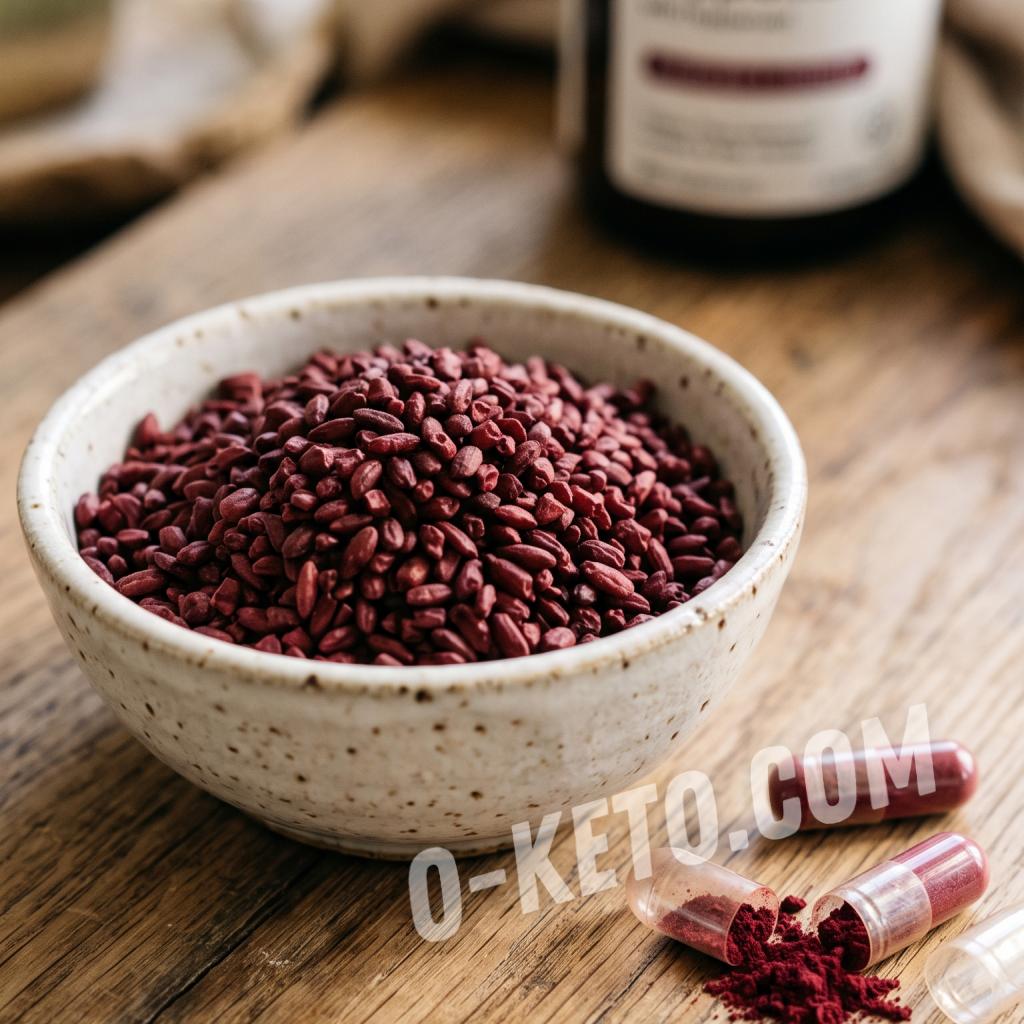

Red yeast rice is fermented rice produced with Monascus purpureus. In modern use it is discussed far more often as a supplement ingredient than as an ordinary grain for daily meals. Fermentation gives the rice its deep red color and creates a very different chemical profile from plain white or brown rice. The best-known reason it attracts attention is the presence of monacolins, including monacolin K, which is why red yeast rice should not be treated as just another colorful rice variety. In practical nutrition discussions, it belongs much closer to the supplement world than to the usual grain section.
What It Is
Red yeast rice starts as rice that is fermented with Monascus cultures. The resulting material has a red to burgundy tone and a long history in parts of Asia as a coloring and fermentation-related ingredient. In current supplement markets, though, the main interest is not culinary use but the presence of compounds associated with cholesterol metabolism. That difference matters because the label may still say “rice,” while the practical reason people buy it is completely different from buying rice flour, rice bran oil, or a staple grain product.
Why People Use It
Today red yeast rice is most often found in capsules, tablets, and blended lipid-support formulas. It may appear alongside coenzyme Q10, berberine, policosanol, or other ingredients discussed in the context of cholesterol and cardiovascular risk management. What matters is not just the product name but the actual standardization and manufacturing quality. Two supplements with the same front label can differ greatly in active-content profile, testing, and overall reliability. For a keto-oriented product catalog, its practical role is therefore supplement-related, not meal-related.
What To Check When Choosing
Useful checkpoints include the producer reputation, monacolin standardization, labeling clarity, and contaminant control. One especially important issue is citrinin, an undesirable compound that can appear when production quality is poor. That is why quality assurance matters so much here. A serious product should make its composition understandable and should not hide behind vague marketing language. Dose strength, combination ingredients, and testing transparency are all more important than the fact that the raw material originally came from rice.
Limits and Interactions
Red yeast rice should not be viewed as a casual food ingredient that anyone can take without context. Because some of its active compounds overlap conceptually with drug-based cholesterol-lowering strategies, there can be restrictions, adverse effects, and medication interactions. Extra caution is relevant for people already taking statins, people with liver concerns, muscle-related side effects, pregnancy, breastfeeding, or complex treatment plans. In those situations, the right approach is to discuss the product with a clinician rather than rely on the comforting assumption that “natural” automatically means harmless.
What This Means For Keto
When red yeast rice appears as a supplement, it is not evaluated as an ordinary carbohydrate-rich rice product in the diet. In capsule or small-dose form, its macro contribution is usually irrelevant in practice. The value of the product page is therefore not in carbs-per-100-grams accounting, but in explaining what the ingredient is, why it is used, and what limitations matter. For that reason this kind of card works best as a practical supplement reference rather than as a standard food entry.


