


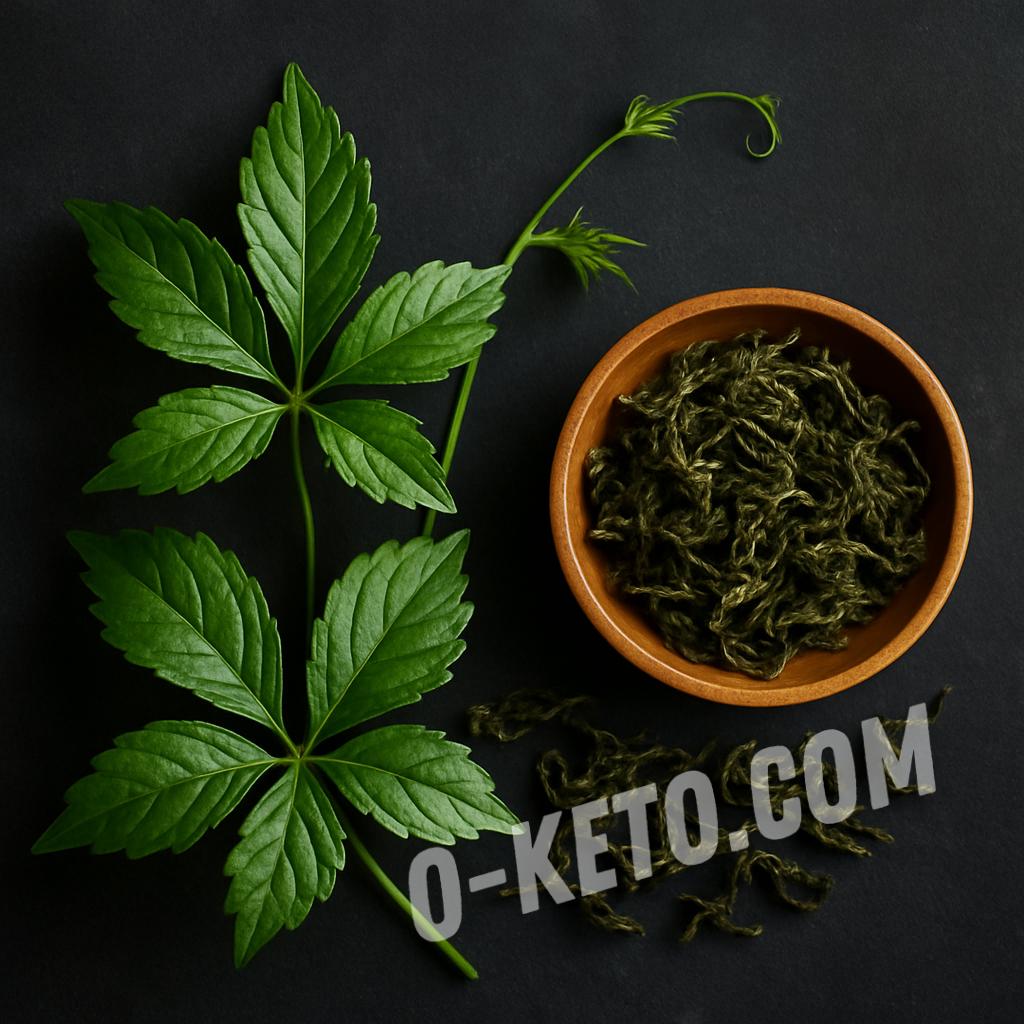

Jiaogulan is the climbing plant Gynostemma pentaphyllum, most often used as tea, dried leaf material, powder, or extract capsules. Interest in it is mainly linked to adaptation support, stress resilience, energy balance, and metabolic markers. In practical use it is often placed near other mild herbal adaptogens, yet it also has its own reputation in discussions about lipid metabolism, fatigue, and recovery capacity.
What it is
Jiaogulan is known in Asian herbal traditions as a bitter-toned plant with a tonic profile that does not rely on the sharp stimulation pattern of coffee. Its composition is often discussed in terms of saponins, flavonoids, and antioxidant compounds that may influence vascular tone, oxidative stress, and general resilience. For that reason people use it not as a casual flavor ingredient but as a more directed botanical support that is usually judged over a course rather than by a one-time serving.
When people use it
Jiaogulan is most often considered when someone wants a gentler herbal layer for stress adaptation, mental steadiness, recovery from overload, and broader metabolic support. It is also discussed in relation to lipid balance, triglycerides, fatigue, and reduced stamina. That does not mean it replaces diet quality, movement, or medical treatment. Its role, when relevant, is supportive and secondary within a wider plan.
Which forms are most practical
The market includes leaf tea, loose dried herb, powdered material, liquid extracts, and capsules with fixed dosages. In practice, the easier forms to work with are the ones that clearly state how many milligrams of extract or raw material each dose contains. Products with vague descriptions, unclear concentration, or unspecified plant-part sourcing are harder to interpret. Standardized capsules or extracts are usually more convenient when a regimen needs precision.
What to keep in mind
Even though jiaogulan is often described as mild, it is not identical in tolerance for everyone. Some people may notice insomnia, overstimulation, headache, stomach irritation, or changes in blood-pressure comfort. Tolerance may also differ between taking it fasting and taking it with food. Extra caution makes sense during pregnancy, breastfeeding, marked hypotension, unstable blood-pressure therapy, or when combining it with other active adaptogens or stimulatory compounds.
How to choose
Useful selection points include dosage in milligrams, a clean ingredient list, a clear description of the botanical source, and the absence of unnecessary sweeteners when not needed. For longer courses, simpler and better standardized products are usually more practical than decorative multi-herb blends with fuzzy labeling. If the goal is metabolic or adaptogenic support, clarity tends to matter more than marketing language.
Storage
Dried herb, tea, and capsules should be stored in a dry place away from light and heat. Moisture and repeated air exposure gradually reduce the stability of plant compounds and can change the taste of the raw material. Liquid forms should also follow the manufacturer’s storage rules after opening.


