


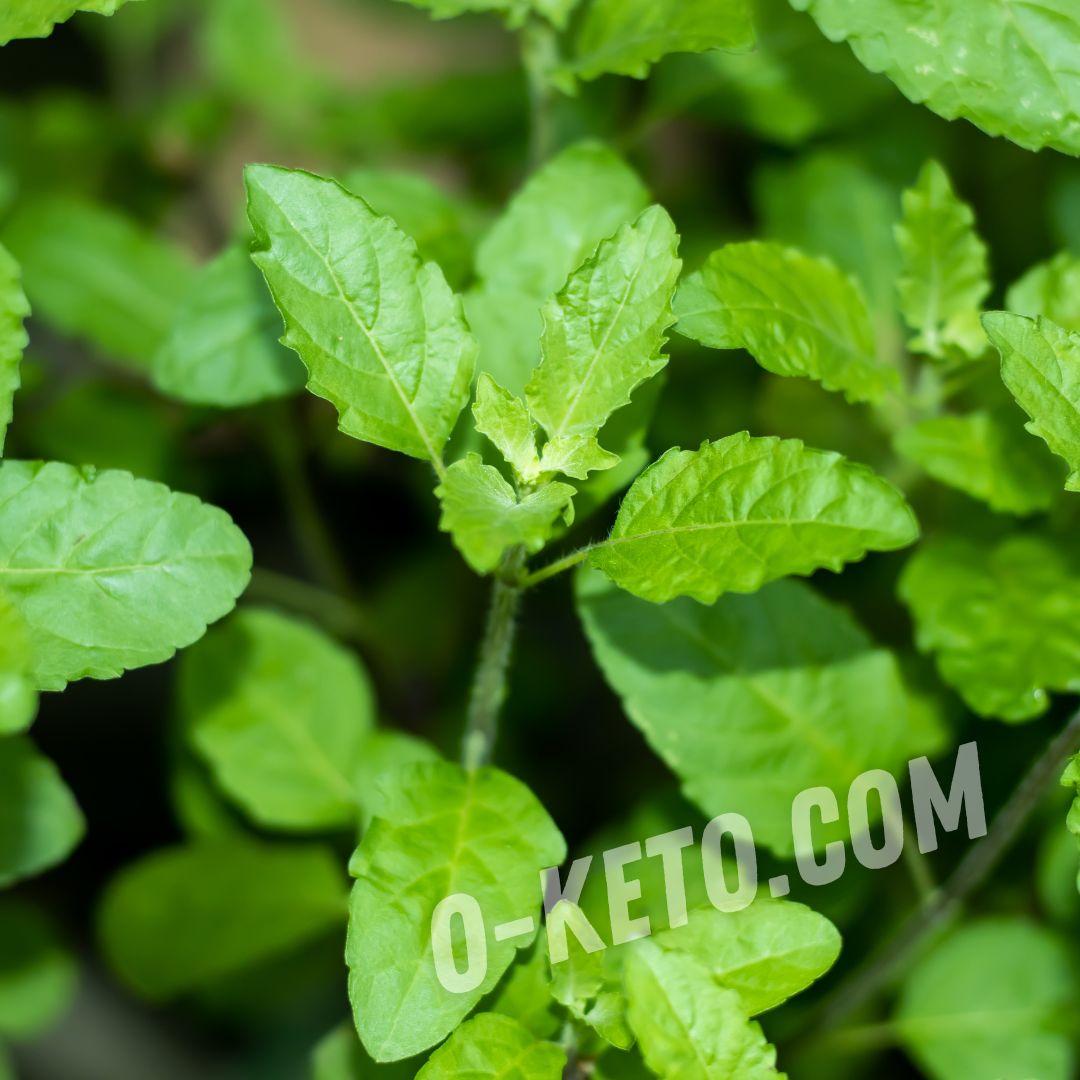

Tulsi, or holy basil, is an aromatic plant, Ocimum tenuiflorum, also found in older texts as Ocimum sanctum. In India it is grown near homes and temples, used in rituals, brewed as tea, and added to food. Its taste differs from common sweet basil: tulsi is spicier and warmer, with clove-like, peppery, herbal, and sometimes lemony notes.
It is sold as dried leaves for tea, powder, capsules, extracts, tinctures, essential oil, and fresh greens. These are different products. A cup of herbal infusion and a concentrated tincture are not the same in composition or serving, and essential oil should not be treated as an ordinary food spice.
Nutritional value
In culinary amounts, tulsi has almost no effect on calories or carbohydrates in a dish. A few fresh leaves, a pinch of dried herb, or a cup of sugar-free infusion adds aroma but does not become a meaningful source of protein, fat, or carbohydrates. If the product is sold as a sweet tea mix, syrup, or drink powder, the whole ingredient list must be checked.
The leaves contain aromatic components, tannins, eugenol-like notes, polyphenols, and mineral traces. These details matter for flavor and smell, but they do not turn tulsi into a standalone substitute for food or professional care. In the diet it is mainly an herb, tea base, or spicy addition.
Is it suitable for keto?
For keto and LCHF, tulsi fits when used as greens, spice, or unsweetened tea. The carbohydrate load in such a portion is minimal. Problems begin not with the plant itself, but with additions: honey, sugar, syrups, sweet granules, fruit fillings, and ready “wellness” blends can make the drink no longer low-carb.
Tulsi fits keto cooking as an alternative to sweet drinks. Tea can be taken hot or cold, with lemon, mint, ginger, cinnamon, a small amount of cream, or mixed with black or green tea. If an extract is used, it is better viewed separately from food: as a concentrated product with instructions and limitations.
How to use it
For an infusion, dried leaves are usually covered with hot water and not boiled for a long time. The taste is herbal, spicy, and slightly astringent. Fresh leaves can be added to salads, sauces, curries, dishes with sugar-free coconut milk, fish, chicken, eggs, vegetables, and unsweetened yogurt sauces. Tulsi pesto will be spicier than pesto made from familiar sweet basil.
Tulsi seeds are sometimes used in drinks and desserts, where they swell and create a gel-like texture. This is a separate form: it needs soaking, and the additions in the recipe must be counted. Essential oil is used only according to the producer’s purpose; it is not added to homemade food simply “for aroma”.
For a softer taste, make the infusion weaker and steep it for less time. For a spicier drink, tulsi can be mixed with ginger, cardamom, or black tea. Sweetener is added separately and only if it fits the diet.
How to choose
Dried tulsi should smell clean, herbal, and spicy, without mustiness, mold, or raw hay odor. The leaves should not look like a dusty gray mass. In tea blends, check the composition: tulsi may be mixed with mint, ginger, cinnamon, lemon, licorice, or black tea. For keto, the absence of sugar and sweet granules matters.
Fresh leaves should be firm, without wet dark spots, and with a lively aroma. For tinctures and extracts, dosage, solvent, concentration, and producer instructions matter. The more concentrated the form, the less it resembles an ordinary kitchen herb.
Limitations
Tulsi may not suit people allergic to basil, mint-family plants, or other aromatic herbs. Caution is needed during pregnancy and breastfeeding, before surgery, and when using products that affect clotting, pressure, or blood sugar. Ordinary tea is less risky than concentrated extracts, but an individual reaction is still possible.
If nausea, burning in the mouth, rash, itching, swelling, or noticeable stomach discomfort appears, remove the product. Children are better given a weak infusion or herbs in food, not concentrates.
How to store it
Keep dried leaves in a tightly closed jar, away from light, moisture, and strongly smelling spices. Fresh tulsi is stored like tender herbs: in the refrigerator, not wet, in a container or glass of water. Essential oil and tinctures are kept according to the package instructions, usually in a dark cool place.
What can replace it?
For fresh spicy greens, common basil, Thai basil, mint, cilantro, or a mix of basil with a tiny amount of clove can work. For tea, mint, lemon balm, lemongrass, ginger, chamomile, or a sugar-free spiced herbal blend may solve a similar task. In curry, Thai basil is closest, but the aroma will still be different.


