
Cirrhosis is not just a word in a scan result. It is a state in which a meaningful part of normal liver tissue has been replaced by scar tissue, and that changes how the body handles food, protein, fluid balance, ammonia, bile, hormones, and blood sugar. That is why nutrition in cirrhosis is not a decorative afterthought. It directly affects how a person tolerates meals, how much strength they keep, and how much extra stress reaches an already damaged liver.
It is important to separate support from miracle claims. Nutrition does not erase established scar tissue and it does not replace medical supervision, especially when ascites, jaundice, edema, bleeding risk, low albumin, confusion, or other decompensation signs are present. But food can still work in two opposite directions: it can either reduce unnecessary metabolic pressure and improve tolerance, or it can worsen bloating, weakness, glucose swings, protein deficit, and fluid retention.
What changes in cirrhosis and why an ordinary diet often stops working well
A healthy liver participates in hundreds of processes. It helps process incoming nutrients, contributes to protein synthesis, supports hormone handling, participates in ammonia detoxification, and works closely with bile production and the absorption of fat-soluble vitamins. In cirrhosis, part of that functional reserve is lost, so the body may react to ordinary meals very differently than before.
Some people feel full quickly because abdominal pressure and ascites make large meals uncomfortable. Others notice poor tolerance to fatty foods, swelling, unstable stools, post-meal exhaustion, or progressive muscle loss even when they seem to be eating enough. That happens because cirrhosis is not only a liver-shape problem. It can become a whole-body nutrition problem involving protein balance, energy regulation, digestion, and recovery.
Why nutrition in cirrhosis works best as support rather than as an extreme diet
The worst patterns in cirrhosis are usually swings. One extreme is a high-sugar, high-snack, high-processed pattern that keeps insulin high and pushes more metabolic stress through the liver. The other extreme is overly harsh restriction: fear of protein, very little food, long fasting windows, or trying to live on almost nothing but broth and vegetables. That second pattern may sound gentle, but in practice it can worsen muscle loss, fatigue, and poor recovery.
The more useful strategy is usually calmer and more practical. Meals should be tolerable, not overly heavy, not strongly glycemic, and still rich enough in protein and micronutrients to help the body preserve function. The goal is not to perform a dietary ideology. The goal is to reduce unnecessary burden while covering what the body still needs every day.
How lowering glucose and insulin spikes can help some people
Many people develop serious liver disease on top of insulin resistance, fatty liver, metabolic syndrome, or years of high insulin exposure. In that setting, it often helps to reduce the foods that create the biggest glucose swings: sugary drinks, desserts, white flour products, sweet snacks, and large portions of refined starch. More stable glucose usually means more predictable energy, less post-meal sleepiness, fewer cravings, and lower metabolic noise for the liver to manage.
That does not automatically mean everyone with cirrhosis should go into strict keto. The useful principle is usually gentler: less sugar, fewer glucose surges, and more predictable meals built around protein and tolerable whole foods. If a lower-carb pattern is used, it should be adapted carefully to appetite, bile tolerance, muscle status, and clinical severity instead of being turned into an aggressive high-fat challenge.
Why protein balance matters so much in cirrhosis
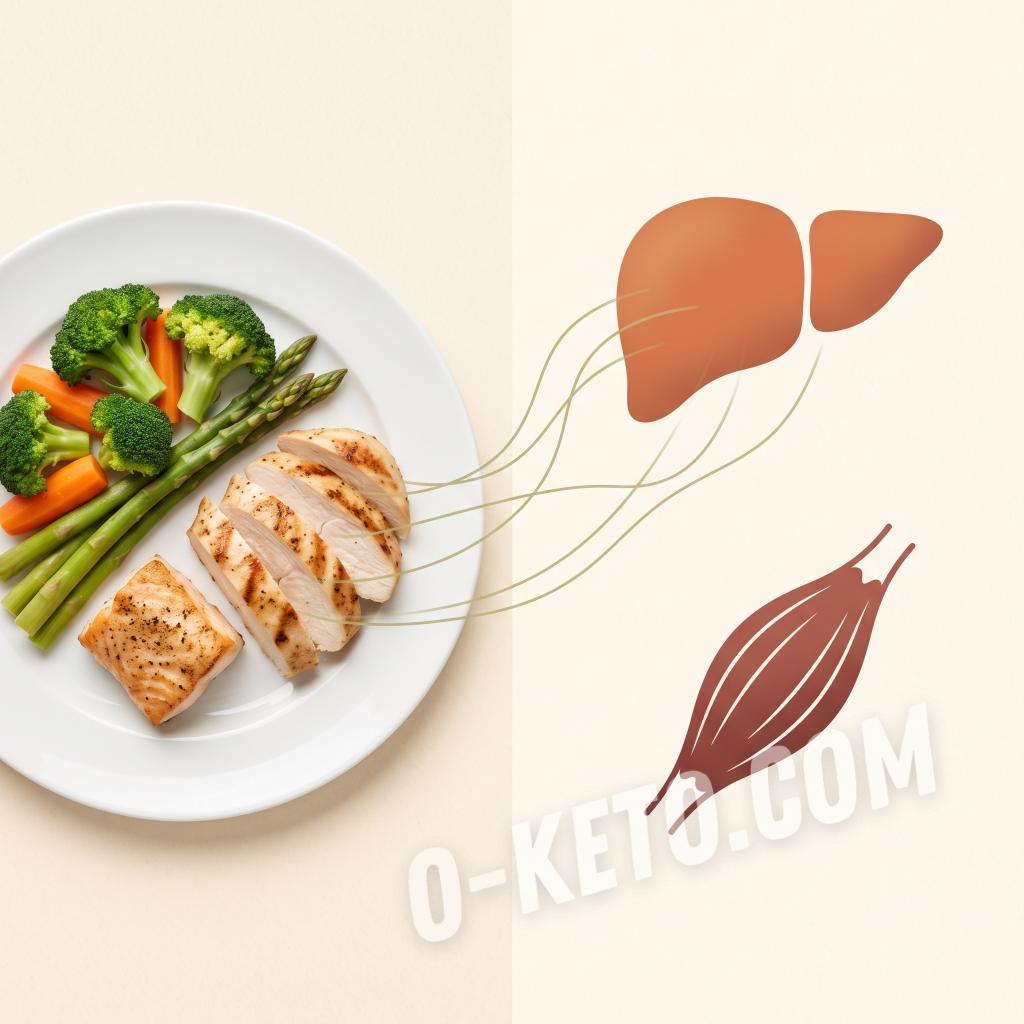
Protein is one of the central nutrition questions in cirrhosis. A damaged liver may struggle more with protein-related metabolism, yet the body also needs protein to maintain muscle, albumin, immune function, enzymes, and repair. If a person becomes afraid of protein and starts avoiding it, muscle wasting can progress faster, and that often weakens the person more than the original meal fear.
At the same time, the answer is not simply to force huge protein loads. In more fragile situations, especially when ammonia handling is poor and encephalopathy risk exists, very large protein boluses may be tolerated badly. The practical target is usually balance: moderate amounts of well-tolerated protein spread through the day often work better than a long fast followed by one very heavy protein meal. Eggs, fish, cultured dairy when tolerated, cottage cheese, yogurt, and softer meat dishes are often easier to work with than very heavy restaurant-style meals.
When albumin falls, strength drops, appetite disappears, or encephalopathy becomes a real concern, protein decisions need more individual adjustment. That is where symptom tracking and medical follow-up matter more than internet slogans about either “eat all the protein” or “protect the liver by avoiding protein.”
Why fat tolerance and bile flow deserve their own attention
The liver is tightly connected to bile production and bile movement, and bile is essential for handling fats and absorbing fat-soluble nutrients. That is why some people with cirrhosis feel clearly worse after very fatty meals, heavy cream dishes, deep-fried food, or large combinations of fat with sugar and alcohol. The issue is not that all fat becomes forbidden. The issue is that tolerance may narrow, and the digestive system may handle moderate fat much better than extreme fat.
In practice, this often means choosing smaller and steadier fat portions instead of trying to cover energy mostly with oils, cream, butter, and fat bombs. If fatty meals repeatedly bring nausea, diarrhea, heaviness, bitterness, or strong bloating, it is more useful to respect that feedback than to keep pushing the same pattern because a diet template says it should work.
What a calmer day-to-day food pattern often looks like
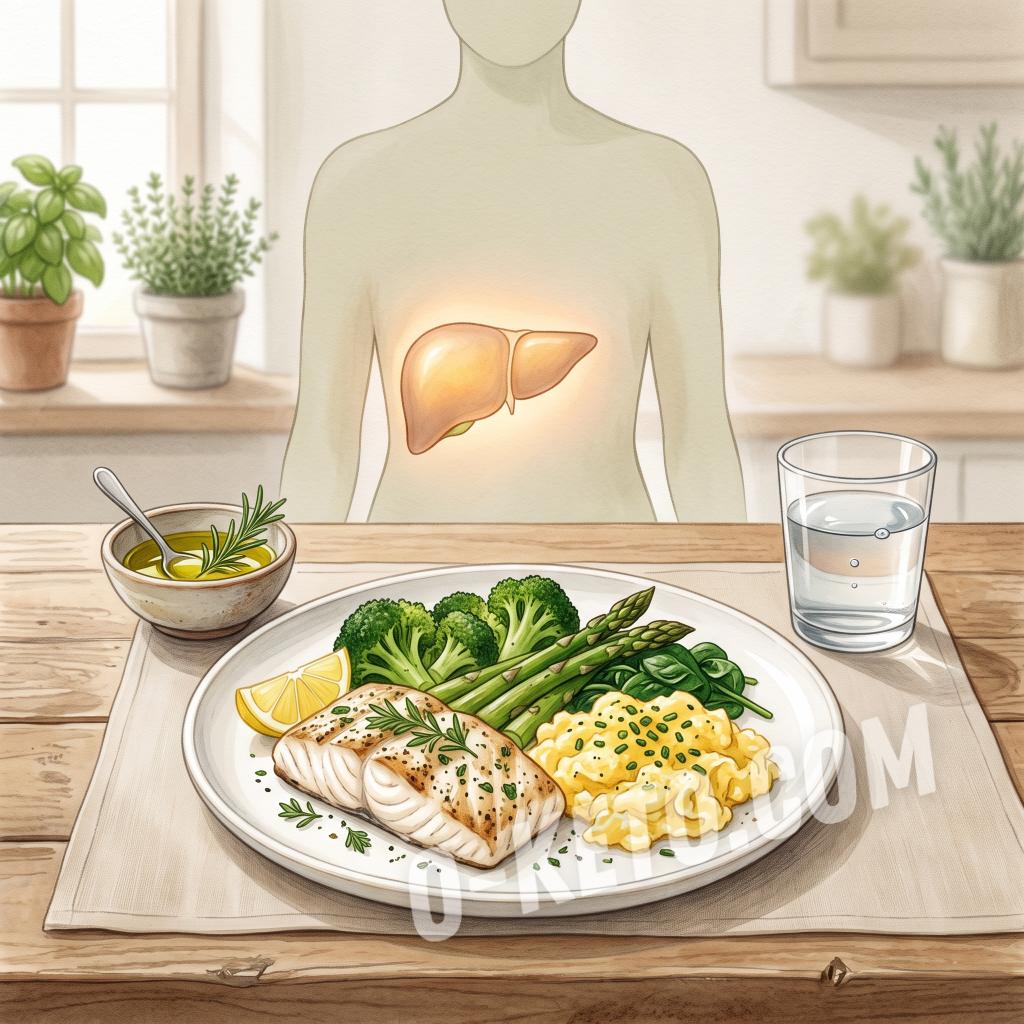
Many people do better on simple, repeatable meals: soups, stews, softly cooked vegetables, eggs, baked fish, poultry, cottage cheese dishes, fermented dairy when tolerated, and moderate portions of foods that do not create violent fullness or sugar spikes. When appetite is poor, smaller meals or snacks built from real food often work better than forcing very large plates. The right meal is not just “healthy” on paper. It has to be digestible in real life.
Vegetables matter not only for fiber but also for potassium, magnesium, and general diet quality, yet raw high-volume salads are not always the best answer when bloating is severe. Some people tolerate cooked vegetables, blended soups, and softer textures much better. It is also worth watching individual triggers such as very sweet fruit, large amounts of milk, legumes, cabbage, onions, or sugar alcohols when the gut is already reactive.
What usually makes the situation worse
Alcohol is the clearest example, but it is not the only one. Repeated overeating, sugary drinks, ultra-processed food, constant snacking, and heavy late-night meals often increase metabolic pressure. Another common mistake is self-prescribed “liver cleansing” with many herbs and supplements at once. A struggling liver does not automatically benefit from a complicated detox stack. In some people, that only adds nausea, diarrhea, or worse food tolerance.
Salt also has to be considered in context rather than as a slogan. If ascites, edema, or a direct physician plan requires sodium control and fluid monitoring, that becomes part of the medical strategy, not just a generic wellness tip. The more advanced the cirrhosis, the less useful it is to improvise from social media rules.
When low-carb and fasting require extra caution
Lower-carb eating and intermittent fasting are often discussed as tools for insulin reduction and lower inflammatory pressure. In some earlier metabolic liver problems, that can make sense. But cirrhosis changes the context. If the person is weak, losing muscle, barely eating, has ascites, low intake, unstable blood pressure, or signs of encephalopathy, long fasting windows may do more harm than good.
That is why the useful question is not “How strict can I go?” but “What is actually tolerated and sustainable here?” Sometimes a softer version works: fewer sugary meals, fewer late snacks, more stable protein-based food, and no alcohol. But decompensated cirrhosis is not a good setting for OMAD, aggressive keto, or multi-day fasting experiments without direct medical oversight.
What to monitor with symptoms and labs
Food tolerance in cirrhosis should not be judged only by body weight. Muscle strength, swelling, abdominal size, appetite, protein tolerance, fat tolerance, bowel patterns, mental clarity, and the reaction to long gaps without food all matter. On the laboratory side, doctors often watch albumin, bilirubin, liver enzymes, urea, electrolytes, glucose, and other markers that help show whether the person is sliding into malnutrition, dehydration, decompensation, or worsening liver stress.
The main practical conclusion is simple: food in cirrhosis should help a person stay steadier, eat more calmly, digest more predictably, and lose less strength. That usually means enough protein, less sugar chaos, caution with heavy fat, no alcohol, and quick reassessment when symptoms start to say that self-experiments are going too far.
Sources
- Eating, Diet, & Nutrition for Cirrhosis – National Institute of Diabetes and Digestive and Kidney Diseases
- Malnutrition in the Adult with Cirrhosis – American Association for the Study of Liver Diseases
- Malnutrition, Frailty, and Sarcopenia in Patients With Cirrhosis: 2021 Practice Guidance by the American Association for the Study of Liver Diseases
- EASL Clinical Practice Guidelines on Nutrition in Chronic Liver Disease
- ESPEN Guideline on Clinical Nutrition in Liver Disease
- Why Is Nutrition So Important in Alcohol-Associated Liver Disease? – American Association for the Study of Liver Diseases