


Stomach acidity
Hydrochloric acid helps digest proteins and limits the passage of some microorganisms through the stomach. Acidity changes during the day, and reduced acid production may be related to atrophic gastritis, Helicobacter pylori infection, medicines, and other conditions.
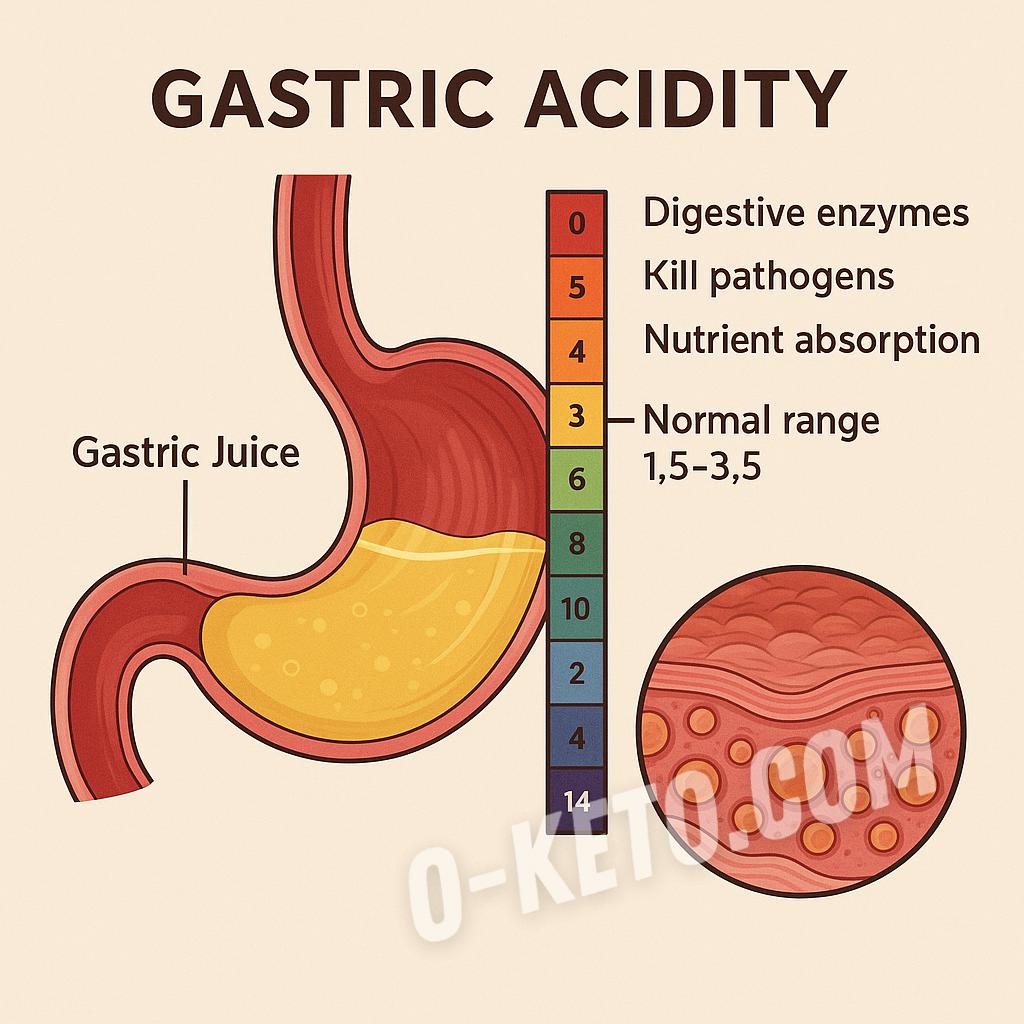
Stomach acidity depends on the activity of parietal cells, which secrete hydrochloric acid. It creates the acidic environment needed to activate pepsin, contributes to the initial digestion of proteins, and helps limit the passage of some microorganisms further through the digestive tract.
Gastric juice does not remain in one constant state. Its composition and pH change after meals and in response to hormonal signals and medicines. Heartburn, heaviness, or bloating do not by themselves show whether acidity is high or low: similar symptoms can occur with gastritis, functional dyspepsia, reflux, and other conditions.
Normal acidity values
Acidity is measured on the pH scale: the lower the value, the more acidic the environment. Textbooks often give a range of about 1.5–3.5 for gastric juice, but the result depends on whether the stomach was empty, when the measurement was taken, and which method was used. A single number should therefore not be treated as a diagnosis.
Acid production and the stomach lining may be affected by:
- Helicobacter pylori infection and chronic inflammation of the lining;
- atrophic or autoimmune gastritis, in which fewer glands produce acid and enzymes;
- acid-suppressing medicines, including proton pump inhibitors, when used for a prolonged period;
- stomach surgery, age-related changes, and other diseases;
- alcohol, smoking, NSAIDs, and other factors that damage the protective lining.
Consequences of acidity disorders
A high acid load or a weakened protective lining may be accompanied by burning, pain, and other upper-GI symptoms. Heartburn, however, is not the same as a diagnosis of high acidity: it is related to reflux of stomach contents into the esophagus and must be interpreted in context. Peptic ulcers are more often linked to H. pylori infection and NSAID use, so explaining them only by the acid level is inaccurate.
Reduced acid production is especially relevant in atrophic and autoimmune gastritis. These conditions may impair the release of iron from food and may be associated with iron deficiency; autoimmune gastritis can also reduce intrinsic factor, which is needed to absorb vitamin B12. Acid-suppressing medicines may reduce the release of food-bound B12 as well, but this does not mean that the medicines should be stopped without medical advice.
When acid production is low, the stomach’s protective barrier may be weaker, increasing susceptibility to some infections. A link with SIBO, bloating, or altered stools is not automatic: these conditions have different causes and require separate assessment.
How acidity and its causes are assessed
Symptoms cannot reliably determine gastric pH. A clinician considers the symptoms, medicines, medical history, and alarm features, then chooses tests when needed. If gastritis is suspected, testing for H. pylori may be used; upper endoscopy with biopsy is performed when indicated. A complete blood count, ferritin, vitamin B12, and other tests may be appropriate when anemia or other risk factors are present.
Urgent medical assessment is needed for vomiting blood, black stools, progressive weight loss, repeated vomiting, marked weakness, difficulty swallowing, or persistent severe pain. These signs should not be explained simply as “bad acidity.”
What actually supports stomach health
There is no universal diet proven to normalize acidity for everyone. Adequate protein can be part of a balanced diet, but the claims that animal protein is the main regulator of acidity or that vegetarian eating by itself causes hypoacidity are not established as general rules. Acid production depends on disease, medicines, and the condition of the gastric lining, not only on the proportion of protein or carbohydrates in the menu.
If particular foods worsen heartburn or pain, reducing them temporarily and discussing the pattern with a clinician may help. Alcohol and smoking damage the lining, while NSAIDs can increase the risk of gastropathy and ulcers. Proton pump inhibitors and other medicines should be used as prescribed and not stopped abruptly without medical advice.
Conclusion
Stomach acidity is one part of a complex system that supports digestion and protects the gastric lining. Reduced acid production may result from a specific disease, medicine, or surgery and can sometimes be associated with iron or vitamin B12 deficiency. Symptoms do not replace diagnostic assessment, and food cannot universally “raise” or “lower” acidity without identifying the cause.
A balanced diet, avoiding smoking, caution with alcohol and NSAIDs, and timely assessment of persistent symptoms can reduce the risk of complications. When a condition is confirmed, treatment should be determined by a clinician.
Sources
- Definition & Facts for Gastritis & Gastropathy — National Institute of Diabetes and Digestive and Kidney Diseases
- Vitamin B12 — Health Professional Fact Sheet — National Institutes of Health, Office of Dietary Supplements
- ACG Clinical Guideline: Treatment of Helicobacter pylori Infection — American College of Gastroenterology
If you have any questions about the term "Stomach acidity", you can ask them to AI. Please note, a low-cost OpenAI model is used. It may answer questions about disease treatment with errors!


 1 / 4
1 / 4 1 / 4
1 / 4 1 / 4
1 / 4

 1 / 4
1 / 4 1 / 4
1 / 4
 1 / 4
1 / 4