


Endocytosis
Endocytosis is the process by which a cell takes in external material by forming membrane vesicles.
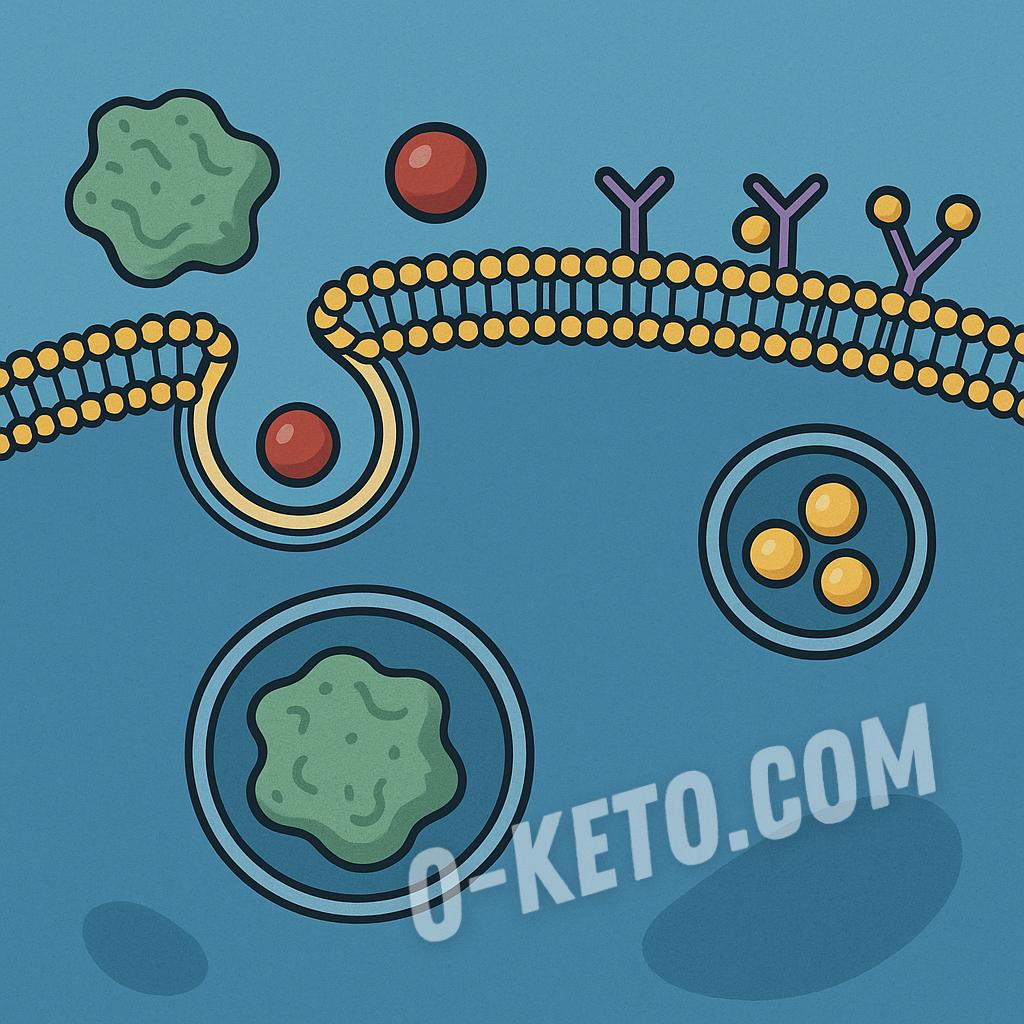
Endocytosis is the process by which a cell takes in material from its environment by folding part of the membrane inward and forming a vesicle. Cells use it to obtain nutrients, regulate receptors, remove particles, interact with the immune system and maintain internal balance.
There are different forms: phagocytosis for large particles, pinocytosis for fluid and receptor-mediated endocytosis for more selective uptake. For example, cells can take up lipoproteins through receptors, which matters for cholesterol metabolism.
Why Endocytosis Matters In Practice
Endocytosis is not something people track like a daily marker, but understanding it helps when reading about how cells take up nutrients, lipoproteins, signaling molecules and particles from the outside environment. In practice, the term is most useful when interpreting material on receptors, immunity, viruses and intracellular delivery.
When disease is discussed, the real problem is rarely framed simply as “impaired endocytosis” without context. It is therefore more useful to focus on the actual diagnosis, organ system, symptoms and biochemical markers than to look for a diet aimed at the term itself.
If you have any questions about the term "Endocytosis", you can ask them to AI. Please note, a low-cost OpenAI model is used. It may answer questions about disease treatment with errors!


 1 / 4
1 / 4

 1 / 4
1 / 4 1 / 4
1 / 4 1 / 4
1 / 4


