


Uric acid
Is the end product of purine metabolism, which reflects the balance between the formation and excretion of nitrogenous compounds. In the body, it acts as an antioxidant in blood plasma, but when levels rise, it becomes a factor in tissue damage and metabolic disorders.


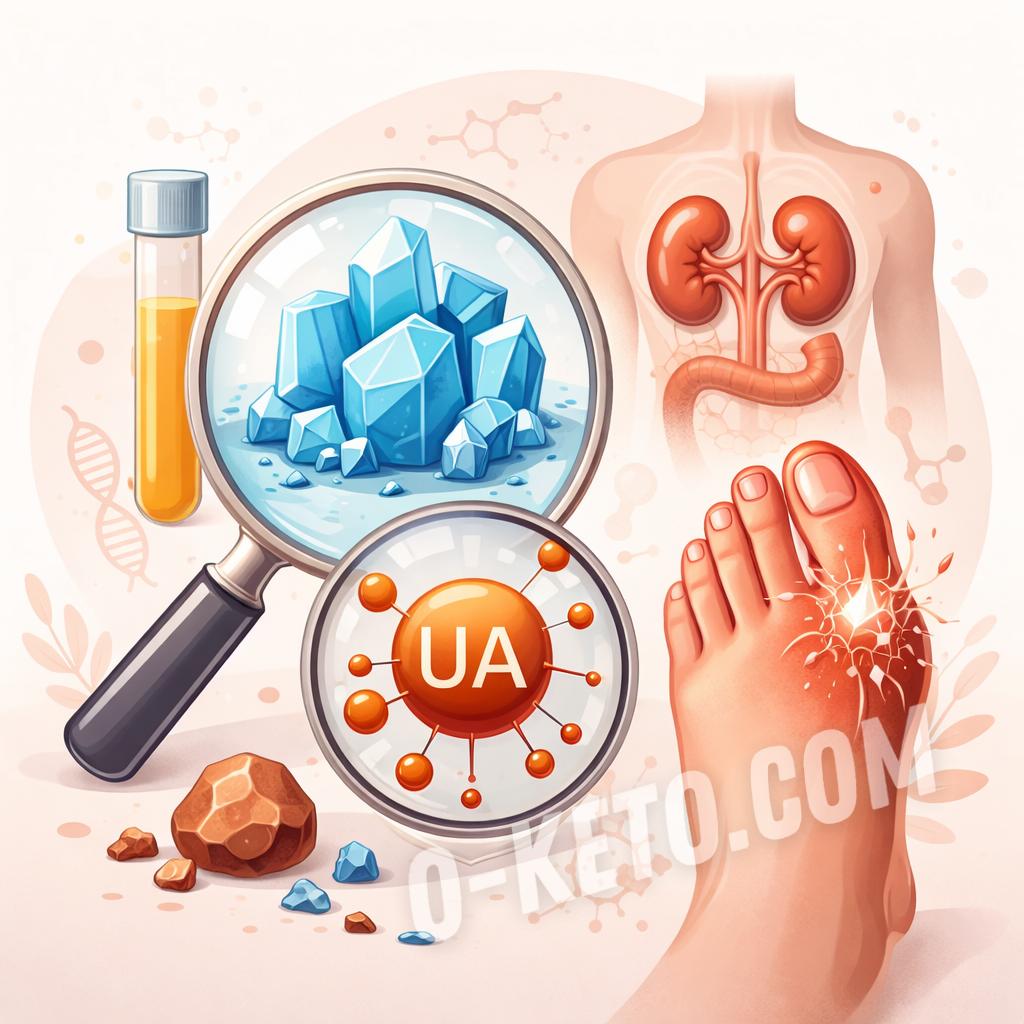
Uric acid — is the end product of purine metabolism, which reflects the balance between the formation and excretion of nitrogenous compounds.
In the body, it acts as an antioxidant in blood plasma, but when levels rise, it becomes a factor in tissue damage and metabolic disorders.
A key feature of uric acid — is its poor solubility. When concentration increases, crystal formation begins, which deposits in joints, kidneys, and soft tissues, causing inflammation and mechanical damage.
Formation and excretion of uric acid
Uric acid is primarily formed in the liver as a result of the breakdown of:
- the body’s own cells;
- nucleotides and ATP;
- dietary sources of purines;
- fructose, which actively accelerates its synthesis.
Excretion occurs in two ways:
- through the kidneys (the main pathway);
- through the intestines with the involvement of microbiota.
The level of uric acid is influenced not only by its formation but also by the body’s ability to excrete it. Impaired renal filtration — is one of the key factors for elevation.
Normal values and their interpretation
Reference ranges may vary, but it is important to assess not only whether one falls within the “normal” range but also their position within the range and the context of metabolism:
- men: approximately 3.4–7.0 mg/dL;
- women: approximately 2.4–6.0 mg/dL.
Even values at the upper limit of the range may already be metabolically unfavorable, especially in the presence of insulin resistance, inflammation, or impaired kidney function.
Causes of elevated uric acid
Hyperuricemia is formed either due to excessive production or decreased excretion:
- insulin resistance: reduces uric acid excretion by the kidneys;
- excessive fructose consumption: sharply increases uric acid synthesis;
- obesity: is accompanied by chronic inflammation and metabolic disturbance;
- kidney dysfunction: reduces filtration and excretion;
- alcohol: increases production and decreases excretion;
- high cellular breakdown: during intense exertion or diseases;
- dehydration: increases concentration and decreases excretion.
Connection with gout and stone formation
With persistently high levels of uric acid, urate crystals form:
- in joints: causing acute inflammation, pain, swelling;
- in kidneys: may form urate stones;
- in tissues: maintain chronic inflammation.
Gout — is not just a joint disease, but a systemic manifestation of metabolic disorder.
Systemic effects of elevated uric acid
Hyperuricemia is associated not only with gout but also with broader metabolic disorders:
- increased oxidative stress;
- reduced insulin sensitivity;
- endothelial damage of blood vessels;
- increased blood pressure;
- acceleration of metabolic disorders.
Control and correction of levels
Working with uric acid — is not just about limiting certain foods, but restoring metabolic balance:
- reducing fructose and sugary drink consumption;
- maintaining stable glucose and insulin levels;
- adequate water intake;
- normalizing body weight;
- supporting kidney function;
- controlling inflammatory processes.
In cases of significant elevation, pharmacological methods may be used, aimed either at reducing synthesis or increasing uric acid excretion.
Key takeaway
Uric acid — is a marker of metabolic state, not just an indicator related to specific foods. The main cause of its elevation — is a disturbance of metabolism and regulation, not isolated consumption of certain foods.
If you have any questions about the term "Uric acid", you can ask them to AI. Please note, a low-cost OpenAI model is used. It may answer questions about disease treatment with errors!


 1 / 4
1 / 4 1 / 4
1 / 4 1 / 4
1 / 4


 1 / 4
1 / 4 1 / 4
1 / 4