
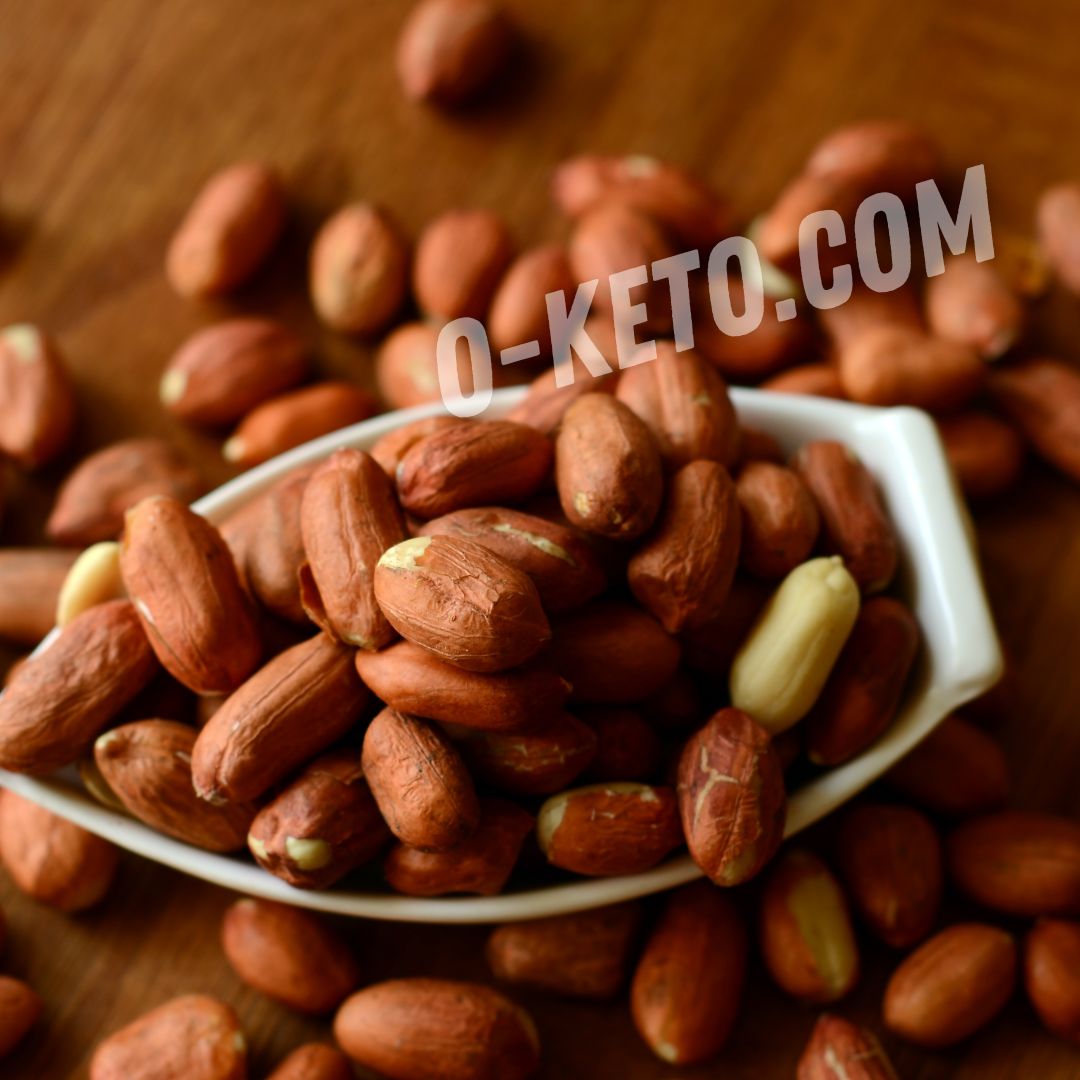

Peanuts are not nuts in the botanical sense, but seeds of a legume plant that develops its pods underground. In cooking, they are still often used like nuts: roasted as a snack, blended into pastes, added to sauces, coatings, low-carb desserts and Asian-style dishes. Their flavor is dense, oily and slightly sweet, so a small amount can make a dish feel much more filling.
Peanuts originated in South America and later spread through tropical and subtropical regions. Today they are grown widely because the plant is productive, tolerates dry climates and can fix nitrogen in the soil. For eating, the more practical point is this: peanuts are high in calories, fat and protein, but they also contain a noticeable amount of carbohydrates, so a keto diet needs a measured portion rather than an unlimited approach.
Nutrition
In 100 g of peanuts there are usually about 567 kcal, around 26 g of protein, 49 g of fat and 16 g of carbohydrates, of which about 8.5 g are fiber. Peanuts also provide vitamin E, niacin, folates, magnesium, phosphorus, potassium and other micronutrients. These numbers make them nourishing and dense, but not a light snack.
The fatty acid profile of peanuts is made mostly of monounsaturated fats and omega-6 linoleic acid; saturated fat is a smaller part. Peanuts contain little omega-3, so they should not be treated as a complete source of all fatty acids. If the diet already includes many nuts, seeds and plant oils, the peanut portion is better counted separately.
Are They Keto-Friendly?
Peanuts can fit keto and LCHF when the portion is small and the product is free from sugar, glaze, honey, syrup, flour and sweet coatings. Their glycemic index is low, about 14, and the glycemic load of a usual serving is small. But low glycemia does not erase carbohydrates or calories: a handful can easily become several servings, especially when peanuts are salted or roasted.
A practical serving is a small handful or 1-2 tablespoons of unsweetened peanut butter. In strict keto, peanuts often work better as an addition than as the base of a meal: sprinkle over a salad, add to a sauce, mix into an erythritol-sweetened dessert or eat alongside a protein dish. This makes both carbohydrates and total calories easier to control.
How to Choose
The best option is peanuts without sugar, glaze, caramel, starchy coating or sweet flavorings. In peanut butter, the ingredient list is best kept to peanuts and, if needed, salt. Palm fat, syrups and sweet fillers turn it into a dessert rather than a practical keto ingredient.
Fresh peanuts smell clean and nutty. A rancid, musty, sour or moldy smell is a bad sign. Because peanuts can be affected by unwanted mold compounds, it is important to buy from a reliable supplier, avoid damp, darkened or damaged kernels and avoid keeping an opened package for months in a warm cupboard.
How to Use Them
Peanuts work well in dishes that need crunch, richness and a clear roasted flavor. They can be added to cabbage and chicken salads, sprinkled over stewed vegetables, used in a sauce with coconut milk, lime, chili and ginger, or mixed into sugar-free cottage cheese or chocolate desserts. Ground peanuts can thicken a sauce, but they do not replace flour one to one.
If roasting peanuts at home, use moderate heat: gentle roasting brings out aroma, while overroasting creates bitterness. Salt, smoked paprika, chili, garlic, lime, sesame oil and unsweetened cocoa powder pair with peanuts better than sweet glazes.
Limits and Storage
Peanuts are one of the common food allergens. People with a peanut allergy should not try them even in small amounts, and when cooking for guests this point is worth checking in advance. For sensitive digestion, a large portion may feel heavy because of the combination of fat, fiber and dense texture.
Store peanuts in an airtight container in a cool, dry place; after opening a large package, the refrigerator or freezer is better. This is especially important for shelled or chopped peanuts: the more contact with air, the faster the flavor changes. Peanut butter should be closed tightly after opening and stirred if the oil separates.
Substitutes
If similar crunch and richness are needed, almonds, hazelnuts, macadamias, pecans or walnuts can work, though the taste will be different. For sauces, almond butter, tahini or cashew butter can be used if their carbohydrate content and tolerance fit. In peanut allergy, substitutes must be chosen carefully because reactions to other nuts and seeds differ from person to person.
Allergenicity and processing
Peanuts are among the most important food allergens. Roasting may increase IgE binding for some allergens, while boiling changes protein solubility and has produced lower allergenicity than roasting in some studies. Boiled peanuts are not safe for a person with confirmed peanut allergy: the food and trace amounts still need to be avoided, rather than made acceptable through a different cooking method. When choosing peanuts, also check for dryness, mold and musty odors. Damaged or damp peanuts cannot be made safe by roasting them again.