


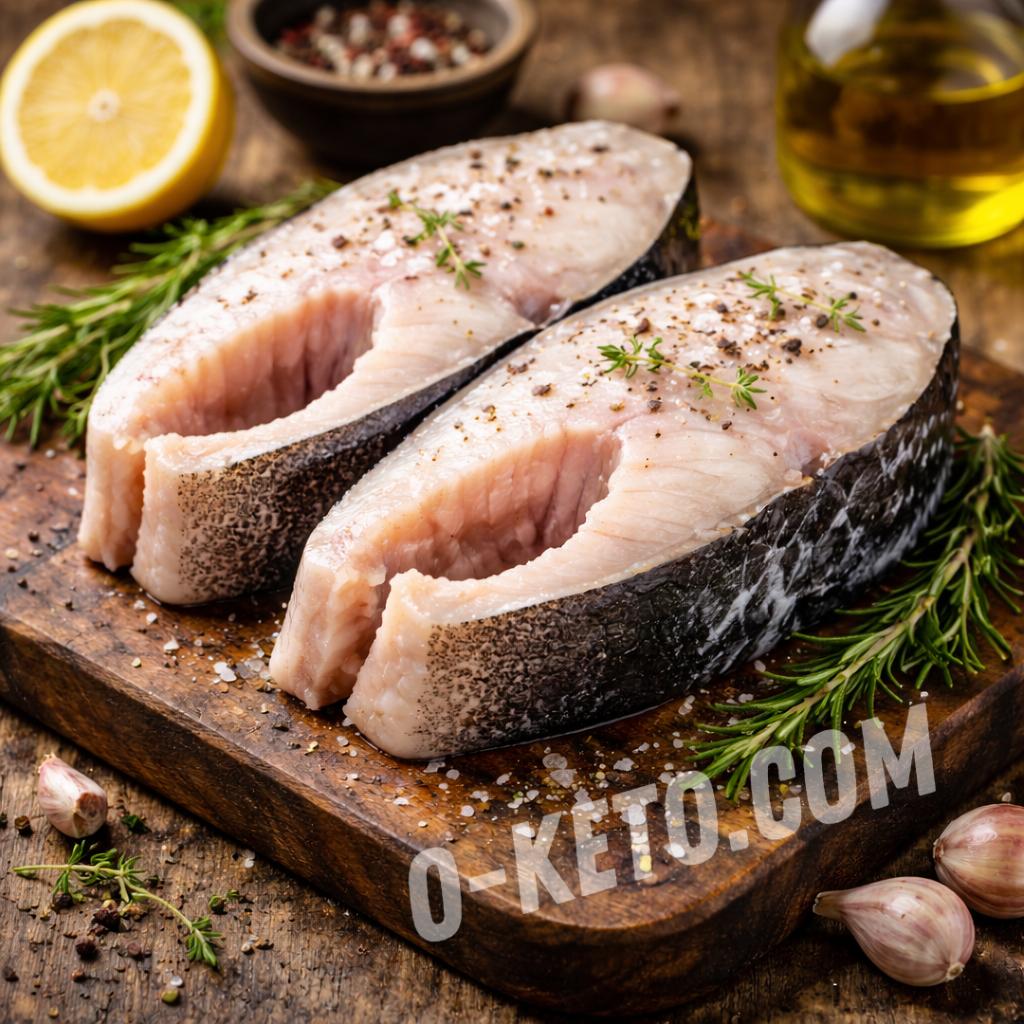

Beluga is a large fish from the sturgeon family. Historically, it is connected with the basins of the Caspian, Black, and Azov Seas and migrates into rivers for spawning. It is valued for firm, tender meat with a mild taste and for caviar, which belongs to the most expensive delicacies.
Wild beluga is under strict protection, so the origin of the product matters especially when buying it. Legal products more often come from aquaculture and should have clear documents. This is not a formality: sturgeon have a long life cycle, and illegal catch strongly affects populations.
Nutritional value
Beluga meat is a protein-rich fish product with no carbohydrates. In 100 g there are usually about 180–220 kcal, 20–23 g protein, 10–14 g fat, and 0 g carbohydrates. Exact values depend on the cut, age of the fish, feeding, and cooking method.
It contains omega-3 fatty acids, vitamin B12, vitamin D, phosphorus, selenium, and other trace elements typical of fatty fish. Beluga is not as lean as cod or pike perch, so the dish is richer and does not always need a heavy sauce.
Is it suitable for keto?
Beluga fits keto and LCHF well by macronutrients: it contains no carbohydrates, while providing protein and fat. The dish should not be spoiled with sweet marinades, breading, flour, thick starch sauces, or side dishes based on grains and potatoes.
For a keto plate, beluga is convenient with butter, ghee, olive oil, flour-free cream sauce, green vegetables, mushrooms, salad, cauliflower, or cucumbers. If the piece is very fatty, extra fat can be reduced and acidity can become the main accent.
How to cook it
The firm texture makes beluga suitable for steaks: baking, pan-frying, grilling, or braising in cream or sugar-free tomato sauce. The meat should not be dried out. Moderate heat is better, and the fish can be removed from the heat when it has turned opaque and comes apart into firm flakes.
Before cooking, the piece can be briefly salted and paired with lemon, garlic, dill, thyme, bay leaf, black pepper, or a little dry white wine. Strong sweet marinades are unnecessary here: beluga has a delicate taste that is easy to cover.
For soup, pieces with bones, cartilage, and skin are useful because they give a dense broth. For frying, even steaks or fillets of similar thickness are better. After cooking, the skin can be removed or left for flavor if it is clean and well prepared. Beluga caviar is a separate product: it is eaten in small portions and judged by different rules than the meat.
If this fish is being cooked for the first time, it is better to start simply: salt, pepper, a little oil, and short baking. This makes it easier to understand beluga’s own taste and not hide it under a heavy spice mixture. The cooked piece works well with a sour sauce, herbs, and a warm vegetable side.
How to choose
Fresh beluga should smell clean, like the sea or fresh fish, without ammonia, sourness, or rancid fat. The flesh should be firm and moist, without sticky slime. Frozen fish should not have a thick ice layer, dry white spots, or signs of repeated freezing.
Because of its protected status, it is especially important to buy beluga from a seller who can confirm legal origin. For sturgeon this is not a minor detail, but part of normal product choice. If the origin is unclear, it is better to choose another fish.
Limitations
Beluga can be expensive and not always available. Sensitive people may react to fish and seafood. Fatty fish spoils quickly, so poor storage is more serious than with dry foods. Pregnant women, children, and people whose clinician limited large fish should discuss frequency and portion with a professional.
Salted or smoked beluga differs from fresh fish: it contains more salt, and sometimes sugar appears in the marinade. These versions should be checked by the label and eaten in smaller portions, especially when salt is limited.
How to store it
Chilled fish is best cooked on the day of purchase or the next day, stored in the coldest part of the refrigerator. Frozen beluga is thawed slowly in the refrigerator, not in warm water. After thawing, refreezing is undesirable: the texture worsens and spoilage risk rises.
What can replace it?
The closest replacements by density and status are other sturgeon, if legally available: sterlet, sturgeon, or sevruga. In ordinary cooking, halibut, wolffish, sea bass, salmon, or another firm fish can be used. For keto, it is more important to choose fish without breading and sweet sauces than to copy beluga flavor completely.


