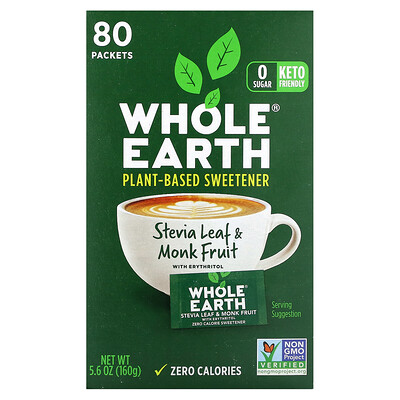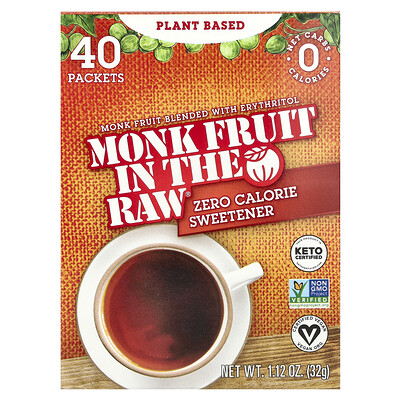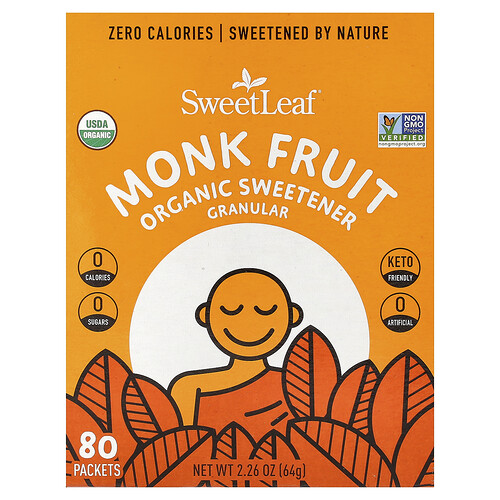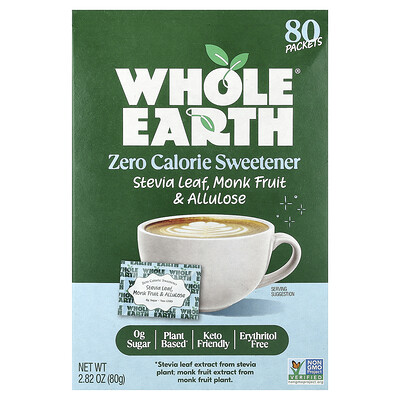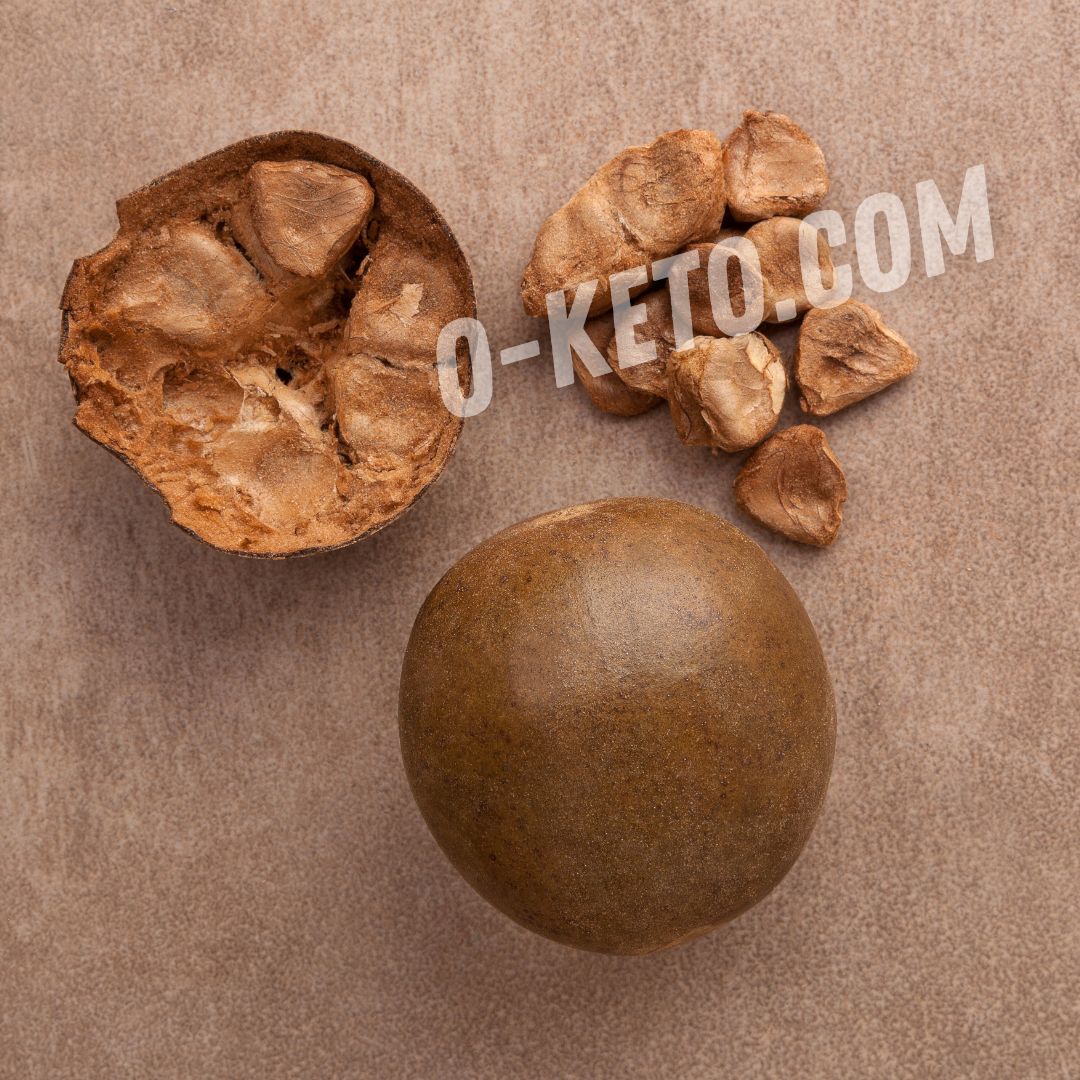

Monk fruit, or luo han guo, is the fruit of Siraitia grosvenorii, a plant from southern China. In low-carb eating, the commonly used product is not the fresh fruit itself but a sweetener made from its extract.
Monk fruit gets its sweetness from mogrosides. These compounds are much sweeter than sugar, so only very small amounts are used in products. The taste is usually mild, without sugar-like caramel notes, sometimes with a light fruity or herbal tone.
Nutrition
Pure monk fruit extract provides almost no calories and usually does not raise glucose the way sugar does. However, finished sweeteners are often blended with erythritol, inulin, or other carriers, so the ingredient list should be checked on the label.
Is It Keto-Friendly?
Monk fruit can be a convenient keto sweetener for drinks, creams, desserts, and sauces. It helps remove sugar, but it does not make sweet baked goods a daily foundation of the diet: dessert portions should still stay moderate.
How to Use
Because it is very sweet, the dose depends on the product form. Drops, powder, and granulated blends replace sugar differently. In baking, follow the manufacturer’s instructions, because pure extract adds almost no bulk, while blends with erythritol behave differently.
Limits
The main issue is usually not monk fruit itself but the blend. If the sweetener contains maltodextrin, dextrose, or sugar, it is less suitable for keto. In sensitive people, sweet taste may also keep dessert cravings active.
Substitutes
The closest keto substitutes are erythritol, stevia, or blends of these sweeteners. Concentrated drops are convenient for drinks, while baking usually needs granules or a blend that adds bulk.
Pure Extract and Blends
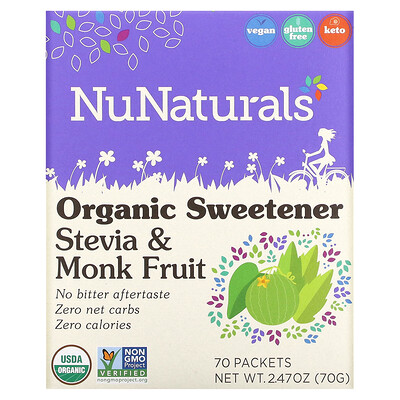
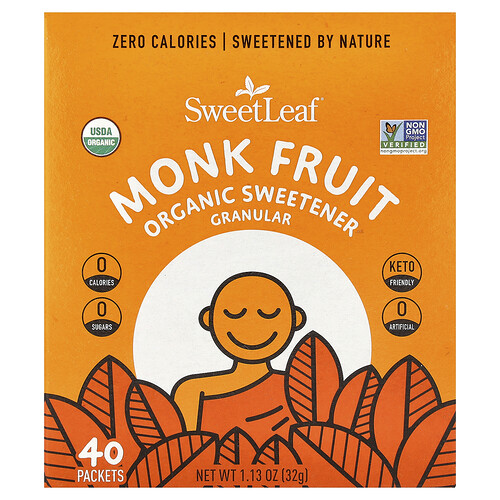
Products sold as “monk fruit” can be very different. Pure extract is extremely sweet and is used in tiny pinches or drops. Granulated blends usually consist mostly of erythritol, inulin or another carrier, while the extract increases sweetness.
So compare not only the name but also the ingredient list. If a blend replaces sugar one to one, it almost certainly contains a bulk ingredient. That is not automatically a problem, but for keto the key points are tolerance, carbohydrates, aftertaste and response to the specific carrier.
Flavor and Use
Monk fruit is often perceived as milder than stevia, but flavor differs between brands. In drinks and creams it can be almost invisible, while in simple desserts it may give a fruity-herbal note. If the flavor feels intrusive, reduce the dose and combine it with erythritol.
In dough, pure extract does not provide bulk, moisture or structure. For muffins, waffles, cheesecakes and creams, a blend designed for recipes is usually more convenient. For coffee, tea, sauces and yogurt, drops or concentrated powder work well.
What to Check on the Label
Weaker options often contain maltodextrin, dextrose, sugar, syrups or flavored fillers. Sometimes “monk fruit” is printed prominently on the front, while the actual extract is present in a tiny amount. For strict keto, choose a product with a short, clear ingredient list.
Like any sweetener, monk fruit does not solve the habit of constant sweetness. It can replace sugar conveniently, but dessert remains dessert, especially when it contains a lot of nut flour, cream and calorie-dense additions.
Common Mistakes
The first mistake is assuming that any product with monk fruit automatically fits keto. The ingredient list may contain regular sugar, syrup, starch, maltodextrin or a large amount of inulin. The sweetener name on the package does not replace reading the label.
The second mistake is using too much pure extract. Because it is very sweet, excess quickly creates an intrusive flavor and aftertaste. Start with the smallest dose, especially in drinks, yogurt and creams where sweetness is not hidden.
How It Differs From Stevia
Stevia often has an herbal or licorice-like aftertaste, while monk fruit is usually perceived as softer and fruitier. But this depends on the brand and blend. In recipes they can replace each other if sweetness and bulk are recalculated.
Dosage and Aftertaste
With monk fruit, it is important not to chase sugar-level sweetness immediately. If taste receptors are used to very sweet desserts, pure extract is easy to overdo. A calmer approach is to make the dish slightly less sweet and let the flavor settle after cooling, especially in creams, cheesecakes and yogurt desserts.
In hot drinks, add the sweetener at the end and stir it in small portions. In meat sauces or berry additions, only light sweetness is enough; otherwise the flavor can become candy-like. If the product is blended with erythritol, consider the cooling sensation: it is more noticeable in a cold dessert than in warm baking.