


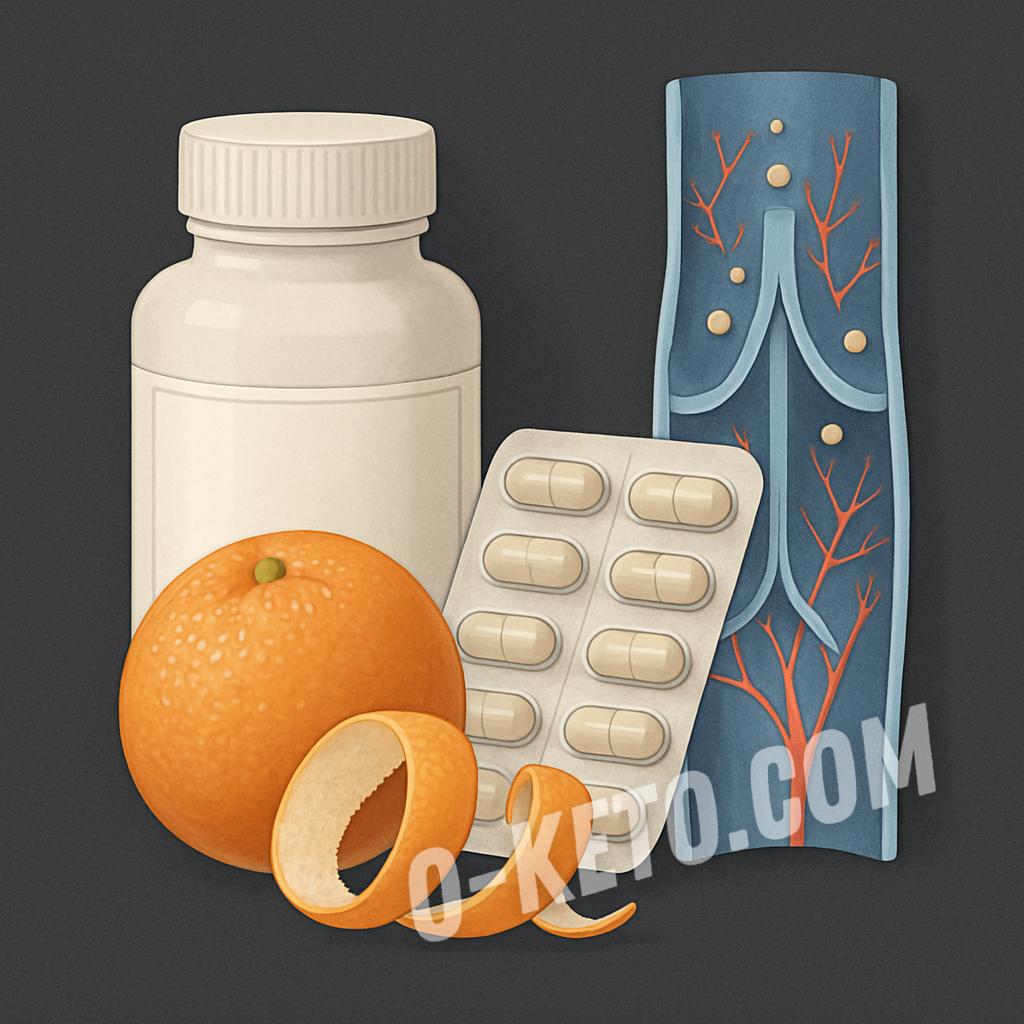

Diosmin and hesperidin are a flavonoid combination most often used in venotonic supplements. Both compounds belong to the citrus bioflavonoid family: hesperidin is naturally associated with citrus peel, while diosmin is usually treated as a more concentrated derivative used in supplement formulas. In practice, people usually encounter not isolated single-ingredient products, but combined formulas designed to support the venous wall, microcirculation, and to reduce the feeling of heaviness in the legs.
What this combination is
This pairing is usually chosen for a practical vascular purpose rather than for a generic antioxidant label. Diosmin is commonly associated with support of venous tone and reduced stagnation, while hesperidin is often viewed as an additional flavonoid that helps with capillary support and inflammatory stress. That is why manufacturers frequently combine them in the same product: not as a random stack, but as a pair for longer supportive use when the main complaints involve veins, evening swelling, heaviness, visible vascular changes, or hemorrhoidal symptoms.
When it is usually used
These formulas are most often discussed in the context of varicose veins, a tendency to evening edema, a feeling of pressure in the lower legs, long periods of standing or sitting, and also hemorrhoidal complaints where better venous return matters. This is not a substitute for vascular assessment and not something to use on your own for thrombosis or severe chronic venous insufficiency. Still, within a broader supportive plan, such combinations are common. They are usually combined with weight management, movement, compression garments when indicated, and work on the general inflammatory background.
How to choose a product
When choosing a supplement, it helps to look beyond the front-label marketing and check the actual daily serving, the amount of active compounds per tablet or capsule, and the overall convenience of the formula. Some products emphasize micronized diosmin as a better-absorbed form. Excipients also matter, especially for people who react poorly to dyes, flavorings, or overloaded multi-ingredient blends. If the intended course is long, the more practical option is usually the one with a clear daily dosage and without the need to take too many tablets every day.
Limitations and safety
Even though this combination is often considered relatively gentle supportive care, it still has limitations. It is approached more cautiously during pregnancy, lactation, with a pronounced tendency to bleeding, during anticoagulant use, and in cases of individual intolerance. Possible adverse effects include dyspepsia, stomach discomfort, occasional headache, or skin reactions. If leg pain, redness, and swelling suddenly worsen, that is not a supplement problem to watch at home but a reason for urgent medical evaluation. For that reason, diosmin with hesperidin is best viewed as a supportive tool for course-based use rather than a universal solution for every vascular complaint.


