


Vitiligo
Vitiligo is a pigment disorder marked by pale skin patches, where the visible spots are only part of the story; autoimmune background, sun sensitivity, skin trauma, nutrient status, and the pattern of progression all matter.




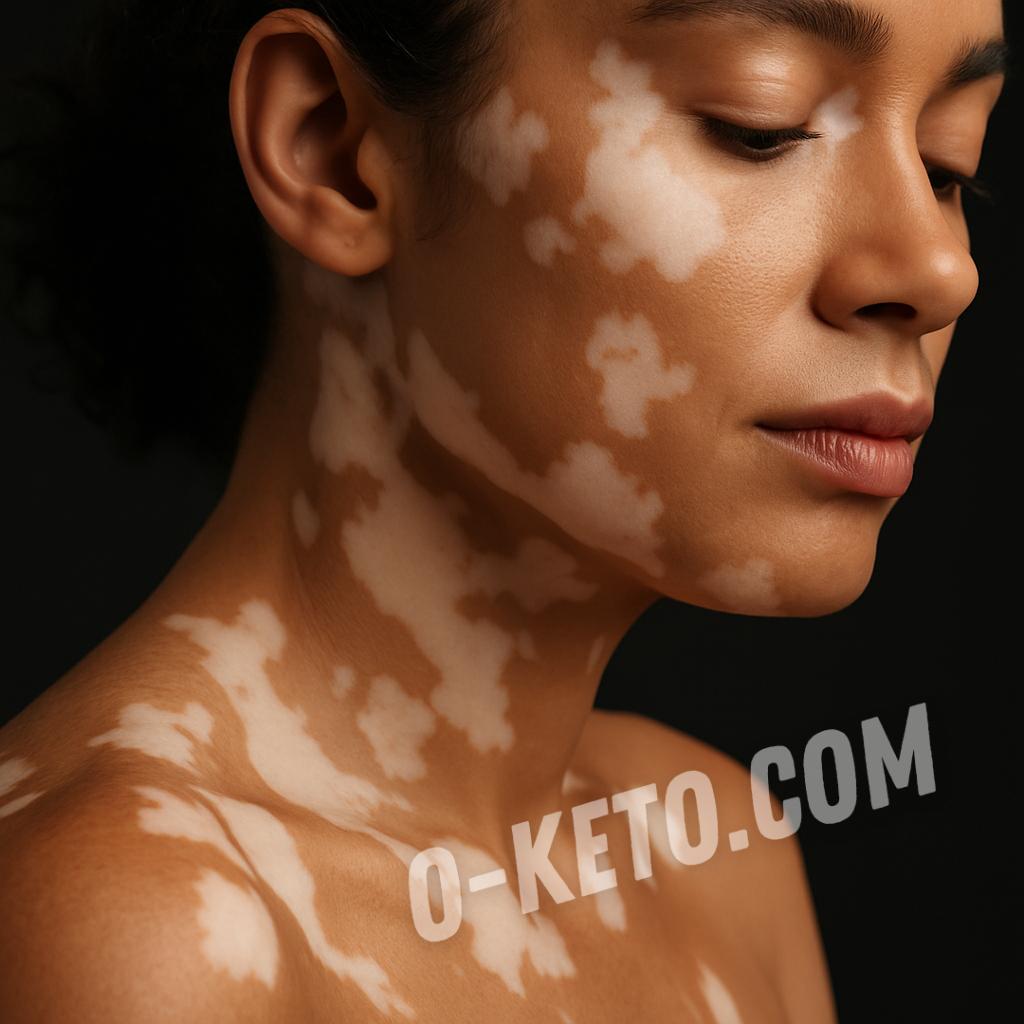
Vitiligo is a condition in which areas of skin lose part or all of their pigment and become visibly lighter than the surrounding skin. These pale patches can appear on the face, hands, elbows, knees, trunk, around the mouth and eyes, or in many other locations. For some people the issue is experienced mainly as a cosmetic one, but for others it becomes emotionally heavy because the changes may be quite visible and their progression can feel unpredictable. It is important to understand that vitiligo is not a surface stain or a simple discoloration. It reflects a disturbance involving the cells responsible for producing melanin.
Modern understanding often places vitiligo in an autoimmune context. That does not mean every person has one single immune explanation for the whole story, but immune mechanisms help explain why pigment-producing cells become dysfunctional or are lost. Genetic predisposition, oxidative stress, skin trauma, sunburn, psychological stress, and other internal or external influences may make melanocytes more vulnerable. This is one reason the condition behaves so differently from person to person.
What happens in the skin
Skin color depends on melanin and on the health and activity of melanocytes. When melanocytes stop functioning well in a certain zone or are damaged, that area becomes lighter. In practice this may happen slowly or more noticeably over time. Some people have only a few localized patches, while others develop wider or more symmetrical areas. Hair growing within the affected zone may also lose pigment and appear white or lighter than before.
Vitiligo does not follow one single pattern. There can be long stable periods, but there can also be phases of spread or enlargement. That is why it is more useful to think in terms of pattern and dynamics rather than one static snapshot. When did the first patches appear? Was there recent friction, trauma, or sun damage? Is the disease quiet or still expanding? Those practical questions matter more than simply naming the condition.
Which background factors often matter
In some people vitiligo coexists with other autoimmune issues, especially involving the thyroid. For that reason, it should not always be viewed in complete isolation. If fatigue, weight change, dry skin, hair loss, cold intolerance, mood changes, or other signs suggest thyroid dysfunction, that wider context becomes more relevant. Depending on the clinical picture, clinicians may also think about nutrient status, inflammatory burden, stress load, or other chronic influences that make the overall terrain less resilient.
The Koebner phenomenon also matters. In some people new patches appear where the skin has been irritated, scratched, burned, or chronically rubbed. That means care is not only about treatment of existing spots, but also about protecting the skin from avoidable trauma and repeated irritation.
Why sun and photosensitivity require caution
Pigment helps protect the skin from part of ultraviolet exposure. When that pigment is lost, the affected skin becomes more vulnerable to sunlight. This has two practical consequences. First, pale areas may burn more easily. Second, any approach involving photosensitizing agents or extra sun exposure needs more caution than casual internet advice usually suggests. It is very easy to move from hope for repigmentation into preventable skin injury.
For that reason, any meaningful discussion of vitiligo should include photoprotection, measured sun habits, and a critical view of home combinations that claim to “boost” sun response. If a person is also using medication or topical products that increase light sensitivity, the margin for error becomes even smaller.
How the picture is usually clarified
Assessment is based on inspection of the patches, their distribution, their evolution over time, family background, and associated symptoms. Sometimes the clinical appearance is enough, while in other cases tools such as Wood’s lamp examination help distinguish vitiligo from other causes of hypopigmentation. If there are clues pointing toward an autoimmune background, especially thyroid-related, it makes sense to explore that instead of focusing only on the visible skin changes.
The emotional dimension also deserves respect. Vitiligo can influence clothing choices, comfort in public, attitude to sunlight, and self-esteem. The severity of the condition is therefore not measured only by the surface area involved. For some people, support in living with a chronic and uncertain visual condition is as important as any direct skin-oriented strategy.
What support usually tries to address
Support commonly focuses on protecting the skin, reducing triggers, thinking carefully about sun exposure, addressing possible autoimmune or deficiency-related background factors, and choosing an individualized dermatologic strategy. In one person the main priority may be photoprotection and trauma reduction; in another, thyroid evaluation or broader metabolic context; in another, structured topical and light-based care under supervision. What matters most is avoiding chaotic experimentation, especially when it involves irritating mixtures and aggressive sun exposure.
Home and folk advice around vitiligo is abundant, but this is exactly the type of condition where anecdotal success stories are easy to overvalue. Even if a certain plant or mixture appears in informal recommendations, it is more sensible to treat it as a secondary element within a wider approach that includes skin safety, progression pattern, and the person’s overall background.
When a faster evaluation is especially useful
Closer evaluation matters when patches spread rapidly, when there are signs of associated autoimmune disease, when depigmented areas burn repeatedly, when emotional distress is severe, or when the person begins using photosensitizing products without understanding the risks. It is also important in children with progressive disease, where the goal is to build a safe long-term strategy rather than a collection of random experiments.
Vitiligo is therefore more than “white spots on the skin.” It is a pigment condition with immune, photobiologic, and emotional dimensions. The sooner it is understood in that fuller way, the easier it becomes to move from anxiety and scattered advice toward safer, more coherent support.
If you have any questions about the term "Vitiligo", you can ask them to AI. Please note, a low-cost OpenAI model is used. It may answer questions about disease treatment with errors!


 1 / 4
1 / 4


 1 / 4
1 / 4 1 / 4
1 / 4