


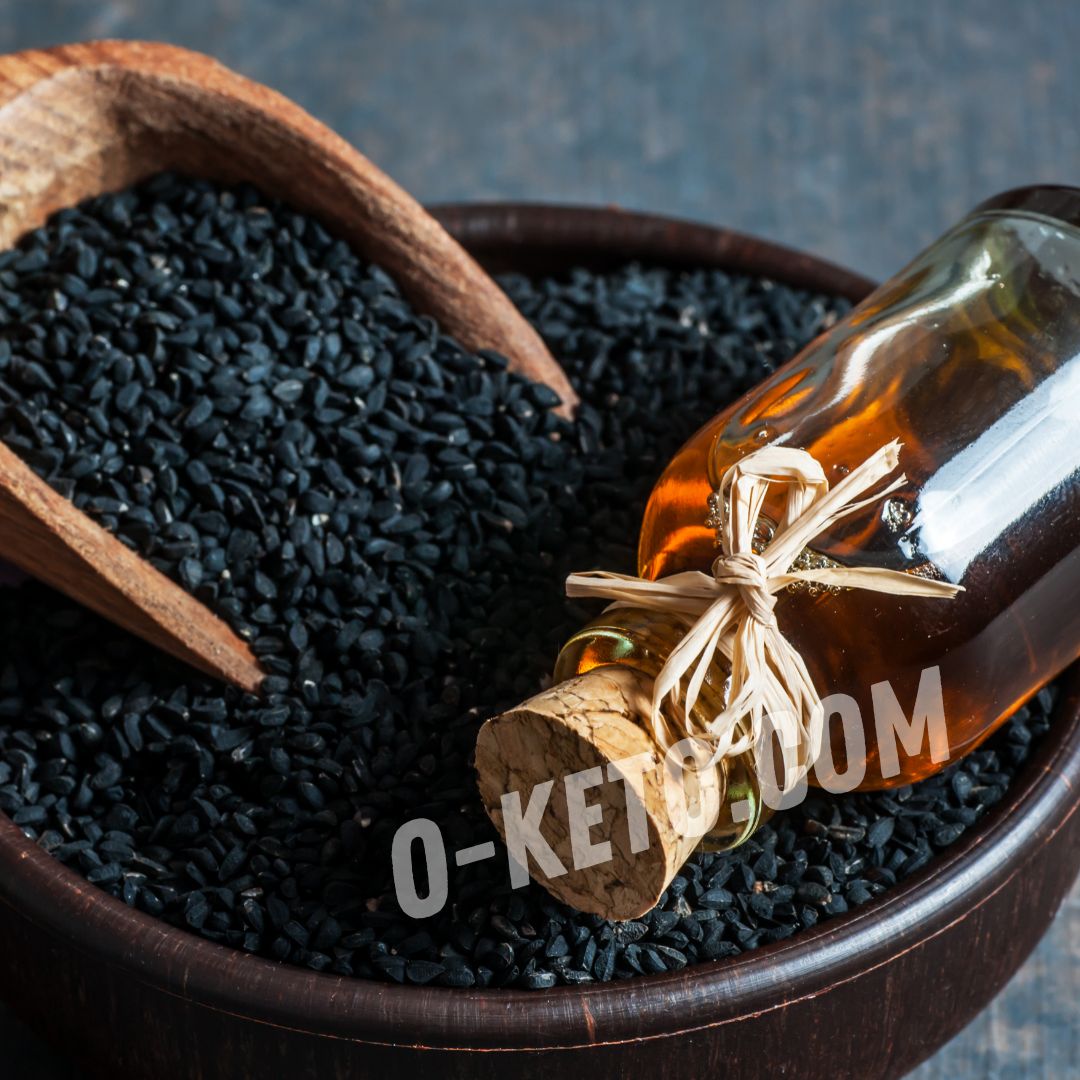

Black seed, or nigella, is the small black seed of the Nigella sativa plant. It is also called kalonji or black cumin, though it is not the same as regular cumin. The flavor is spicy, slightly bitter, with onion-pepper and nutty notes. In Middle Eastern, North African, Indian, and Turkish cooking, it is added to flatbreads, vegetables, meat, cheeses, pickles, and spice blends.
The name can be confusing, but nigella has its own aroma: drier, darker, and mildly sharp. In keto cooking, the seeds are useful as a spice and a small addition to fatty sauces, salads, eggs, cheeses, and vegetables, not as a main calorie source.
Nutritional value
In 100 g of seeds there may be about 325–375 kcal, roughly 15–20 g of protein, 20–25 g of fat, and a noticeable amount of dietary fiber. Carbohydrate values vary widely in tables because part of them is fiber. In real cooking, however, 1–3 g is usually used at a time, so the carbohydrate contribution is small.
The seeds contain fatty acids, aromatic compounds, minerals, and thymoquinone, which is often mentioned in descriptions of nigella. This is useful for understanding composition, but not a reason to turn the spice into a universal remedy. On the plate, black seed mainly gives aroma, bitterness, and texture.
Are they suitable for keto?
For keto and LCHF, black seeds fit in culinary amounts. They can be sprinkled on salad, omelet, cream cheese, roasted vegetables, meat, fish, sugar-free yogurt sauce, or keto crackers. They make flavor brighter without sweet sauces or starchy breading.
If black seed oil is used, that is a different product: more concentrated in flavor and fat. It should not automatically replace seeds one-to-one. The oil is usually added by drops or small portions to cold dishes, while the seeds can be gently heated to release aroma.
How to use them
The seeds can be added whole, lightly crushed, or quickly warmed in a dry pan. Heating makes the aroma brighter, but burning should be avoided because bitterness becomes harsh. Whole seeds add crunch; ground seeds release flavor faster but lose aroma sooner in storage.
Good pairings include eggs, brined cheese, feta, cream cheese, cucumbers, tomatoes in a small portion, eggplant, zucchini, cauliflower, lamb, chicken, fish, sugar-free yogurt sauce, lemon, mint, coriander, and garlic. In marinades, nigella is better combined with oil and acidity so the flavor becomes softer.
Whole seeds are convenient where noticeable crunch is needed: keto crackers, cheese flatbreads, salads, egg toppings, and dishes with oven-cooked vegetables. Crushed seeds work better in sauces, marinades, and cream cheese spreads where the flavor should spread evenly. Fully ground nigella should be used quickly: it is vivid right after grinding but becomes flat sooner.
For a gentle start, a pinch per serving is enough. If too much is added, the spice can easily overpower delicate fish, creamy sauce, or young cheese. In spice blends it is often placed next to sesame, coriander, cumin, garlic, lemon, mint, and hot pepper, but the amount is better increased gradually.
How to choose
Fresh seeds should smell spicy and nutty, without mustiness, mold, or old oily odor. The color is usually matte black. If the seeds are gray, dusty, full of debris, or almost odorless, they may have been stored too long. It is better to buy a small package and grind only the amount needed.
Check that the ingredient is specifically Nigella sativa or black seed. Spice blends may contain salt, sugar, flour, flavor enhancers, or hot additions that change the recipe.
Limitations
Black seed has a pronounced taste and may irritate a sensitive stomach in large amounts. Caution is needed during pregnancy, breastfeeding, spice allergy, use of products affecting clotting or blood sugar, and before surgery. A culinary pinch and concentrated supplements are different things.
If reflux, nausea, itching, rash, or unpleasant bitterness in the mouth appears after the seeds, reduce the portion or remove the product. Children should be given such spices little by little and only as part of ordinary food.
How to store them
Keep the seeds in a tightly closed jar in a dark, dry place away from the stove. Fats and aromatic compounds gradually oxidize, so ground nigella stores worse than whole seeds. If powder is needed, it is better to grind a small amount before cooking.
After opening the package, it is useful to mark the date: old seeds lose depth of aroma and their bitterness becomes rougher.
What can replace them?
There is no full replacement, but a close accent can be chosen by task. For nutty spice, sesame, cumin, coriander, or sugar-free zaatar can work. For mild heat, use black pepper, mustard seeds, or a little chili. In baking, black seeds can be replaced with sesame, poppy, or flax, but the flavor will be different.
Research Notes
Black seed, or Nigella sativa, is studied separately from regular caraway or cumin: it is a different spice with a different composition. One of its key compounds is thymoquinone, found in black seed oil. The seeds also contain fatty acids, amino acids, minerals, and bitter-spicy aromatic compounds, which explain their dense flavor and the long-standing interest in this spice in Middle Eastern and Asian cuisines.
Research most often discusses black seed in relation to antioxidant and anti-inflammatory potential, immune response, metabolic markers, and airway reactivity. For everyday cooking, the practical point is simpler: this is a strong spice best used in small portions as an accent for meat, eggs, cheese, vegetables, sauces, and spice blends.
Limits
Culinary amounts of the seeds are not the same as concentrated extracts or oil supplements. During pregnancy, when taking glucose-lowering, blood pressure, or anticoagulant medication, or with chronic illness, concentrated supplements should not be used casually without medical guidance. In food, black seed also needs restraint: the taste quickly becomes sharp and bitter.


