


Thalassemia
Thalassemia is an inherited group of hemoglobin-synthesis disorders in which red blood cell formation is altered; it can resemble iron deficiency anemia in parts of the laboratory picture while having a completely different origin.




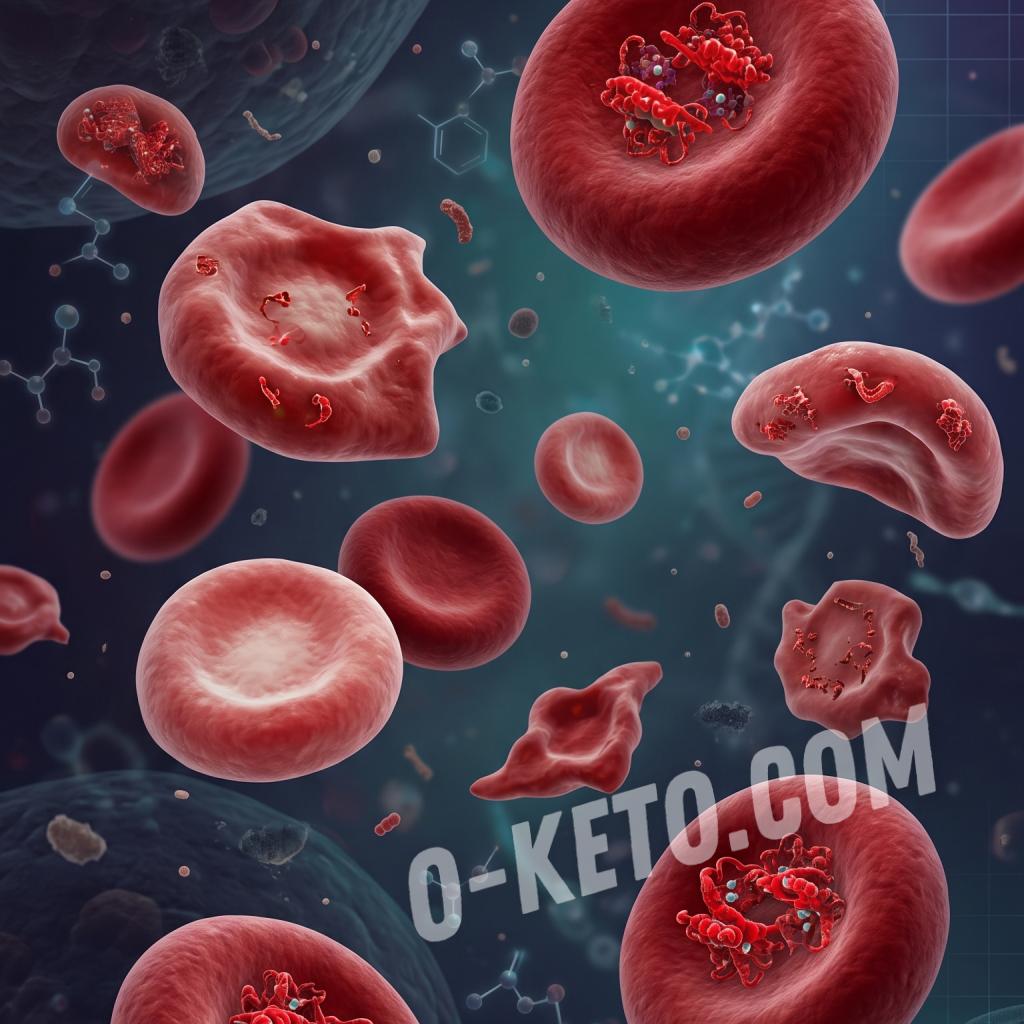
Thalassemia is an inherited group of disorders in which the synthesis of hemoglobin chains is disrupted. Because of that, red blood cells are formed and function differently from normal, and a person may develop chronic anemia of varying severity. In practice, thalassemia matters especially because parts of its laboratory pattern can resemble iron deficiency anemia while the underlying cause is completely different. If the two are confused, laboratory interpretation may drift in the wrong direction for years, and attempts to correct the picture with iron alone will miss the primary mechanism. That is why thalassemia is not just a rare hematology term but an important differential diagnosis in anemia work.
What happens to hemoglobin and red cells
In thalassemia, the body produces hemoglobin with an imbalance in its chain synthesis. As a result, red blood cells become less efficient and are often smaller than expected, while oxygen-carrying performance may be reduced. Depending on the form of the disorder, the effect ranges from a subtle laboratory finding to a more clinically meaningful anemia. The central point is that the problem does not begin with iron depletion itself, but with a genetically determined disturbance in how hemoglobin is built. That is why the laboratory picture can become misleading if only one line is read without the broader blood-count context.
Why it can be mistaken for iron deficiency
Both states can show microcytosis and an anemic pattern, which is why they sometimes look superficially similar. But in thalassemia, iron handling does not have to be depleted in the same way it is in classic iron deficiency. If someone sees only anemia and small red blood cells, the automatic conclusion may be that iron must be low. This is exactly where a more careful interpretation is needed, because an inherited hemoglobin problem is not the same as a deficiency state. That distinction matters in real life, since repeated iron supplementation aimed at the wrong mechanism does not solve the underlying issue and may complicate interpretation further.
Which tests matter most
Understanding the pattern usually requires a complete blood count, red-cell indices, ferritin, serum iron, transferrin, total iron-binding capacity, and, when needed, more specialized hematologic studies. The point is to determine both whether true iron deficiency exists and whether the broader picture may instead reflect an inherited hemoglobin pattern. In selected cases, hemoglobin electrophoresis or additional confirmatory testing is needed. Thalassemia is therefore not diagnosed from suspicion alone and not excluded by one apparently acceptable iron value.
How this relates to transferrin
In iron-profile interpretation, thalassemia appears as one of the conditions to remember when transferrin and the overall anemia picture do not fit a simple deficiency pattern. But the key is not one isolated transferrin result. The broader context includes ferritin, serum iron, TIBC, red-cell morphology, and the patient’s overall history. If transferrin is read in isolation from the hematologic picture, thalassemia may be missed. Its role here is mainly differential: it reminds the interpreter that not every anemia and not every shift in iron-related markers can be reduced to straightforward iron depletion.
What symptoms may appear
The clinical picture depends on the form of thalassemia. Some people have a very mild pattern that is discovered mostly through laboratory testing, while others experience chronic fatigue, pallor, lower exercise tolerance, and other features of anemia. More severe variants can be far more clinically significant and require specialist follow-up. For everyday interpretation, the practical lesson is that even moderate symptoms may reflect not a temporary deficiency, but a stable inherited mechanism that can shape laboratory findings over many years.
When closer evaluation is important
Closer evaluation is important when anemia recurs, microcytosis persists, and the ordinary logic of iron deficiency does not fully explain the findings. Extra caution is especially useful when ferritin and related iron markers do not match a classic deficiency pattern while red-cell indices remain abnormal. Thalassemia is best kept in mind as a real alternative explanation rather than a remote curiosity, because without that perspective a person may be treated repeatedly for the wrong cause while the blood pattern continues to look confusing.
If you have any questions about the term "Thalassemia", you can ask them to AI. Please note, a low-cost OpenAI model is used. It may answer questions about disease treatment with errors!


 1 / 4
1 / 4


 1 / 4
1 / 4 1 / 4
1 / 4