


Comedones
Comedones are early acne lesions formed by blockage of the pore with sebum and keratin, so the real issue is not only blackheads themselves but sebaceous-gland activity, skin turnover, skincare pattern, hormonal context and inflammation.



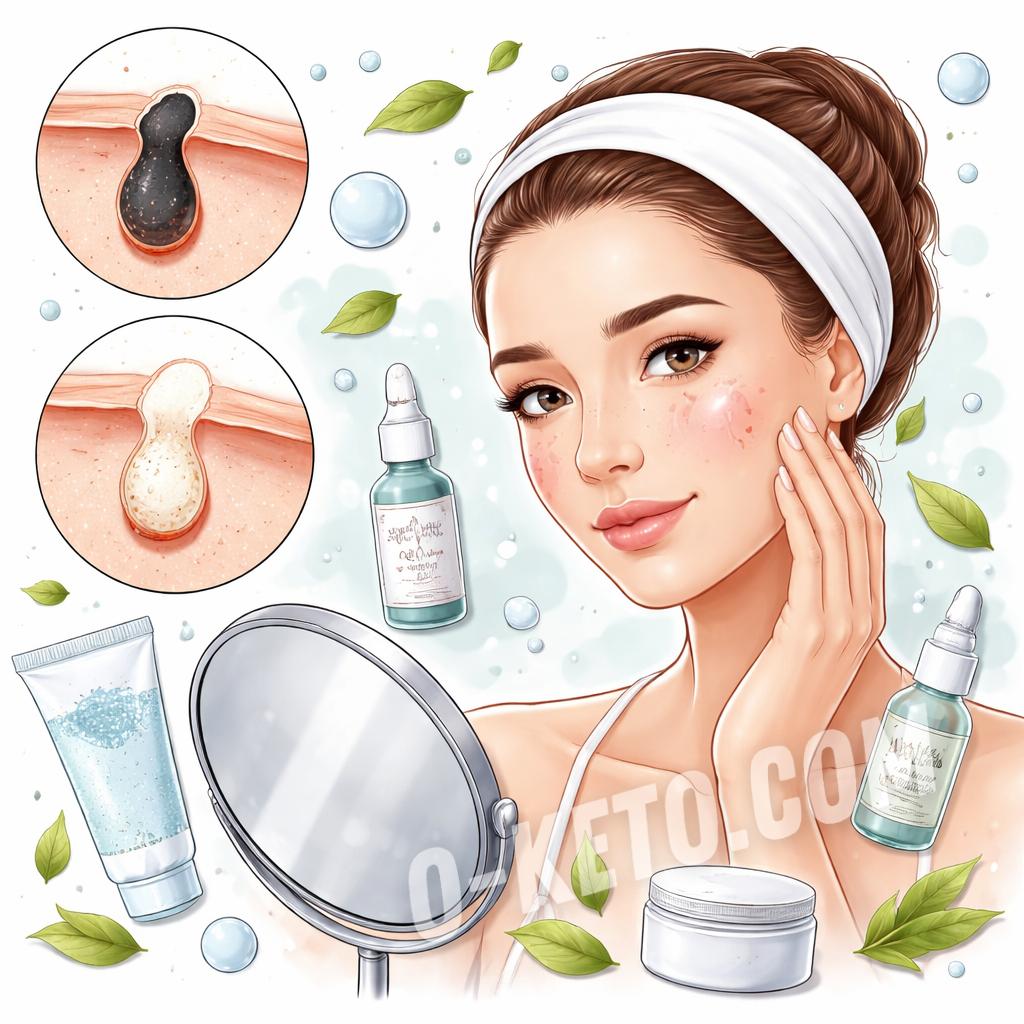
Comedones are the earliest acne lesions, forming when pores become blocked by a mixture of sebum, keratin and cellular debris. Open comedones appear as blackheads, while closed ones look like pale or skin-colored bumps beneath the surface. Although they may seem like a relatively mild cosmetic issue, comedones matter because more active inflammatory acne often begins from this stage. For that reason the goal is usually not just to remove visible dots, but to understand why the skin is living in a constant pattern of pore blockage.
Why comedones form
The main mechanisms are increased sebaceous-gland activity, altered sebum composition, slowed shedding of keratinocytes in the follicular opening and hormonal influences. When dead cells do not clear normally while sebum continues to be produced, a plug forms. That is why comedones are especially common in oily areas such as the nose, forehead, chin, back and chest. If inflammation and bacterial factors then join in, the picture can shift quickly from simple congestion to fully inflammatory acne.
Comedones are therefore not “dirt in the skin,” but a result of how sebaceous glands and follicular turnover are behaving.
Open versus closed comedones
Open comedones become dark not because street dirt fills them, but because the material in the pore oxidizes on contact with air. Closed comedones sit deeper and often behave more stubbornly, especially if the skin is overdried or overloaded with heavy products. This distinction matters because the way the skin responds to care can differ between the two. Closed elements are more likely to evolve into inflammatory lesions if the follicle remains blocked.
It is therefore useful to judge comedones not only by appearance, but by how easily the skin keeps forming new plugs.
What tends to make them worse
Occlusive cosmetics, inappropriate cleansing, harsh overdrying, friction, hot humid climates, androgenic influence and some skincare habits may all worsen comedone formation. In some people hormonal shifts, insulin resistance and inflammatory background also contribute. Diet does not explain every blackhead, but major glucose swings, heavy ultraprocessed eating and broader metabolic imbalance can make acne-prone skin behave worse in certain individuals. Looking only at one cream and ignoring the wider pattern is therefore rarely enough.
A common mistake is to traumatize the skin with aggressive cleaning while expecting it to become calmer.
Skincare and practical strategy
The basic aim is to reduce follicular blockage without damaging the barrier. That usually means gentle cleansing, sensible use of comedolytic ingredients, non-comedogenic products and patience, because skin rarely changes behavior within a few days. Constant squeezing often increases irritation and inflammation instead of solving the problem. If a strong hormonal component is present, the result of skincare alone may remain limited. This is why comedones are best seen as part of the overall logic of acne rather than as isolated “dots that just need removal.”
Practical success usually comes more from consistency than from one dramatic “strong” procedure.
When closer review is needed
Closer review is needed if comedones quickly become inflamed, leave marks, coexist with severe oiliness, menstrual irregularity, hyperandrogenic signs or fail to respond to basic care. The most sensible way to think about comedones is as an early marker of altered follicular and sebaceous-gland behavior that matters not in isolation, but as part of the wider picture of acne and skin metabolism.
Common mistakes with comedones
A common mistake is to treat comedones as mere dirt and try to scrub them away by force. In reality, excessive skin trauma often intensifies the cycle of blockage and inflammation. The practical goal of care is gradual normalization of follicular behavior rather than aggressive war against every visible dot.
If you have any questions about the term "Comedones", you can ask them to AI. Please note, a low-cost OpenAI model is used. It may answer questions about disease treatment with errors!


 1 / 4
1 / 4
 1 / 4
1 / 4 1 / 4
1 / 4


