

A Sadhu board practice should begin with a safe room, a health check and a calm entry, rather than with a long standing time. Nails create sharp mechanical pressure on the skin of the feet, so a beginner’s goal is to control support, breathing and duration, not to endure pain at any cost. The steps below give a cautious order for a first short session.
Who should postpone the practice
Do not step on the board with open cracks, cuts, blisters, fungal infection or any other damaged skin on the feet. An acute illness with fever, marked weakness, recent surgery, an unhealed injury or recent alcohol use are also reasons to wait. Pregnancy, epilepsy, serious cardiovascular symptoms, balance problems and medicines that affect consciousness or coordination require an individual decision with a clinician.
If diabetes has reduced sensation in the feet, or if there are clotting problems or wounds that heal poorly, a puncture may carry more risk. This practice is not a treatment for pain, anxiety, insomnia, organ disease or “energy blocks”. When the situation is unclear, obtain medical advice before the session instead of testing the body on the nails.
Prepare the space and equipment
Place the boards on a firm, level non-slip mat. Remove furniture and objects that could cause an impact if balance is lost. Keep a solid wall, rail or heavy chair within reach. For a first session, have a guide or another adult present who will not rush the participant and can help them step down calmly.
Inspect the nails and base: every element should be secure, vertical and similar in height. Do not use a board with rust, loose parts, cracks or a slippery underside. Feet should be clean and dry; cream, oil and wet skin reduce control. Keep water, a towel and a place to sit or lie down nearby.
Warm up the body and feet
Start with a few minutes of gentle movement without pain. Make slow head turns, shoulder circles, ankle movements and a few easy squats or calf raises. Rub the feet with your hands, move the toes, massage the arch and check for tender areas. A warm-up does not “open chakras” or guarantee an easy session; it helps you notice the condition of the skin and prepare the lower-leg muscles.
Do not rub damaged skin or use a numbing cream before practice. It can hide the signal that tells you to stop. If sharp pain, numbness or burning appears during the warm-up, postpone the session.
Settle your breathing
Sit beside the boards and breathe normally for several cycles. Make the inhalation gentle and let the exhalation be slightly longer, without force or breath-holding. Keep enough comfort to speak in short phrases. Complex pranayama, long holds and very rapid breathing are unnecessary for a first session and may increase dizziness or anxiety.
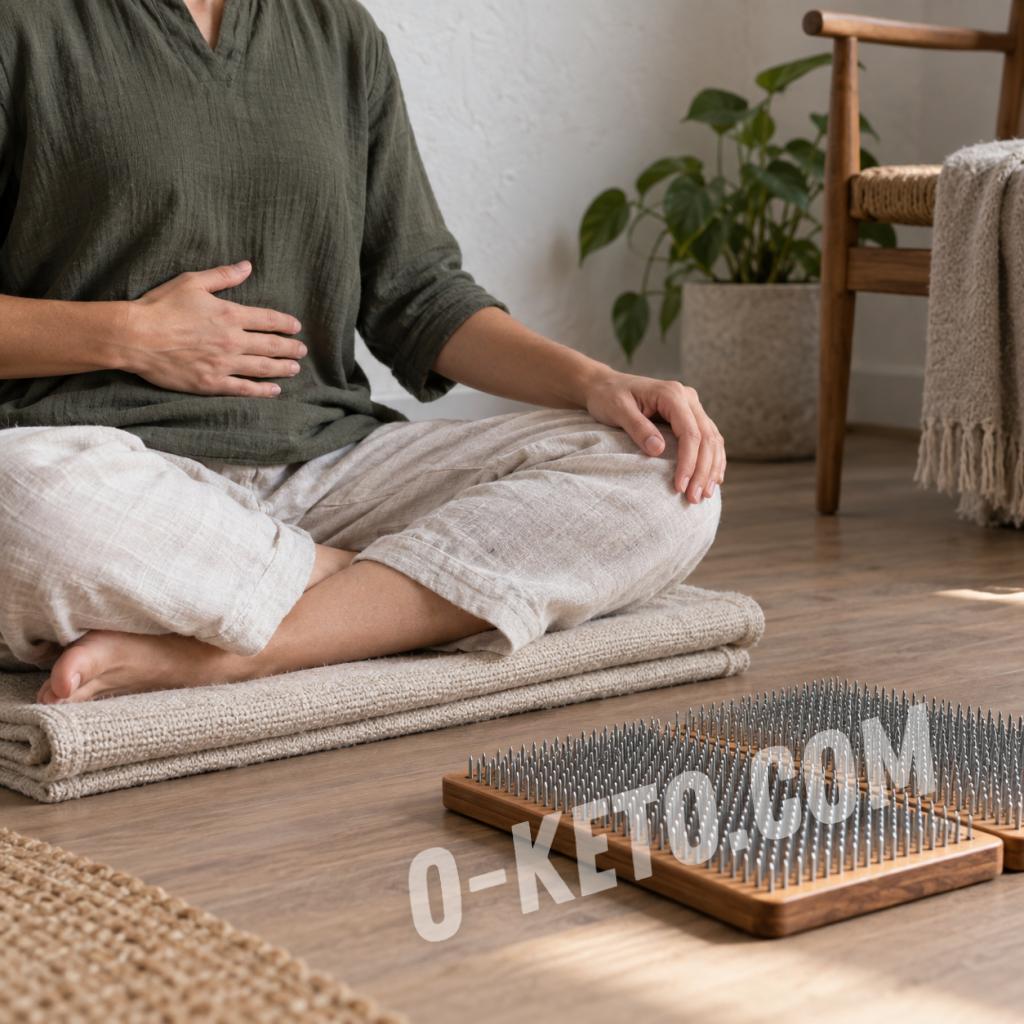
While standing, return attention to the feeling of support and a smooth exhalation. Breathing should not become a contest or a way to silence sharp pain. If you feel sick, notice tingling around the mouth, ringing in the ears or a sense of not getting enough air, stop the technique, sit down and return to ordinary breathing.
How to step onto the board
Set the boards parallel and check that they do not slide apart. Stand in front of them, hold the support and shift weight to one leg. Place the other foot on the board with the whole sole, without jumping, then place the second foot in the same way. Keep the knees softly unlocked, the torso upright and the gaze on a still point ahead. A guide may support the elbows or shoulders, but should never pull the person abruptly upward.
Begin with an interval that allows control and calm breathing. Duration is not a target and differs between people. Do not shift weight with a jerk, walk on the nails or close the eyes immediately. If the board tilts, a foot slips or the pain becomes sharp and localised, step down.
Which sensations are expected, and when to stop
Pressure, burning, tingling, sweating, trembling and an emotional response may occur during the first minutes. These are possible signs of acute discomfort and stress; they do not prove detoxification, rejuvenation or treatment of internal organs. Sensations should remain manageable and ease after the load stops.
End the practice at once for dizziness, near-fainting, chest pain or pressure, unusual breathlessness, confusion, loss of coordination, severe sharp pain, ongoing bleeding or any rapidly worsening reaction. Step down with support, sit or lie down and ask for help. Seek medical care when symptoms are persistent or severe.
How to finish the session
To leave, shift weight to one foot while holding the support, then remove the other foot. Do not jump or step backwards quickly. Sit for a few minutes, drink small sips of water and check the feet. Mild redness may settle with rest, but blood, increasing swelling, severe tenderness or worsening health needs attention.
If the skin is punctured, wash your hands, rinse a minor wound with clean water and soap and cover it with a dry dressing. A deep puncture, contamination, signs of infection or uncertain tetanus vaccination status require medical advice. Clean the board according to the maker’s instructions and let it dry completely.
Conclusion
A safe start is a short session near a support, after checking the skin and general health, with gentle warm-up and ordinary relaxed breathing. Step on one foot at a time, keep the torso upright, do not extend the duration through pain and stop at the first warning sign. The practice may serve as a personal concentration ritual, but it does not replace treatment or medical assessment.
Sources
Key sources:
- Preventing Group A Strep Infection — Centers for Disease Control and Prevention.
- Clinical Guidance for Wound Management to Prevent Tetanus — Centers for Disease Control and Prevention.
- Should You Exercise If You Have Heart Disease? — Mayo Clinic.
- Dizziness — NHS.