


Pancreas
The pancreas combines digestive and hormonal work: enzymes help digest fats, proteins and carbohydrates, while insulin and related signals regulate blood glucose. In nutrition, the key issues are the lipase-bile partnership, the role of bicarbonate and how lower carbohydrate exposure can reduce the workload on beta cells.

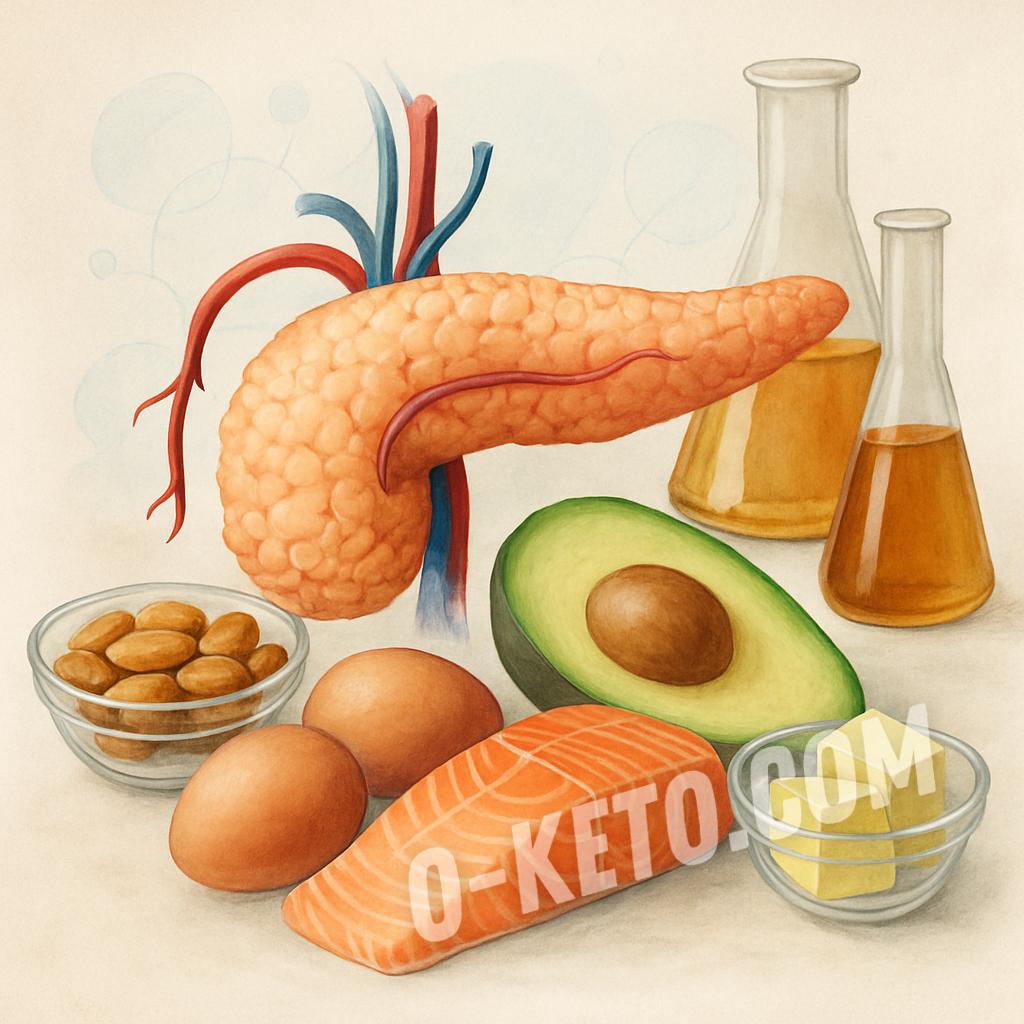
The pancreas is an organ that participates in both digestion and metabolic control. That is why it should not be reduced to enzymes alone or to insulin alone. One part of the pancreas helps break down fats, proteins and carbohydrates inside the small intestine, while another part produces hormones that influence blood glucose, appetite and energy distribution. In practice, this means that symptoms after meals, unstable glucose and poor tolerance of a very high-fat diet can come from different mechanisms and should not be explained with one simplistic phrase such as “the pancreas does not like fat.”
How the pancreas helps digest fats, proteins and carbohydrates
The exocrine part of the pancreas releases a group of enzymes into the small intestine that help finish the breakdown of food into absorbable fragments. Proteases are especially important for proteins, lipase for fats and amylase for starches. That does not mean the pancreas works in isolation. The stomach prepares food with acid and early protein digestion, the liver and gallbladder contribute to fat handling, and the small intestine completes both the chemical and transport side of absorption.
When a person says they “cannot tolerate fat,” the problem is not automatically inside the pancreas itself. Sometimes fat intake was raised too abruptly, sometimes bile flow is poor, sometimes there is intestinal inflammation, bacterial overgrowth or altered gut motility. In the same way, poor protein tolerance does not automatically prove pancreatic enzyme insufficiency, and blood sugar spikes after porridge or sweets do not mean digestive enzymes have failed. The pancreas has different jobs, and each one has to be evaluated separately.
Why lipase depends on bile to work properly
Lipase is often treated as the main fat-digesting enzyme, but by itself it is not enough. Large fat droplets are not easily accessible for enzyme action, so bile is needed first. Bile emulsifies fat, meaning it breaks it into smaller droplets and increases the surface area that pancreatic lipase can work on. Once that happens, lipase can more effectively split triglycerides into components that can be absorbed in the intestine.
This partnership is one reason symptoms after fatty meals are easy to misread. Heaviness, nausea, loose stools or the feeling that a fatty meal “just sits there” may happen with impaired bile flow, with an overly rapid increase in dietary fat, or with reduced pancreatic enzyme output. One symptom alone does not identify the cause. In practical terms, it is often more useful to increase fats gradually, distribute them across regular meals and watch for accompanying signs such as greasy stools, weight loss, fat-soluble vitamin deficiency, right upper abdominal discomfort or worsening meal tolerance.
Why the pancreas releases bicarbonate
After food leaves the stomach, it enters the duodenum together with strongly acidic gastric contents. If that acid is not neutralized, the intestinal lining becomes irritated and both pancreatic and intestinal enzymes lose their optimal working environment. This is why the pancreas releases bicarbonate. Bicarbonate shifts the environment toward a more alkaline range and allows digestion to continue under better conditions.
This matters because many people think digestion depends only on the amount of enzymes produced. In reality it also depends on stomach acidity, bile timing, the condition of the intestinal lining and pancreatic bicarbonate output. When one of those steps is disrupted, a meal can trigger burning, heaviness, bloating, noisy digestion or unstable stools even when the overall food choices seem reasonable.
How a low-carbohydrate diet changes the load on beta cells
The endocrine part of the pancreas works differently. Beta cells produce insulin, which helps move glucose out of the bloodstream and coordinates nutrient handling after meals. When the diet contains many rapidly absorbed carbohydrates and frequent snacks, insulin responses tend to happen more often and may become larger. In insulin resistance, that creates a chronic burden on beta cells because the body keeps needing more insulin to hold glucose within a safe range.
A low-carbohydrate diet usually reduces how often that stimulus appears and often reduces its amplitude as well. That does not “heal the pancreas overnight,” but it can lower the workload on beta cells and smooth post-meal glucose swings. The difference is often most noticeable in people who previously relied on sweets, pastries, juice, sugary drinks and large starch-heavy meals. At the same time, old metabolic problems do not disappear instantly. If a person already has marked insulin resistance, fatty liver, excess body fat, poor sleep and chronic stress, fasting glucose may remain elevated for a while even after carbohydrate intake is reduced.
When the pancreas requires extra caution
The pancreas does not handle extremes well, and clear symptoms should not be explained away by diet alone. Acute or chronic pancreatitis, severe upper abdominal pain, vomiting, greasy stools, unexplained weight loss, fever, pronounced post-meal weakness or sudden worsening of glucose control all require proper medical evaluation. Depending on the situation, clinicians may look at blood lipase and amylase, liver enzymes, bilirubin, ultrasound findings, gallbladder status, triglycerides, glucose, insulin and other markers.
From a nutrition perspective, the most useful approach is usually not the most extreme one. If a person is moving toward low-carb eating, fats are usually better increased gradually rather than replacing whole meals with large amounts of liquid fat. Adequate protein, enough salt and water, decent sleep and careful observation of meal tolerance usually matter more than trying to “stimulate” or “rest” the pancreas with dramatic tactics. The pancreas tends to work best when digestion, hormonal signaling and the daily eating rhythm remain predictable.

If you have any questions about the term "Pancreas", you can ask them to AI. Please note, a low-cost OpenAI model is used. It may answer questions about disease treatment with errors!


 1 / 4
1 / 4

 1 / 4
1 / 4


 1 / 4
1 / 4
 1 / 4
1 / 4
