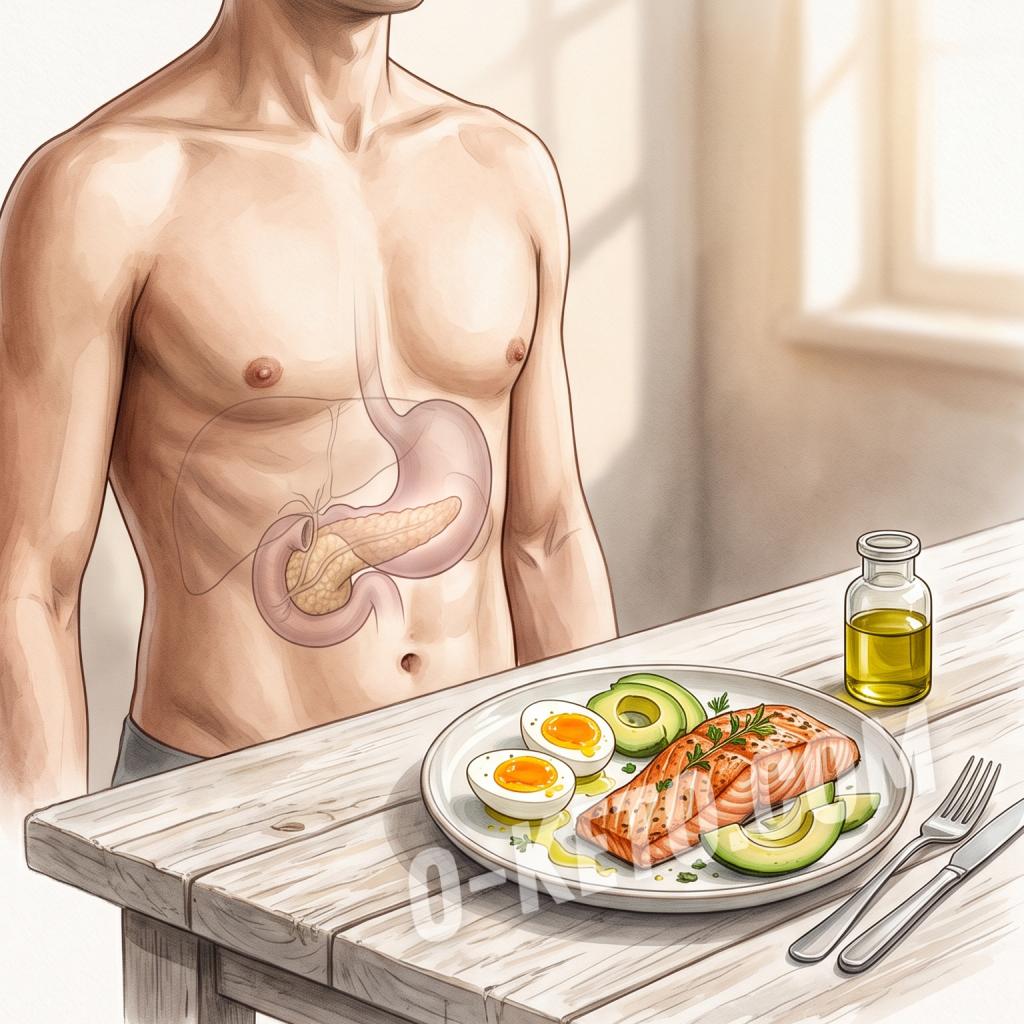

The pancreas responds to keto and fasting through more than one pathway. It helps digest food, releases bicarbonate to neutralize acid coming from the stomach, and participates in blood sugar regulation through insulin and other hormonal signals. That means a low-carbohydrate diet changes not only glucose exposure, but also the workload on pancreatic enzymes, beta cells and the overall rhythm of digestion.
Which pancreatic functions matter most on keto
The pancreas has at least three key jobs that become especially visible when the diet changes. The first is enzyme production for digesting fats, proteins and carbohydrates. The second is bicarbonate release, which helps neutralize acidic stomach contents once food enters the small intestine. The third is hormonal regulation, especially through insulin, which helps control how the body handles incoming carbohydrates and keeps blood sugar in a safe range.
On a standard high-carbohydrate diet, many people only notice the hormonal side and associate the pancreas with insulin alone. But when keto begins, it becomes easier to see how tightly this organ is tied to fat digestion, meal tolerance and post-meal gut comfort. That is why broad statements such as “the pancreas loves keto” or “the pancreas hates keto” are too simplistic. The real issue is not just carbohydrate restriction, but how the whole eating pattern is constructed.
Why the pancreas releases bicarbonate
After food leaves the stomach, it enters the small intestine together with highly acidic gastric contents. If that acid is not neutralized, the lining of the small intestine becomes irritated and the normal activation of downstream digestive enzymes is disrupted. This is why the pancreas releases bicarbonate: it helps shift the environment toward a more alkaline range, where intestinal enzymes work more effectively. This step matters whether the meal is based on grains, meat or a keto plate.
In practice, this means symptoms such as burning, heaviness, noisy digestion and poor meal tolerance should not be blamed on fat alone. If acidity, bile flow and enzyme timing are out of sync, a person may struggle even on an otherwise reasonable diet. Keto therefore has to be judged not as simple macro math, but as a digestive state that requires coordinated adaptation.
How bile and lipase work together to digest fats
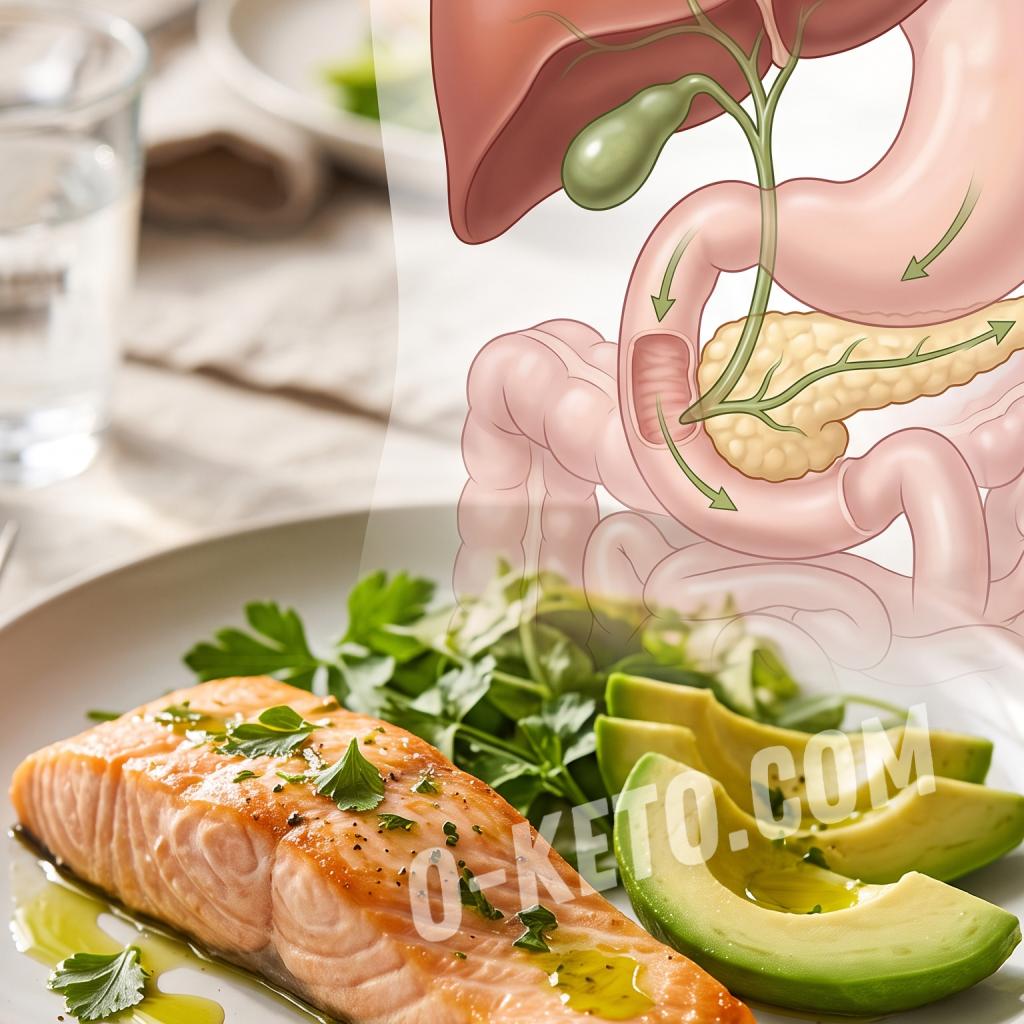
One of the main issues on keto is fat tolerance. Here the pancreas does not work alone, but together with the liver and gallbladder. Bile first emulsifies fat, breaking it into smaller droplets. After that, pancreatic lipase helps split those droplets further so fatty acids can be absorbed in the small intestine. Without this coordinated process, even high-quality fats may cause heaviness, nausea, loose stools or the feeling that food sits for too long.
This is why a sudden jump into a very high-fat version of keto is not always comfortable. If a person ate relatively little fat yesterday and suddenly adds large amounts of oil, rich sauces and MCT drinks today, unpleasant symptoms do not automatically mean the pancreas is “failing because of keto.” More often they mean bile flow and enzyme output have not adapted to the new load yet. In those cases it is usually smarter to reduce liquid fats, distribute fats inside normal meals and give digestion time to adjust.
What happens to insulin and beta cells when carbs go down
When carbohydrate intake drops, the frequency of strong insulin responses usually drops as well. For pancreatic beta cells, that means less repeated daily stimulation. On a high-carb background, the body has to clear glucose from the bloodstream again and again, especially if insulin resistance is already present. On keto, those spikes are often smaller and less frequent, so some people notice steadier energy, less post-meal sleepiness and less urgent hunger between meals.
Still, one nuance matters: lowering carbohydrates does not erase insulin resistance overnight. If a person has spent years with hyperinsulinemia, fatty liver and poor insulin sensitivity, morning glucose may remain elevated for some time even without obvious sugar in the diet. That is not a reason to call keto useless, but it is also not a reason to promise instant “pancreatic recovery.” Metabolic adaptation still needs time, lower liver fat, movement, decent sleep and consistent meal structure.
Why blood sugar can still look strange early in keto
One common question is why fasting glucose can remain high in someone who has already restricted carbs. This can happen when the liver still produces glucose aggressively and the tissues are still relatively resistant to insulin. On the background of older insulin resistance, the body may continue using its old metabolic pattern for a while before settling into a new one. That is why it is often too early to judge the full effect of keto from only one or two mornings.
It helps to look at the broader pattern: weight, waist circumference, fasting glucose trend, post-meal responses, appetite, exercise tolerance and the general rhythm of eating. If a person not only lowers carbs but also stops constant snacking and uses intermittent fasting in a measured way, the insulin load often becomes more manageable. But if keto still includes oversized portions, frequent sweetener-heavy desserts, chronic stress and poor sleep, the pancreas does not get the “rest” many beginners hope for.
How fasting changes the pancreatic workload
Intermittent fasting usually reduces the number of digestive signals during the day. That means fewer moments when the pancreas has to coordinate enzymes, bicarbonate and hormonal responses to incoming food. For some people this makes the rhythm of eating calmer and easier to tolerate. But fasting should not become a stress pattern followed by an enormous heavy dinner. In that situation the advantage disappears and the digestive load may increase instead.
Fasting tends to work best as an extension of an already stable low-carb pattern, not as forced deprivation in a person with constant shakiness, severe weakness or sleep disruption. If skipping meals leads to nausea, strong biliary discomfort, dizziness or rebound overeating, the timing strategy needs to be revised. The pancreas and biliary system usually prefer predictability over extremes.
When caution is needed with the pancreas and keto
Although a low-carbohydrate approach can reduce the insulin burden on the pancreas, that does not mean every person should jump straight into a very high-fat plan regardless of symptoms or diagnosis. Extra caution is needed with acute or chronic pancreatitis, significant gallbladder problems, persistent pain after fatty meals, severe diarrhea, major underweight or complex diabetes medication regimens. At that point the important question is not whether keto is good “in general,” but whether a specific version of keto is actually tolerated.
If the diet causes persistent pain, vomiting, greasy stools, clear digestive decline or major glucose instability, the issue is no longer a simple pro-or-con debate about keto. The real issue is whether this person can handle this exact protocol, at this fat load and with this meal timing. In many cases the best strategy is not the most extreme one: a more moderate, better tolerated low-carb plan, enough protein, gradual fat increase, adequate salt and water, and close attention to real digestive feedback.
Sources
- Pancreas – MSD Manual Consumer Version
- Your Digestive System & How It Works – National Institute of Diabetes and Digestive and Kidney Diseases
- The Role of Bile Acids in the Digestion and Absorption of Dietary Lipids – National Institute of Diabetes and Digestive and Kidney Diseases
- Islet Health, Hormone Secretion, and Insulin Responsivity with Low-Carbohydrate Feeding in Diabetes
- Effect of the Ketogenic Diet on Glycemic Control, Insulin Resistance, and Lipid Metabolism in Patients with Type 2 Diabetes Mellitus: A Systematic Review and Meta-Analysis
- Clinical Assessment of Intermittent Fasting With Ketogenic Diet in Glycemic Control and Weight Reduction in Patients With Type II Diabetes Mellitus: A Systematic Review and Meta-Analysis