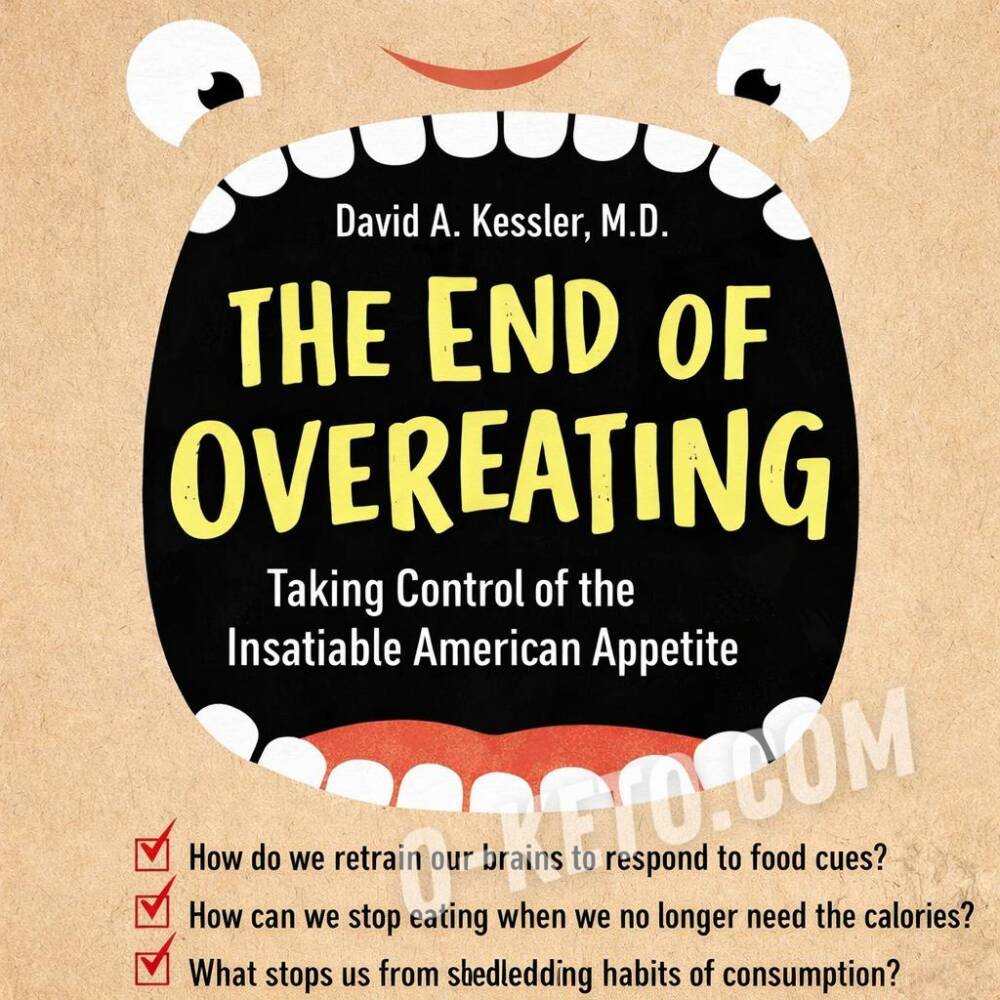
Part One. Sugar, Fat, Salt
Modern food acts on the brain like a behavioral drug. Combinations of sugar, fat, and salt are deliberately selected to maximally stimulate the dopamine reward system and create a desire to eat beyond physiological needs. These combinations suppress signals of satiety, disrupt the connection between the amount eaten and the feeling of fullness, and form conditioned reflexes: food begins to be perceived not as a source of energy, but as a way to obtain pleasure and relieve tension.
The brain becomes accustomed to hyperstimuli and demands increasingly intense flavors. Ordinary, simple food ceases to provide satisfaction, and control over appetite shifts from the cortex to more primitive structures. Overeating becomes an automatic, rather than a conscious process.
Part Two. Food on an Industrial Scale
The food industry systematically uses knowledge from neurobiology and behavioral psychology to increase consumption. Products are developed to make it hard to stop eating: texture, melting speed in the mouth, aroma, crunch, and aftertaste are optimized. This enhances compulsive behavior and reinforces the habit of constant snacking.
In conditions of abundance and calorie availability, the brain loses evolutionary mechanisms of self-regulation. A person finds themselves in an environment where overeating becomes the norm rather than a deviation. The key problem is not personal discipline, but the surrounding food environment, which systematically pushes towards excessive consumption and metabolic disorders.
Part Three. Binge Eating as a Conditioned Reflex
Overeating is formed according to the same laws as any conditioned reflex. Certain tastes, smells, settings, emotions, and times of day become triggers that automatically initiate eating outside of real need. The brain remembers the connection between the stimulus and the reward, and over time, the stimulus itself begins to evoke the desire to eat.
This scheme works independently of hunger: food is used to regulate emotions, relieve stress, and anxiety. The more often such a connection is reinforced, the weaker the influence of rational decisions. Binge eating becomes not a choice, but a programmed response.
Part Four. Theoretical Foundations of Treatment
Treatment of binge eating should focus not on willpower, but on restructuring neural pathways. The author emphasizes that the key task is to weaken pathological associations between the stimulus and the reward and to restore sensitivity to signals of hunger and fullness.
The foundation of the approach is mindfulness, management of the food environment, and breaking automatic reactions. Without eliminating triggers and hyperstimulating products, any diets are doomed to failure, as they conflict with the basic mechanisms of brain function.
Part Five. Treatment of Binge Eating
Practical treatment is built around changing behavior and the environment, rather than counting calories. Foods that trigger compulsive overeating are removed, the number of stimuli is reduced, and new stable eating patterns are formed.
Gradually, the brain is retrained: dopamine dependence on food decreases, the ability to stop when full returns, and the distinction between physical hunger and emotional desire to eat is restored. The result of treatment is the restoration of control over eating without a constant struggle with oneself.