
Attention is the ability to keep a chosen task in mind and return to it after a distraction. It changes during the day and is affected by sleep, stress, interest, noise, and alerts. Exercises can practise specific attention skills, but they do not replace rest or an assessment when persistent difficulties interfere with school or work.
How to prepare for practice
Close extra tabs and alerts, silence the phone, and prepare paper, a pen, and a timer. Start with five minutes so the session does not become an endurance test. Choose one target: mark symbols, complete a table, or find differences. When the timer ends, record time and errors.
Practise when reasonably rested. If you are sleep deprived, hungry, or very anxious, the result reflects your current state rather than a fixed “brain power.” Rest your eyes and stand up between rounds.
How to do a cancellation task
Take a page of dense text or symbols. Choose one target, such as the letter “a,” and mark only that target for one minute. Check omissions and false marks afterward. Repeat with a new fragment, but do not treat every attempt as a race.
This task practises selective attention and tolerance of monotony. It is not a diagnostic test and does not measure general intelligence. For a child, use large print, a short interval, and a clear instruction. Praise accuracy and returning to the task, not speed alone.
How to use Schulte tables and visual search
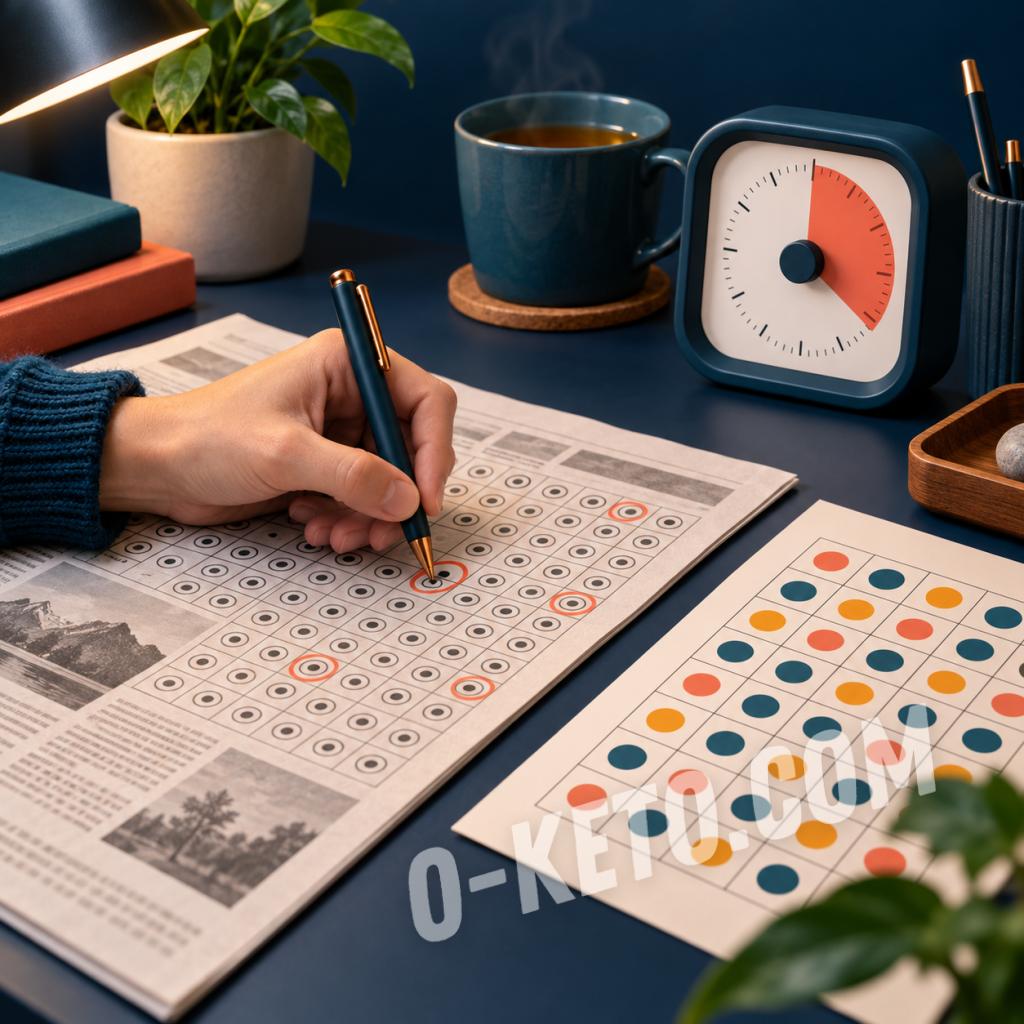
In a Schulte table, numbers or symbols are scattered in random order. Find them in sequence without tracing every cell with your finger. Begin with a small table and record time calmly. Compare results only with your own earlier attempts made with the same size and lighting.
Spot-the-difference puzzles train a related visual search skill. Scan the whole image first, then move from top to bottom or row by row. Avoid jumping randomly between areas; a planned route reduces repeated checks. A child’s task should last only a few minutes and end before fatigue appears.
How to practise switching without constant rushing
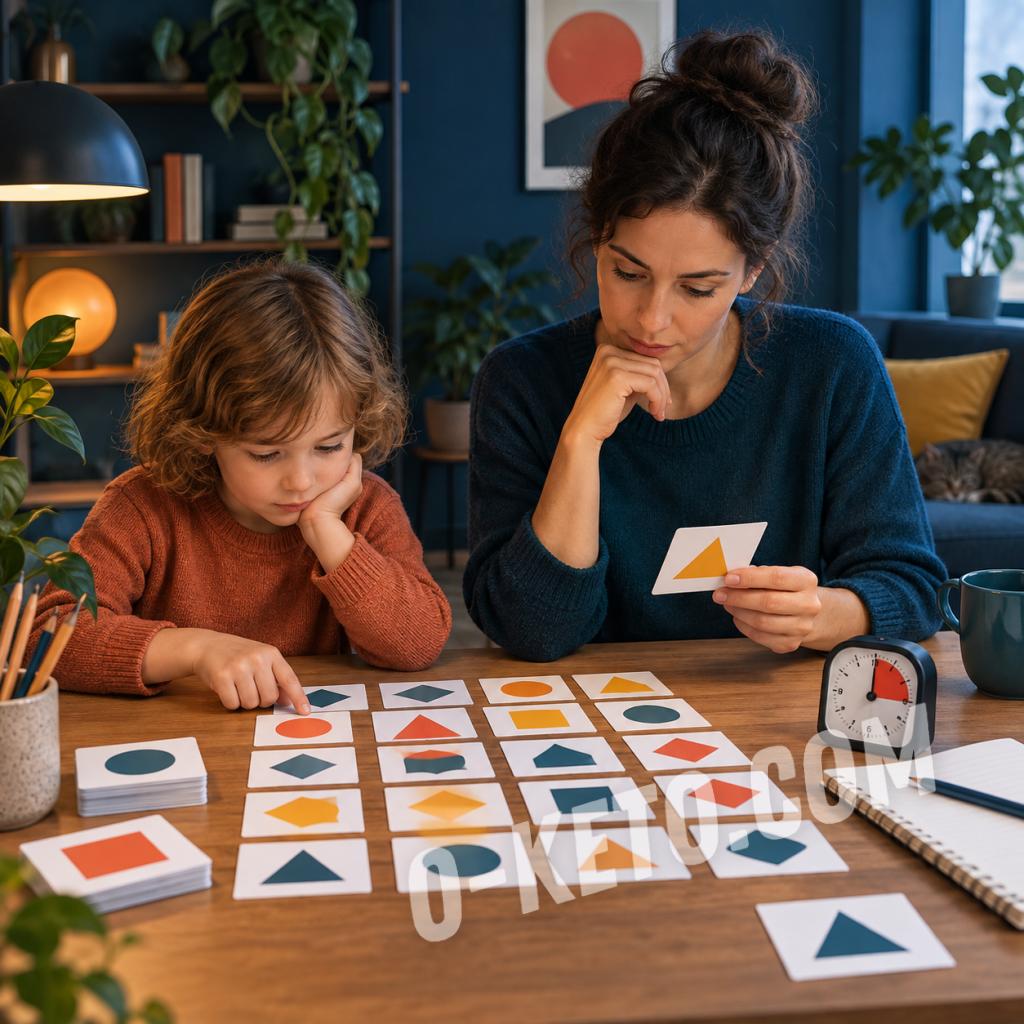
Place cards of two colors on a table. In the first round, name only the color; in the second, name the shape; in the third, alternate the rule when the timer signals. Mark an error and continue with the current card. The aim is accurate switching between rules, not the fastest possible pace.
Use the same idea in daily life: read for ten minutes without the phone, take a short message check, and return to the text using a marked place. This schedule works better than endless multitasking, where no task receives full attention.
How to add movement and speech
A simple movement can signal the start: place the pen on the right, take one calm breath, and read the instruction aloud. For a child, a clap between rounds or saying found symbols aloud can help. Movement does not “train the hemispheres”; it marks the boundary between stages and supports a consistent sequence.
Stop if an exercise causes eye strain, headache, or marked irritation. The workload should remain safe and manageable.
How to build a one-week routine
- Days 1–2: a five-minute cancellation task.
- Day 3: a small Schulte table.
- Day 4: a spot-the-difference puzzle with a planned scan.
- Day 5: rule switching with colored cards.
- Days 6–7: repeat the most comfortable exercise and compare errors.
Record conditions as well as seconds: sleep, time of day, noise, and how you felt. If accuracy improves while time changes little, that is still progress. Do not turn practice into a competition with children or colleagues.
When extra help is needed
Persistent inattention can be related to insufficient sleep, anxiety, depression, vision or hearing problems, medication effects, or other conditions. With a child, consider age, school load, and the classroom situation. Consult a clinician or learning specialist if difficulties appeared suddenly, are getting worse, occur in different settings, or disrupt daily life.
Home attention exercises are useful as short practice. Their goal is to notice distraction, return to the chosen task, and work more accurately. Stable progress comes from regular practice, sleep, a clear plan, and suitable conditions.
Sources
- Attention and executive functions: a review.
- Using Testing as a Learning Tool.
- Sleep-dependent memory consolidation and its implications for psychiatry.
- Dementia prevention, intervention, and care: 2024 report of the Lancet standing Commission.