
A frying pan feels like a simple purchase only until you end up with cookware that scratches quickly, overheats, starts smelling odd, or makes you question whether it is still a good idea to cook in it. In practice, the real issue is rarely one trendy word on the box. It is usually the combination of three things: what the body of the pan is made from, what kind of inner coating it has, and how the pan is used every day. That is why it is smarter to choose cookware by construction and use, not only by labels such as “nonstick” or “stone finish.”
Why the base material matters as much as the coating
Every frying pan has a structural body, and that body affects heat distribution, resistance to warping, and the consequences of scratches. Aluminum, steel, and cast iron are the most common foundations. Aluminum is popular because it heats quickly and evenly, which makes cookware lighter and more responsive. But this also means that the integrity of the coating matters much more. Once the interior layer is badly damaged, the concern is not only sticking; it is also the fact that the exposed base is no longer behaving as intended.
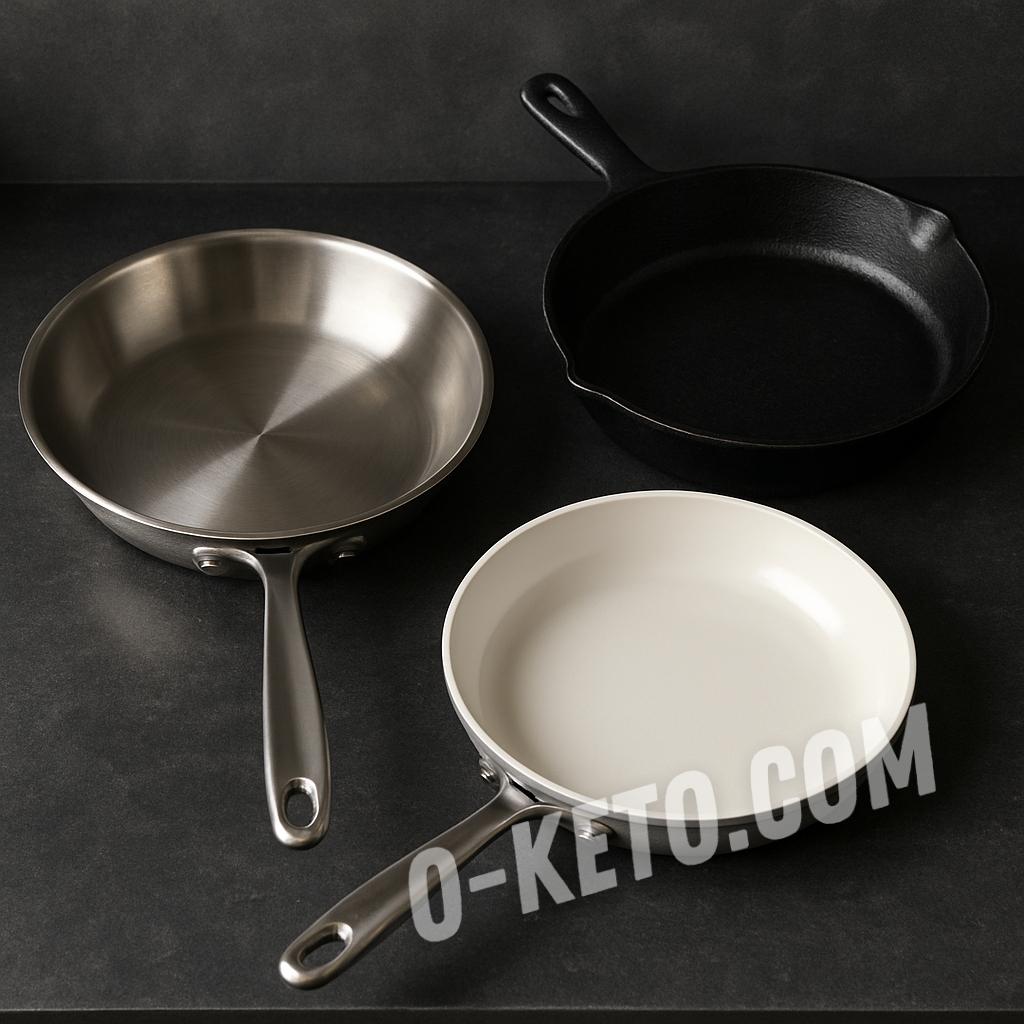
Stainless steel and cast iron are often easier to trust over the long term. They are heavier and may require a little technique, but they also tend to last longer and tolerate daily use better. For many households, that is more practical than replacing cheap nonstick pans again and again.
When aluminum inside a pan is acceptable and when it becomes a problem
People often react to the word “aluminum” as if it always means the same thing. It does not. An exposed contact surface is one case; an internal aluminum layer hidden inside a multilayer bottom is another. In many pans and pots, aluminum is used between other layers to improve heat transfer while the cooking surface itself remains steel or another protected material. That is very different from a very thin pan where damage to the inner layer quickly compromises the whole structure.
This is why thickness, construction, and durability matter so much. A solid pan with a stable multilayer design is not the same as a flimsy budget pan with a decorative coating. If the surface is scratched, bubbling, flaking, or visibly wearing away, it is usually better to retire that cookware than to keep forcing more use out of it.
What makes classic nonstick coatings more complicated
Traditional nonstick cookware became popular for understandable reasons: food releases easily, cleanup is simple, and less fat is needed. The problem is that safety here depends on production chemistry, heat exposure, and surface condition. Older conversations centered on PFOA, while newer concerns often involve the broader PFAS group. For a normal buyer, the practical conclusion is simple: nonstick cookware should not be treated as one uniform and automatically harmless category.
Overheating is one of the biggest problems. Even a decent coating does not love being preheated empty over high heat, and a damaged surface is no longer in the “still usable” zone. If you really need a nonstick pan for delicate dishes, it is worth choosing a reliable manufacturer, avoiding ultra-cheap options, keeping heat moderate, and replacing the pan once the surface begins to fail.
Steel, cast iron, enamel, and ceramic alternatives
Stainless steel, cast iron, enamel, and better ceramic-style coatings often appeal to people who want something calmer and more predictable. Steel and cast iron without fragile inner coatings can last for years, but they demand some technique: proper preheating, enough fat, and patience before moving the food. Once that learning curve passes, many cooks find that they no longer need the cycle of buying and throwing away low-end nonstick pans.
Enamel gives a more inert surface and can feel easier to manage for simmering or everyday stovetop cooking. Ceramic and sol-gel surfaces are often chosen as a middle ground, but the word “ceramic” is not a guarantee by itself. Quality of application and overall construction still matter.
Why “stone” and “titanium” names should not end the conversation
One of the most common buying traps comes from beautiful coating names. “Stone,” “granite,” “marble,” “diamond,” or “titanium” sounds impressive, but those words do not tell you what binds the layers together, what sits underneath, or how the surface will behave after repeated heating. In many cases, such names describe a familiar multilayer coating with decorative mineral or metal particles added in.
That does not automatically make the pan bad, but it does mean the label alone is not enough. It is better to look for real technical details: who makes the coating, what the body is made from, how thick the pan is, whether the manufacturer gives meaningful data, and whether the seller can explain the product beyond advertising slogans.
A practical checklist before buying
For ordinary home use, a short checklist goes a long way. What is the core material: steel, cast iron, or cast aluminum? Is the coating clearly described, not only dressed up with a decorative name? Does the pan have a sturdy bottom? Does it match your stove and your cooking habits? And are you ready to use it in the way its material requires? If you cook often over strong heat, steel or cast iron may make more sense. If you need a pan mainly for delicate foods, then build quality and careful handling become more important.
When it is time to replace cookware
Even good cookware does not last forever. Deep scratches, flaking layers, bubbling surfaces, warped bottoms, or persistent off-smells during heating are all reasons to stop pretending the pan is fine. Replacing one clearly failing pan is usually cheaper and safer than continuing to cook in something that has already moved beyond normal wear.
In the end, the calmest strategy is rarely the hunt for a magical coating. It is the choice of a clear material, realistic daily use, and a willingness to retire damaged cookware on time. The less pure marketing there is in the purchase, and the more real construction details there are, the easier it becomes to trust what you use every day.