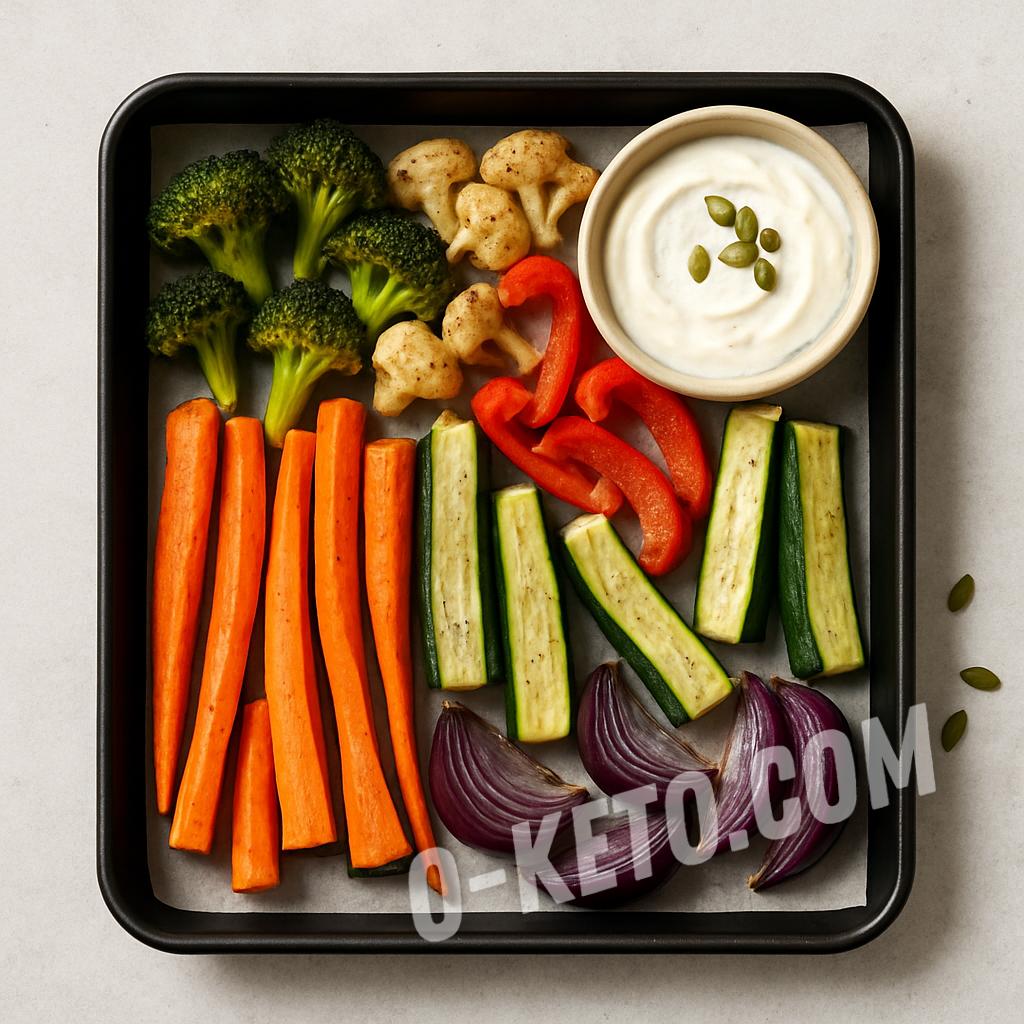

Most people do not miss fiber because they have never heard of vegetables, greens, seeds, or berries. They miss it because real life rewards convenience, and fiber often gets pushed into the category of food that requires extra chopping, extra planning, and extra effort. When there is no ready base in the fridge, the easiest meal usually becomes protein plus something fast, while the fiber-rich part gets postponed for another day.
That is why the most practical solution is not a perfect weekly nutrition plan but a small home system built around prepared components. If you already have roasted vegetables, a crunchy salad base, and one flavorful dip or sauce, it becomes much easier to assemble meals that contain meaningful amounts of fiber. This matters even more in low-carb and keto-style eating patterns, where people may remove grains and legumes but never replace the lost bulk with practical vegetable habits.
Why fiber works better as a system than as a promise
Fiber intake often fails at the weekly level, not at one dramatic meal. One day there is a salad, the next day there is none, then there is a little cucumber, then a busy day built around coffee, eggs, cheese, or leftovers. In theory, fiber is present sometimes, but in practice there is no consistency. Digestion tends to work better when meals are reasonably predictable rather than based on occasional bursts of good intentions.
Prepared components solve that problem better than motivation alone. A large tray of vegetables, a bowl of shredded cabbage or washed greens, and a thick sauce can support several meals in a row. You no longer need to create the fiber part of the plate from scratch every time. Once the base exists, the meal only needs a protein source, some fat, and a quick assembly step.
Which prep components give the best return
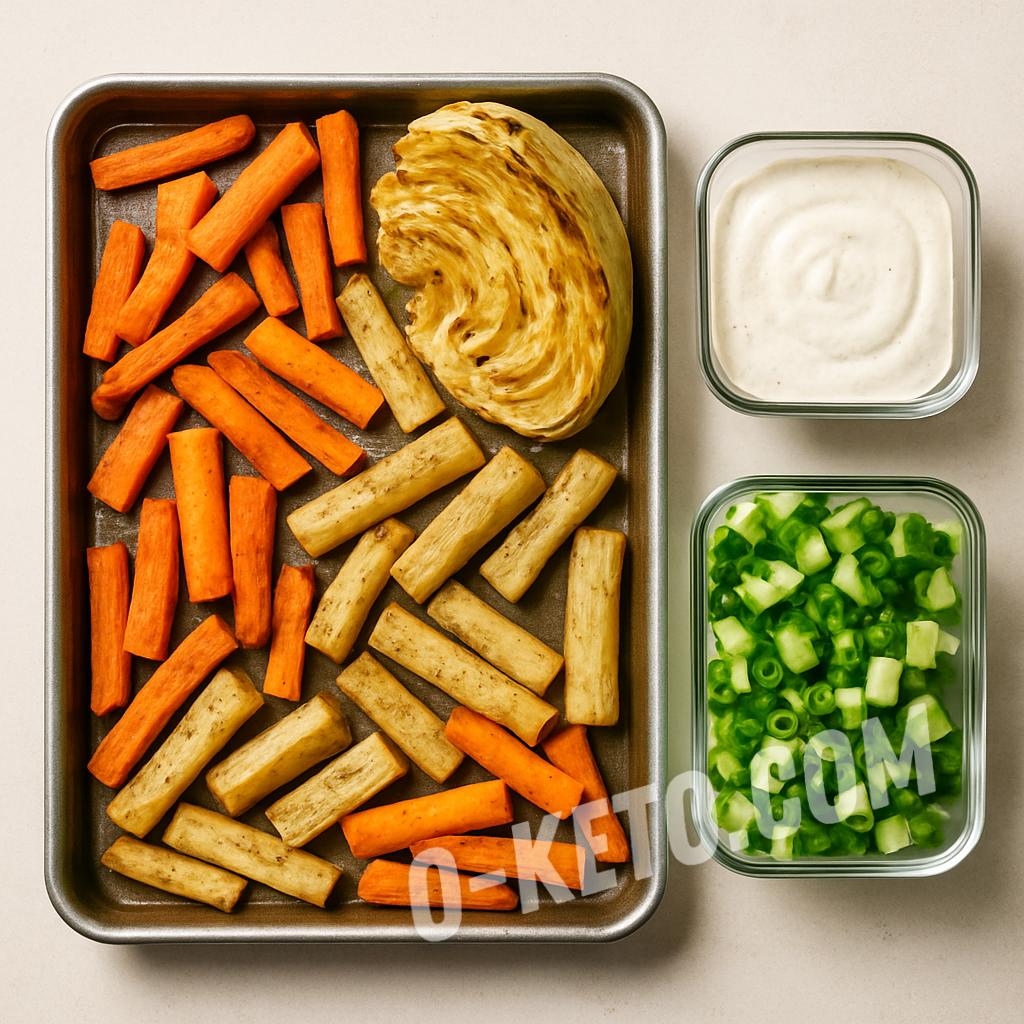
The first strong component is a large tray of roasted vegetables. This works especially well with vegetables that hold shape, taste good reheated, and give real volume: cauliflower, broccoli, cabbage, celery root, turnip, zucchini, eggplant, and similar everyday choices. Roasted vegetables are useful because one cooking session creates several meal options at once: a warm side dish, a soup base, part of a bowl meal, an omelet addition, or a topping for a quick lunch plate.
The second component is something fresh and crunchy. This can be shredded cabbage, washed greens, sliced cucumber, grated radish, fennel, herbs, or a simple raw vegetable mix. Not all fiber has to come from soft cooked food. Crunch gives a different eating experience, improves satiety, and keeps meals from feeling heavy and monotonous.
The third component is a thick dip, spread, or sauce. This is what turns plain vegetables into something that people actually want to eat repeatedly. Yogurt-based sauces, tahini dressings, sour-cream style sauces, kefir dressings, or even a dense vegetable-based dip can make the whole system much more sustainable. The goal is not culinary performance. The goal is making fiber-rich food pleasant enough to choose again tomorrow.
How to build meals so fiber is not a separate chore
The simplest structure is a plate with a fiber base, a protein source, some fat, and a sauce that ties everything together. For example, roasted vegetables with fish and a spoon of yogurt sauce. Or a cabbage base with meat patties and olive oil with lemon. Or a bowl of warm vegetables with eggs, feta, and herbs. In that format, fiber is no longer the moral side task that must be forced onto the plate after the “real” food. It becomes part of the real meal.
It helps to think in modules rather than recipes. If the vegetables are already roasted, if the crunchy base is already washed and sliced, and if the sauce is ready, then assembly takes only minutes. The less friction there is between you and the finished plate, the more likely fiber will stay in your diet consistently.
Why creamy textures can help people eat more fiber
Some people struggle with fiber because they get tired of chewing large salads. In that case, texture variety matters. Part of the fiber can come from crunchy vegetables, part from soft roasted vegetables, and part from creamy forms such as soups or dense dips. A blended vegetable soup, a thick yogurt sauce with herbs, or a vegetable puree can make fiber-rich meals feel easier and more comforting, especially in colder months.
If legumes are used, that has to be judged in the context of the person’s overall eating pattern. In strict keto, bean-based dips are usually a limited rather than foundational option. But the general idea still applies without them: fiber can come through cauliflower soups, cabbage dishes, herb-heavy sauces, eggplant-based dips, and other practical low-carb components that improve texture and satisfaction.
Why ordinary seasonal vegetables usually work better than exotic ideas
When the goal is regular fiber intake, the best foods are usually the ones that are affordable, available, and easy to repeat. Cabbage, zucchini, cauliflower, broccoli, cucumber, celery, leafy greens, herbs, and seasonal root vegetables are often more useful than rare or expensive produce because they actually fit normal shopping and normal cooking rhythms. If the system is too expensive or too complicated, it stops being a system and becomes an occasional weekend project.
That is why simple vegetables matter so much. A big tray of seasonal vegetables often does more for long-term fiber intake than a complicated recipe built around too many ingredients. Consistency is usually more valuable than culinary perfection.
Common mistakes that make fiber disappear again
The first mistake is trying to solve everything with raw salads alone. Some people get bored quickly, while others feel digestive discomfort if too much of their fiber comes from rough raw vegetables. A better pattern is rotation: fresh vegetables, roasted vegetables, soups, dips, warm bowls, and crunchy add-ons. The second mistake is making too little. One tiny container of vegetables disappears in a day, and the habit collapses immediately.
The third mistake is making fiber-rich food taste bland. Dry cauliflower without enough salt, acidity, fat, or sauce will not stay popular for long. Fiber survives in a diet through flavor and convenience, not through moral discipline alone. The fourth mistake is relying only on supplements or isolated fibers while forgetting the volume and structure of real food. Psyllium, inulin, or other added fibers may help in specific situations, but they do not replace a useful habit of eating vegetables, greens, seeds, and other practical whole-food sources.
How to make fiber intake sustainable
The most reliable strategy is to pick two or three repeatable components and keep rotating them. For example: roasted vegetables, a shredded cabbage base, and one thick sauce. Or a vegetable soup, a raw crunchy mix, and some seeds. Or warm vegetables, herbs, and a yogurt dressing. That is enough to create multiple meals with different proteins, different spices, and different serving styles without rebuilding the entire menu every day.
This approach is especially useful for people who want low-carb meals that still have volume, texture, and digestive comfort. A fiber base makes meals more filling and more balanced, and it often reduces the sense that low-carb eating means only meat, eggs, and cheese. When a practical system is in place, fiber stops being a separate obligation and becomes part of normal kitchen logistics.
Conclusion
The easiest way to get more fiber is not through ideal recipes or perfect planning but through a few ready components that stay useful for several meals in a row. Roasted vegetables, a crunchy fresh base, and one good sauce or dip can carry a large part of the job. Once that structure exists, fiber becomes easier to eat consistently, because the meal comes together fast and no longer depends on daily effort or daily motivation.
Sources
- Dietary Guidelines for Americans, 2025–2030 — U.S. Department of Agriculture and U.S. Department of Health and Human Services
- Dietary Reference Intakes for Calcium and Vitamin D, and Dietary Reference Intakes for Energy, Carbohydrate, Fiber, Fat, Fatty Acids, Cholesterol, Protein, and Amino Acids — National Academies of Sciences, Engineering, and Medicine
- Food Category Sources of Dietary Fiber — Dietary Guidelines for Americans
- Dietary Fiber and Health Outcomes: An Umbrella Review of Systematic Reviews and Meta-analyses
- Dietary Fiber: Essential for a Healthy Diet — Mayo Clinic