


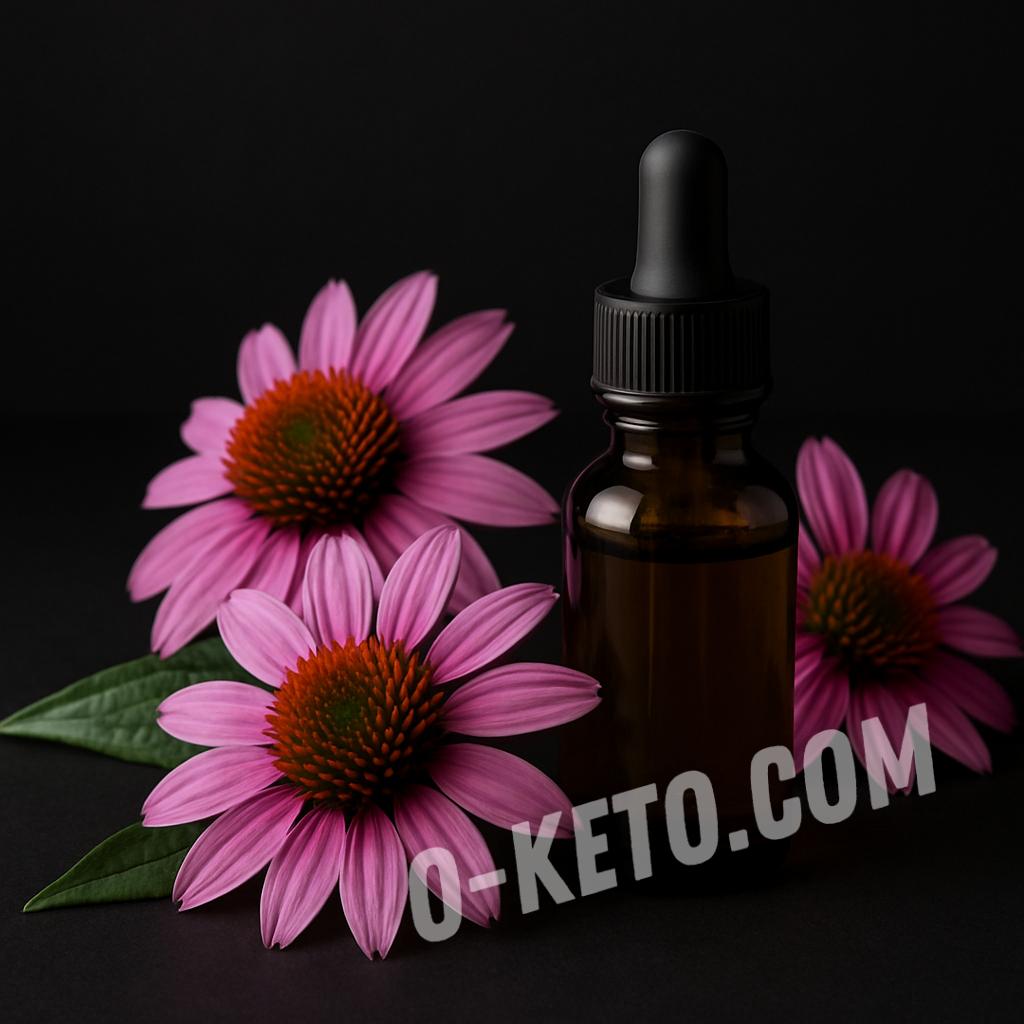

Echinacea is a medicinal herb most often used as extracts, tinctures, tablets, capsules, and herbal teas. Interest in it is mainly tied to immune response, tolerance to frequent respiratory infections, and support during recovery phases where mucosal defense and innate immune resilience matter. At the same time, not every echinacea product is equivalent: the plant part, the extract quality, and the actual dose all change the practical meaning of the product.
What kind of herb it is
Under the name echinacea, products most often use Echinacea purpurea, though other species may appear as well. Discussions usually focus on polysaccharides, phenolic compounds, alkamides, and related constituents that may influence local and systemic immune signaling. In everyday language echinacea is often called simply an immune herb, but its real role is narrower. It is not a universal answer to every infection; it is one herbal tool sometimes used in defined situations and in actual courses rather than as a vague symbol of “immune support.”
When it is commonly used
Echinacea is most often considered when people are prone to recurrent respiratory episodes, at the early stage of upper-airway infections, and during recovery periods when the body needs extra support for mucosal defense. Some broader protocols also mention it during periods of overload, seasonal infection pressure, or environmental stress. Still, it does not replace medical treatment for bacterial complications, fever management, hydration, or proper evaluation when an illness is clearly becoming more serious.
Why product quality matters
Echinacea can differ a lot from one preparation to another. Some products provide a dry extract with clear milligram information and a stated plant part. Others are loose herbal blends or lightly described formulas that make the real dose difficult to understand. For that reason, standardized forms with declared dosage are usually easier to evaluate than vague proprietary mixtures. If the product is loaded with syrup, sugar, flavorings, or unclear add-ons, it becomes less useful for people who want predictable dosing and cleaner tolerance.
What matters in practical use
Echinacea is usually taken in courses rather than randomly once in a while. That matters because herbal immune support is not judged by a single serving but by the whole regimen, its duration, and individual response. Possible downsides include stomach irritation, digestive discomfort, and allergic reactions, especially in people sensitive to plants from the Asteraceae family. Extra caution is also reasonable in autoimmune conditions, pregnancy, breastfeeding, and situations where the general medical picture is still unclear.
What it cannot replace
Echinacea should not be treated as a substitute for sleep, protein sufficiency, correction of deficiencies, or sound medical care. If an infection is severe, fever is sustained, weakness is growing, or signs of a bacterial complication appear, herbal support alone is not enough. It works, when relevant, only as an adjunct within a larger recovery or support strategy.
Storage
Dry forms should be kept in a cool dry place away from direct light and excess moisture. Liquid extracts and tinctures should be stored exactly as directed by the manufacturer and not used after expiry. With herbal preparations, storage affects not only taste and smell but also the stability of active compounds.


