


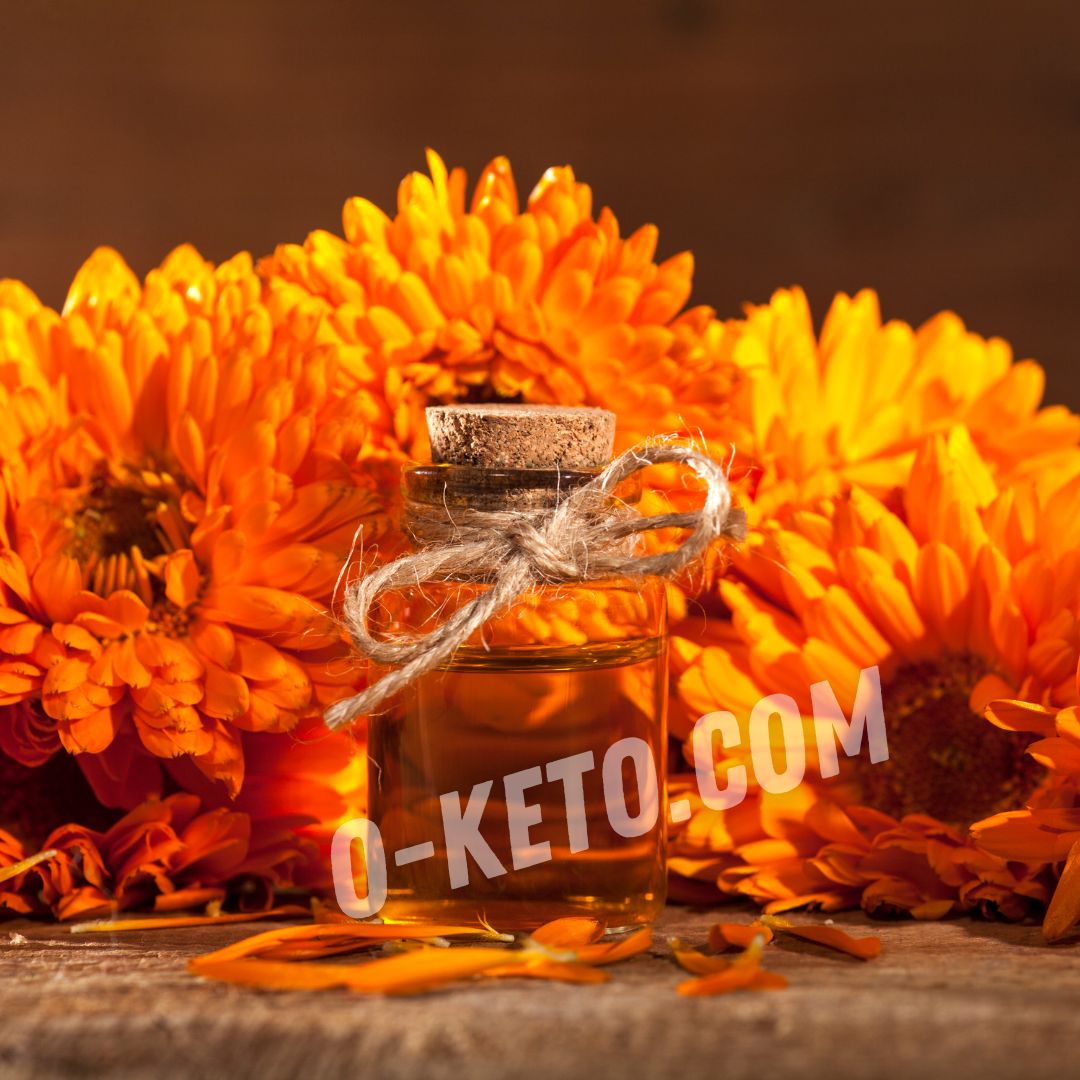

Tagetes oil is a product made from plants of the Tagetes genus. It is important to distinguish it from calendula oil: in translations, both plants may sometimes be called “marigold”, but calendula is Calendula officinalis, while tagetes belongs to Tagetes. Their composition, smell, and use are different.
Most often, tagetes oil means an essential oil or aromatic extract from flowers and aerial parts of the plant, not an edible vegetable oil like olive oil. It has a bright herbal-floral, spicy, sometimes fruity-bitter smell. Such a product is used in cosmetic formulas, perfumery, aromatic blends, and household scents, but not as frying oil or salad dressing.
What it contains
Tagetes essential oil contains volatile aromatic substances: monoterpenes, sesquiterpenes, and other components depending on plant species, region, raw material, and extraction method. Descriptions sometimes list monoterpenes around 39% and sesquiterpenes around 25%, but these numbers should not be transferred to every bottle without analysis of the specific batch.
This is not a fatty oil with an ordinary lipid profile. It does not contain meaningful amounts of monounsaturated or polyunsaturated fatty acids typical of olive, sunflower, or almond oil. If a product is sold as tagetes oil in a carrier oil, the base must be checked: sunflower, olive, almond, or another carrier.
Relation to keto
For keto and LCHF, tagetes oil has almost no dietary role. Essential oil is not counted as a fat source and is not used to add calories. If it is a cosmetic product, dietary carbohydrates and fats do not change at all. If it is a food-grade flavored macerate, the carrier oil and real serving should be counted, but such versions are much less common.
Tagetes essential oil should not be added to food simply because it is “plant-based”. Essential oils are concentrated and require clear labeling and understanding of permitted use. For a culinary floral aroma, it is safer to use edible herbs, spices, or products directly intended for food.
How to use it
In cosmetics, tagetes oil is used only diluted: in creams, body oils, massage blends, aromatic compositions, and skin-care products. A few drops of essential oil are usually mixed with a carrier oil or finished formula, but the exact amount depends on the producer’s instructions and the product’s purpose.
For hair, this aromatic component may appear in masks and oil blends, but it should not reach the scalp in concentrated form. For room scenting, a diffuser or aroma blend can be used if the instructions allow it. The product is not applied to damaged skin, mucous membranes, or the area around the eyes.
How to choose
The label should show the Latin name Tagetes, plant part, extraction method, composition, date, dilution advice, and warnings. It is useful when the label states whether the product is an essential oil, absolute, extract, or macerate in carrier oil. Without this information, concentration is difficult to understand.
The smell should be characteristic, but not rancid, moldy, or solvent-like. A very cheap bottle with a strong perfume note may be fragrance rather than natural oil. Dark glass is preferable to clear glass because volatile components are sensitive to light.
It is also important to distinguish pure essential oil from a finished cosmetic product. A cream or massage oil with Tagetes already contains a base, emulsifiers, and other components, so it is used according to the package instructions. A pure concentrate requires dilution and is not suitable for improvisation.
Limitations
Tagetes belongs to plants that may cause an individual skin reaction. Before first use, it is reasonable to test the diluted product on a small skin area. If burning, itching, rash, swelling, or sharp discomfort appears, wash it off and stop using it.
Extra caution is needed during pregnancy and breastfeeding, for children, people with asthma, strong plant allergies, and sensitive skin. Essential oils are not taken internally without clear food-grade labeling and professional supervision. Aromatic oils may also be problematic for pets, so a diffuser should not be used in a closed room with animals.
How to store it
Keep the bottle tightly closed, in a dark cool place, away from fire, heaters, and sun. Essential oils are volatile and may change smell when exposed to air. If the aroma becomes sharp, rancid, or clearly different from before, it is better not to use the product on skin.
What can replace it?
For cosmetic care, the replacement may be not another essential oil, but a ready fragrance-free cream or a gentle carrier oil: jojoba, almond, squalane, olive, or apricot kernel oil. If a similar floral-herbal note is needed in an aroma blend, lavender, chamomile, calendula, or neroli may sometimes be used, but each essential oil has its own limits and dosages.


