


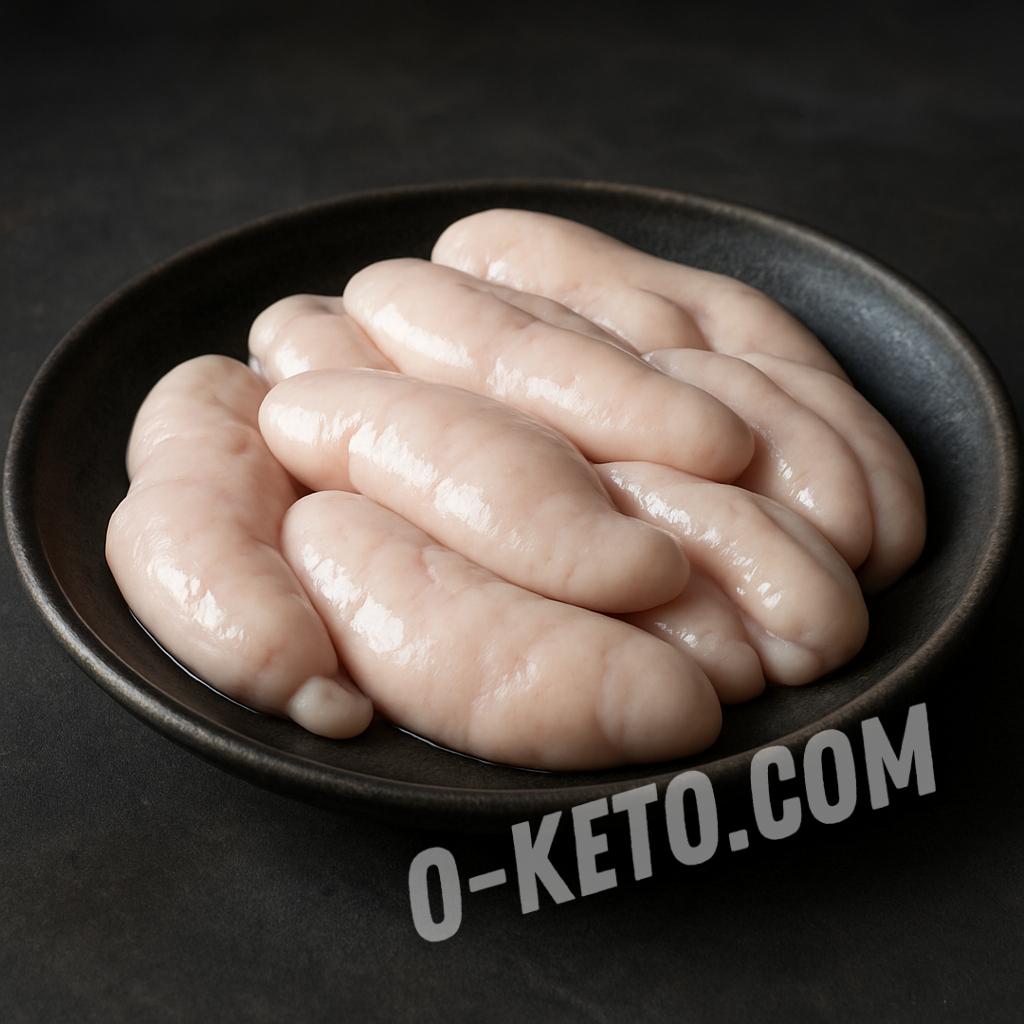

Fish roe is an edible product from the reproductive glands of male fish. Under this name, one can find roe from salmon, herring, cod, and other species for sale, so it is always important to look not only at the general name on the packaging but also at the type of fish, the form of processing, and the composition. This affects the taste, density, fat content, portion size, and even the final calculations of macronutrients.
What is fish roe
Fish roe has been used in home cooking for a long time: it is fried, stewed, added to fish cakes, pâtés, fillings, and warm appetizers. The product has a soft, tender, sometimes slightly creamy texture. Some types of roe are neutral and delicate, while others have a more pronounced marine flavor. Therefore, the same word on the price tag can hide a product with quite different culinary properties.
Nutritional value and place in the diet
Fish roe is characterized by a high proportion of complete protein and a moderate amount of fat. On average, there are about 22.3 g of protein, 6.4 g of fat, and 1.5 g of carbohydrates per 100 g. This makes the product convenient for low-carb and keto diets: the carbohydrate load is low, and satiety is usually good even with a relatively small portion.
In addition to protein, fish roe is interesting as a source of choline, B vitamins, vitamin D, selenium, phosphorus, and a number of other micronutrients. The specific profile depends on the type of fish, so the values for salmon roe and, for example, roe from other fish may differ. In a keto menu, it pairs well with fats and low-carb side dishes: butter, olive oil, mushrooms, eggs, cabbage, zucchini, broccoli, and herbs.
What to look for when buying
For this product, the identification of the raw material is especially important. If it is labeled only as “fish roe” without specifying the type of fish, the nutritional value will be more averaged, and the taste less predictable. A good product should not have a sharp or ammonia-like smell, the surface should not be sticky, and after thawing, there should be no feeling of a watery, repeatedly cooled mass.
If the roe is sold in marinade, breading, or a ready-made frying mix, the composition should be checked separately. For a keto diet, sugar, flour, starch, sweet sauces, and thick store-bought breadings become unnecessary. Pure chilled or frozen roe is usually much more convenient for precise control of macronutrients than ready-made semi-finished products.
How to cook and what to pair with
Fish roe is best not to overload with complex processing. It is usually quickly fried, baked, stewed in creamy sauce, or used in pâté mixtures. Prolonged frying makes the texture drier and coarser. For a milder taste, the product pairs well with onions, mushrooms, sour cream, cream, lemon, dill, and eggs. If the goal is keto compatibility, it is better to avoid flour coatings and sweet marinades.
Storage and limitations
Like other fish by-products, roe is best cooked soon after purchase. The chilled product should not be kept in the refrigerator for long, and it should be thawed slowly without refreezing. If there is a questionable smell, damaged packaging, or long warm transportation, the product should not be used.
During intermittent fasting, fish roe is not considered an acceptable product during fasting periods, as it is a complete protein-fat food. Limitations are mainly related to individual tolerance to fish and the quality of the raw material. If the product is chosen fresh and cooked without unnecessary carbohydrate additives, it can be a good alternative to part of fish fillet or other animal proteins in a low-carb menu.


