


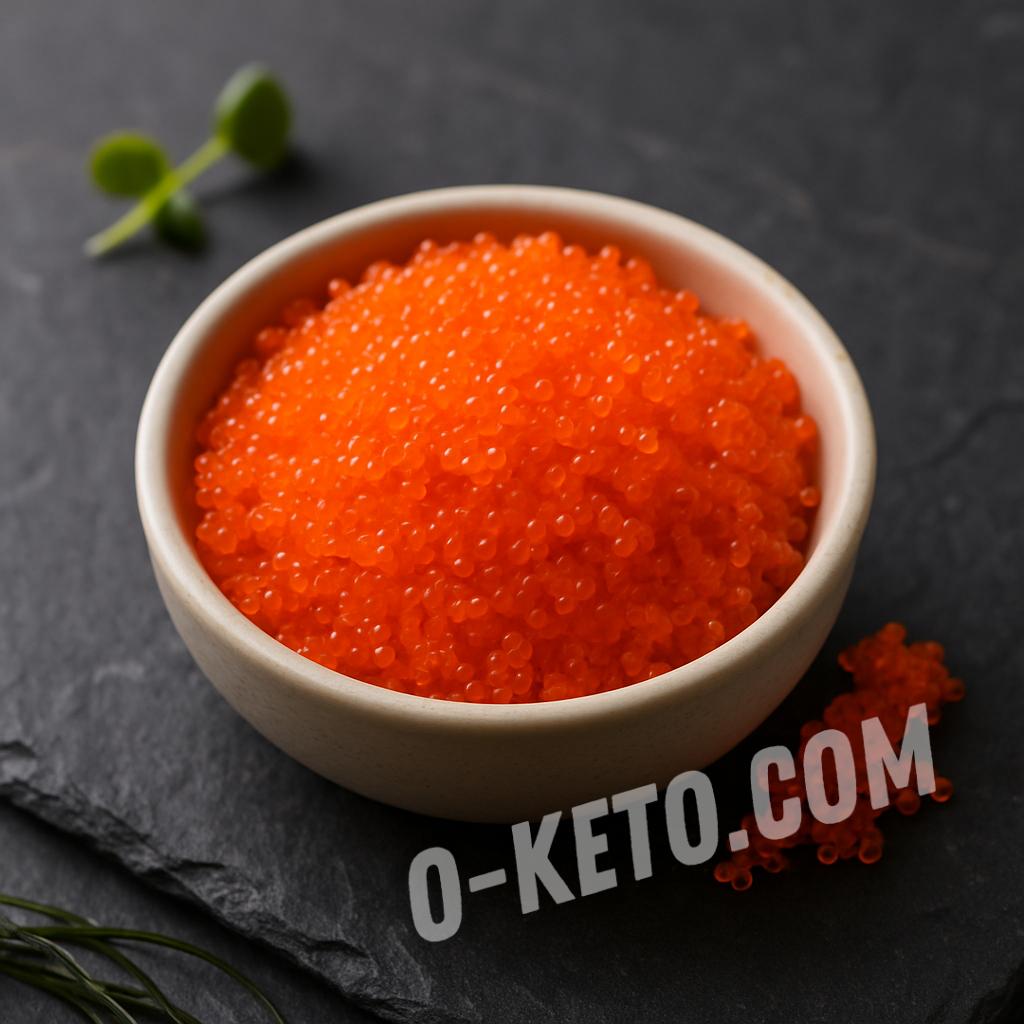

Tobiko is flying fish roe with tiny crisp grains, known from Japanese cuisine. Recipes should count the roe itself, without sweet sauces, starchy thickeners, excess oil, or aggressive preservatives.
Tobiko is often sold colored or flavored. For keto, check ingredients: sugar, mirin, starch, and sweet sauces change the product profile.
Nutrition
Plain roe contains protein, fats, B12, and minerals, with little carbohydrate. The limiting factor is usually salt and additives, not the roe itself.
Tobiko is naturally low in carbohydrate, but packaged roe can change quickly because of salt, sugar, stabilizers, or oil. For keto use, the label matters more than the prestige of the name: the cleanest version is roe with minimal seasoning and no sweet filler.
How to Use
Tobiko is added to cold dishes: rice-free rolls, avocado salads, eggs, fish, seafood, and creamy sauces. Its crisp texture is lost under strong heat.
Weigh Tobiko in grams or measure the actual spoonful used in the dish. Small decorative portions barely change macros, while a generous serving contributes meaningful protein, fat, sodium, and marine micronutrients.
How to Choose
Good Tobiko should look moist but not watery, with a clean marine aroma and no sharp ammonia note. Avoid tubs with leaking liquid, damaged seals, dull color, bitterness, or a long list of sweetened additives.
Storage and Safety
Keep Tobiko very cold and open it only shortly before serving. Roe is delicate and perishable, so do not leave it at room temperature; avoid it if seafood allergy applies and use pasteurized or clearly safe products when raw-food risk is relevant.


