



9″:0.23,”1611″:0.2,”1612″:8.5,”1613″:1,”1614″:0.6,”1616″:25,”1617″:4.2,”1620″:1.1,”1621″:0.1,”1622″:12,”1624″:200,”1625″:363,”1626″:59,”1633″:29,”1635″:0.8,”1637″:0.7,”1640″:60,”1644″:0.02,”1645″:30,”1647″:36.5,”1672″:90,”1682″:0.03,”1683″:900,”1684″:600,”1705″:10.9,”1706″:2400,”5429″:210,”7347″:0.15,”7349″:70,”7350″:1.1,”7352″:0.6,”7356″:0.9,”11323″:0.6,”11331″:55,”11333″:20,”11338″:15,”11342″:7,”11350″:1700,”11354″:1000,”11356″:1100,”11357″:2000,”11358″:950,”11361″:650,”11362″:820,”11364″:270,”11366″:650,”11369″:1300,”11373″:2200,”11376″:3200,”11378″:980,”11381″:800,”11382″:860,”11394″:780,”11395″:1350,”11396″:280}The omul is a sig fish known for its Baikal and northern varieties, with tender meat and a pronounced, yet not heavy flavor. In calculations and recipes, it refers specifically to plain fish without flour, breading, sweet marinade, glaze, and excess salt.
Omul is often sold chilled, frozen, or already cooked. This card refers to the basic fish, without smoking or salting.
Nutritional Value
Omul is moderately fatty, making it juicier than cod in keto dishes, but lighter than mackerel. There are no carbohydrates, and the protein is complete.
In its plain form, omul has virtually zero glycemic load: the fish meat contains no starch or sugar. The keto calculation is altered not by the fish itself, but by flour, breadcrumbs, sweet marinade, glaze, or ready-made sauce that appear during cooking.
How to Use
Fresh omul is best baked or cooked gently with lemon, dill, butter, and green salad. Too strong spices can overshadow the delicate flavor.
For omul, weigh only the edible part that you are cooking or placing on the plate: fillet without large bones, cleaned steak, or portion from a whole carcass. The fish’s own fat enhances the flavor, but sauces and added oil still need to be accounted for separately, especially in large portions.
How to Choose
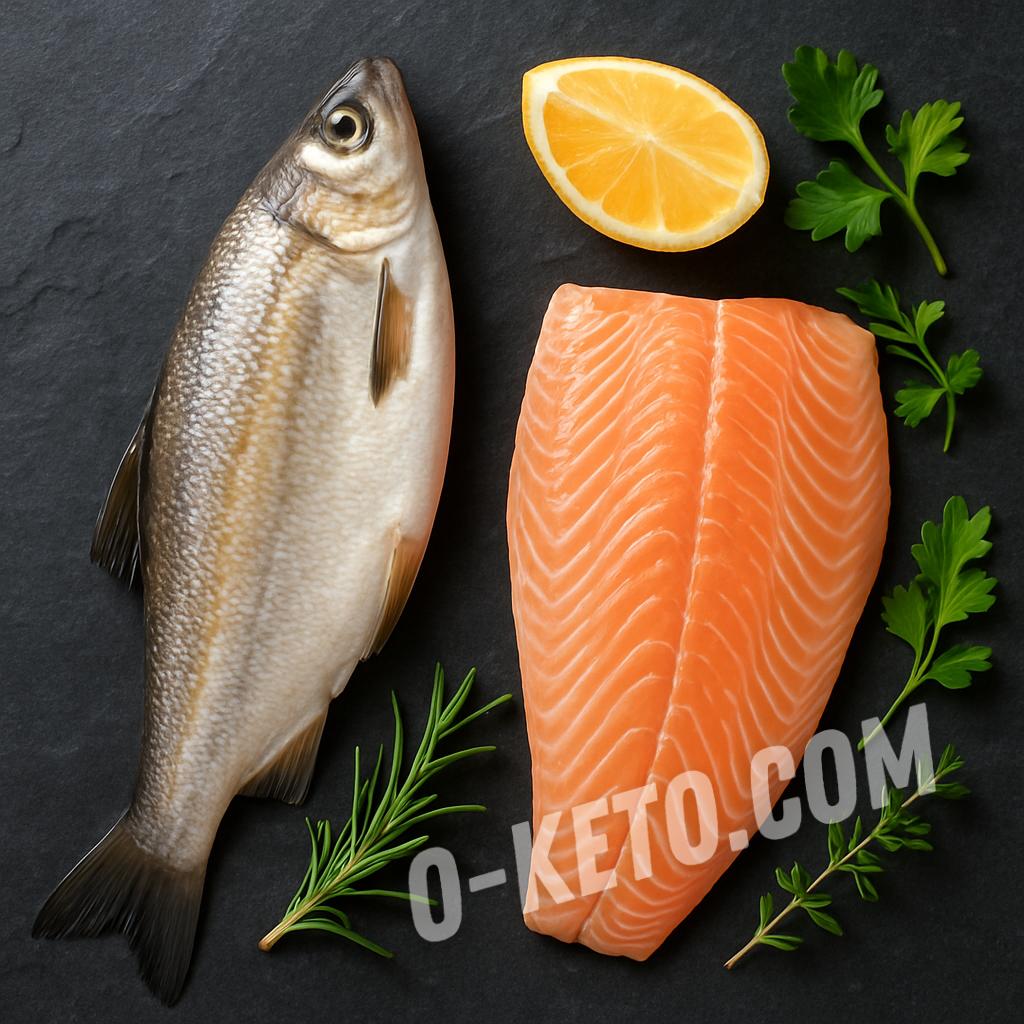
When buying omul, look for a clean smell, firmness of the meat, natural color, and packaging without excess cloudy liquid. For whole fish, clear eyes and intact skin are important; for fillets, the absence of dried edges and a sticky surface.
Storage and Safety
Store omul in the cold until cooking, and thaw frozen pieces slowly in the refrigerator. If the source is unknown, it is better to fully cook the fish; refreezing and a strong ammonia smell are reasons not to use the product.


