


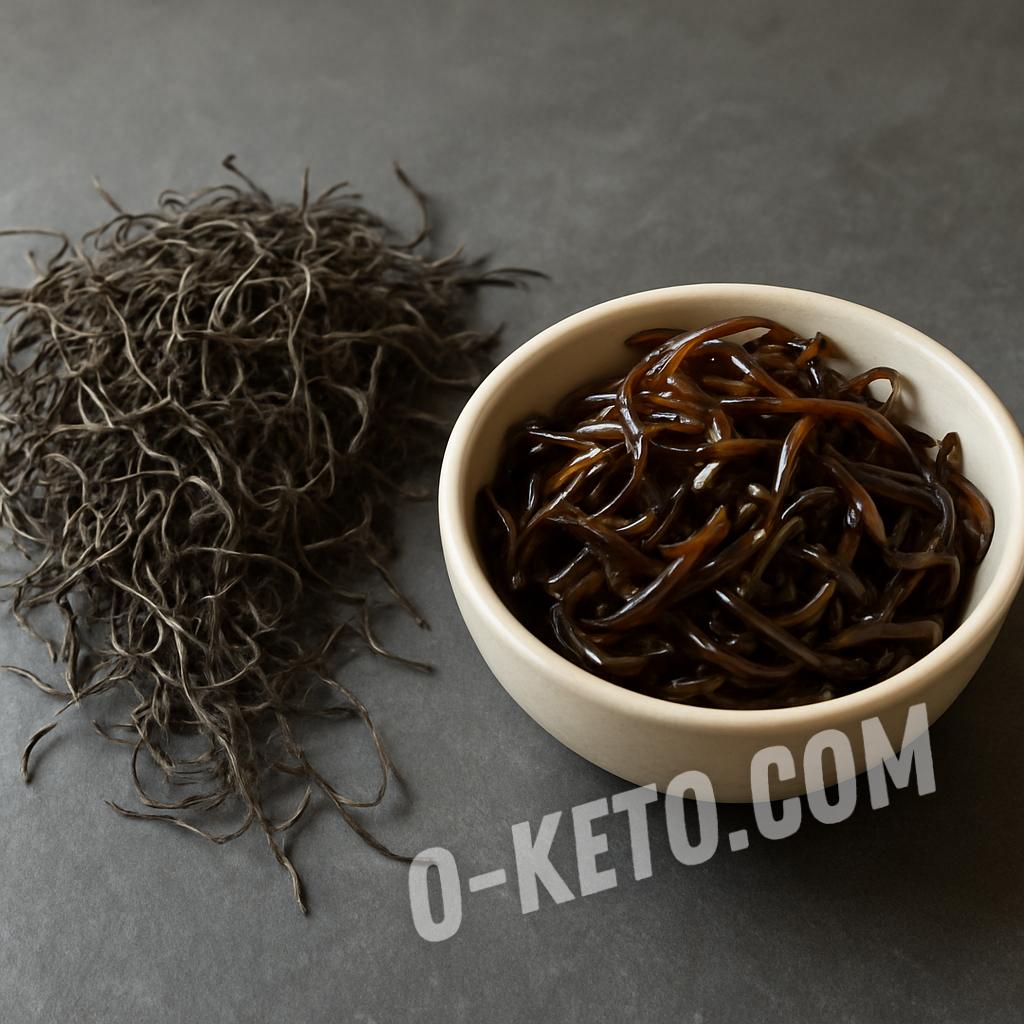

Arame is thin brown seaweed with a milder flavor than kombu and a pleasant springy texture after soaking. Recipes should count the seaweed itself, without sugary dressing, starch, ready-made sauce, or excess salt.
Arame is usually sold dried in thin strips. It cooks faster than dense kombu and fits salads more easily.
Nutrition
Like other seaweed, arame provides minerals, iodine, and fiber with low calories. On keto, dry weight matters because the mass changes after soaking.
For Arame, the keto calculation starts with dry weight, not the swollen portion after soaking. The serving is usually small, so the main value is mineral flavor, iodine, texture, and umami; sweet dressings or seasoned ready salads are what can add unnecessary carbohydrate.
How to Use
Arame is used in salads, vegetable sides, bowls with fish, tofu, and sesame. Its mild flavor takes lemon, ginger, garlic, and sugar-free soy sauce well.
Measure Arame before hydration when the recipe uses a dried product. After soaking it becomes heavier and softer, but the nutrients still belong to the original dry grams, so volume is a poor guide for recipe macros.
How to Choose
Choose Arame that is dry, clean-smelling, and evenly colored, without mold, sticky clumps, or a perfumed odor from old packaging. A short ingredient list is best; sugar, starch, and ready-made seasoning mixes belong in a separate calculation.
Storage and Safety
Store Arame tightly closed away from steam and light. Once soaked, treat it like a fresh refrigerated ingredient, use it promptly, and be cautious with large regular portions if iodine intake or thyroid issues matter for you.


