


Bile stasis
Impaired formation or outflow of bile that may arise from the gallbladder, bile ducts, or the liver itself. In keto and LCHF the main practical issue is not to force very fatty meals when biliary symptoms already exist, and not to dismiss persistent pain, itch, jaundice, or poor fat tolerance as simple diet adaptation.
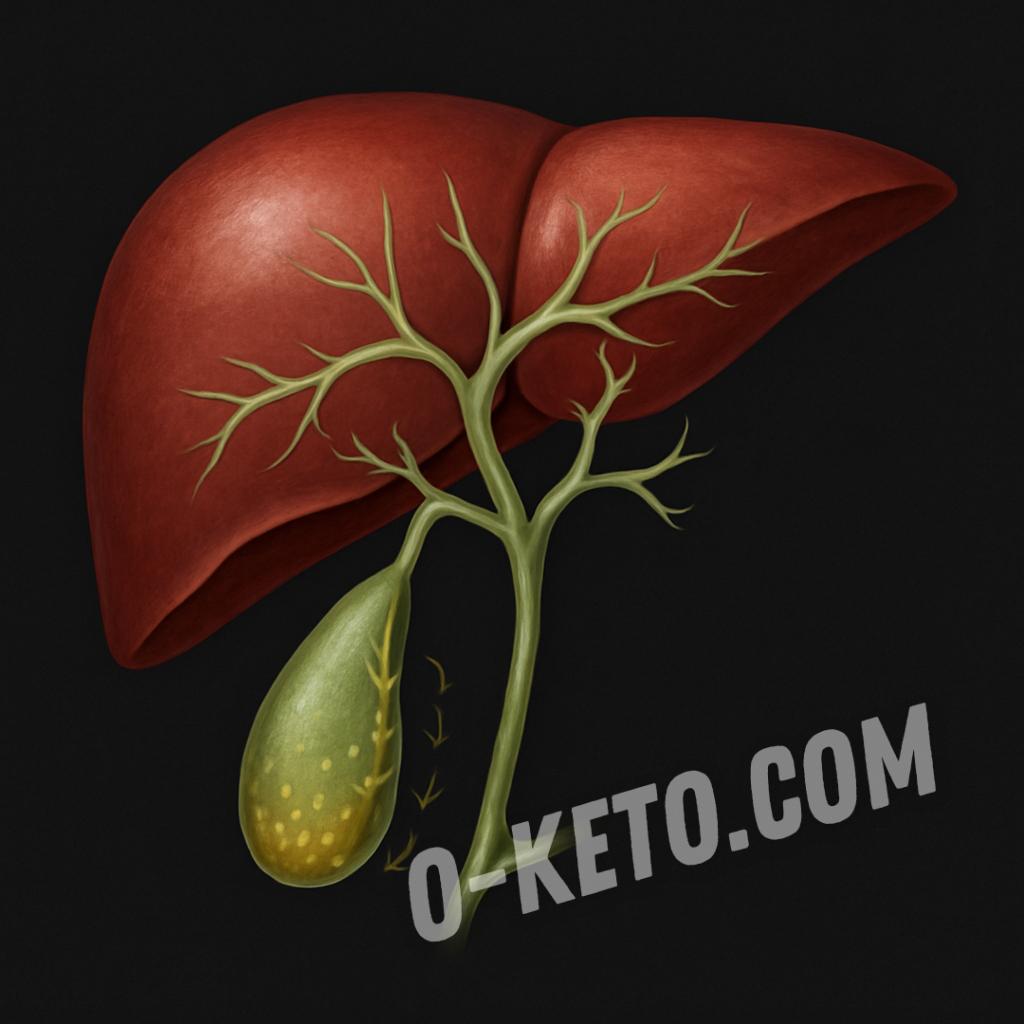
Bile stasis means impaired formation, movement, or outflow of bile through the intrahepatic or extrahepatic biliary system. In everyday speech people use this phrase loosely for many different complaints: heaviness after fatty meals, bitterness in the mouth, discomfort under the right rib, “thick bile” on ultrasound, nausea, or unstable stool. Clinically, however, the important issue is not the phrase itself but the mechanism behind it. In one person the main problem is a functional motility disorder of the gallbladder or sphincters, in another it is gallstones or sludge, in another inflammation, and in another a liver process that causes cholestasis from inside the liver. That is why bile stasis is useful as a descriptive term only when it is tied to real symptoms, laboratory markers, imaging, and differential diagnosis instead of being used as a catch-all explanation for any digestive discomfort after eating fat.
What changes when bile flow slows down
Bile is needed for much more than simple fat digestion. It helps emulsify fats, supports the absorption of fat-soluble vitamins, and carries bilirubin, cholesterol, and some metabolic waste products out of the body. When bile flow slows down or becomes obstructed, several processes can change at once. Fat-heavy meals may be tolerated poorly, nausea may appear, stool patterns may shift, and some people notice bloating, bitterness, pressure under the right upper abdomen, or reduced tolerance for rich food. If the problem is more significant or prolonged, laboratory markers such as direct bilirubin, alkaline phosphatase, and GGT may rise, and in some situations transaminases can rise as well.
It is important not to reduce the whole issue to the gallbladder alone. Bile is produced in the liver, transported through ducts, stored and concentrated in the gallbladder, and released in response to meals. Disturbance can happen at any of those levels. Causes range from stones, sludge, inflammation, edema near the sphincter of Oddi, pregnancy, rapid weight loss, medication reactions, fatty liver disease, viral disease, autoimmune disease, and external compression of ducts. The term describes a flow problem, not one single diagnosis.
Symptoms that matter and red flags that should not be ignored
Mild heaviness after overeating does not prove bile stasis. More meaningful patterns include repeated right upper quadrant discomfort after fatty meals, nausea after rich foods, a bitter taste after eating, pressure or pain under the right rib, pale stool, darker urine, unexplained itch, or visibly reduced tolerance for meals with a high fat load. Even then, symptoms alone do not diagnose cholestasis. Similar complaints can come from reflux, gastritis, functional dyspepsia, pancreatic insufficiency, small intestinal bacterial overgrowth, medication side effects, or liver disease of another type.
Some signs need prompt medical assessment rather than home experiments: fever with right upper abdominal pain, vomiting, jaundice, dark urine, clearly pale stool, generalized itch together with abnormal liver tests, or an attack-like pain pattern after fatty meals in someone with known gallstones. In such situations the vague label “bile stasis” can hide a more specific and more urgent problem such as biliary colic, acute cholecystitis, common duct stone, obstructive cholestasis, or acute liver injury.
How clinicians check it
Real assessment usually starts with history, physical examination, and laboratory work. Common tests include total and direct bilirubin, ALT, AST, alkaline phosphatase, GGT, and sometimes inflammatory markers, pancreatic enzymes, coagulation markers, and a wider metabolic panel. Ultrasound is useful because it can show stones, sludge, gallbladder wall changes, duct dilation, liver texture, and sometimes indirect signs of obstruction. But ultrasound is not the whole answer. A report saying “thick bile” does not automatically explain symptoms, and a normal scan does not fully exclude functional biliary problems.
When true cholestasis or obstruction is suspected, additional tools may be needed, such as MRCP, CT, endoscopic evaluation, or specialist review. If the pattern appears intrahepatic, the search may shift toward medication effects, autoimmune disease, viral hepatitis, pregnancy-related cholestasis, or metabolic liver disease. The key practical question is not “how to stimulate bile flow” in the abstract, but whether there is obstruction, inflammation, or liver dysfunction that changes management.
Why keto and LCHF can make this more noticeable
This topic genuinely matters in keto and LCHF because these approaches change the fat load per meal. If a person already has stones, sludge, chronic gallbladder irritation, strong post-fat symptoms, or a functional biliary problem, a rapid switch to a very high-fat diet can make existing symptoms more obvious. That does not necessarily mean keto caused the problem from nothing; often it means the system was already vulnerable and becomes more clearly stressed when meal composition changes. Another practical issue is rapid weight loss. Fast weight loss is a known setting in which sludge and gallstone risk can rise in susceptible people.
For that reason, a more conservative transition is often safer than forcing large fat boluses from day one. If very fatty meals trigger nausea, intense heaviness, pain, or loose stool, it is better to reassess meal size, pacing, and food selection instead of treating every reaction as “normal adaptation.” Keto does not dissolve every biliary problem and does not replace evaluation when symptoms are persistent or escalating.
What not to do on your own
A common mistake is self-treatment based on one ultrasound phrase or social media advice. The label “bile stasis” often pushes people toward aggressive “liver cleanses,” large amounts of oil on an empty stomach, uncritical use of choleretic herbs, or supplement stacks chosen without a diagnosis. If stones or a mechanical problem are present, those experiments can worsen pain and may provoke a serious episode. Even seemingly gentle measures should not be treated as universal solutions when the cause of symptoms is still unclear.
Another mistake is attributing every biliary symptom during keto to a lack of fiber or trying to solve everything with rough fiber. In some people with active irritation, bloating, or pain, that can make digestion feel worse rather than better. More useful basics are steady weight loss rather than crash dieting, tolerable meal size, adequate hydration, enough protein, and honest reassessment when symptoms repeat.
Practical takeaway
Bile stasis is not a magic diagnosis for every unpleasant sensation after eating fat. It describes impaired bile movement, and the clinically important part is the underlying reason. In keto and LCHF, the term matters because high-fat meals can expose an existing biliary problem and because overly rapid weight loss may increase sludge or stone risk. The practical approach is to avoid extreme fat forcing, avoid blind cleansing routines, and seek real evaluation if there is repeated right upper abdominal pain, nausea after fatty meals, itch, jaundice, dark urine, pale stool, or clearly worsening tolerance to fat.
If you have any questions about the term "Bile stasis", you can ask them to AI. Please note, a low-cost OpenAI model is used. It may answer questions about disease treatment with errors!


